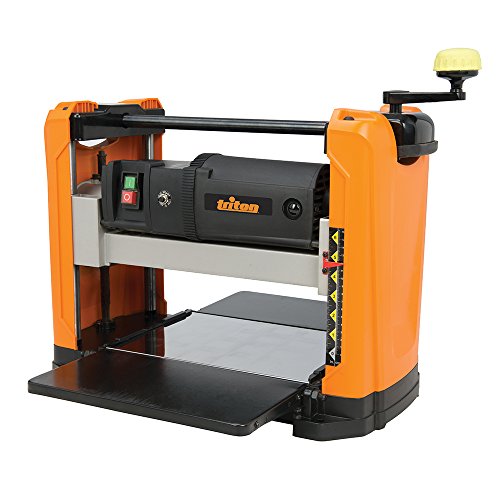
You have a stack of rough lumber that needs to be turned into smooth, uniform boards for your next project. But every time you run a piece through your current planer, you end up with frustrating snipe, chatter marks, or an uneven finish. A quality benchtop planer can transform your workflow, saving hours of sanding and wasted material. In this guide, we reviewed the ten best benchtop planers on the market as of 2026, covering models from trusted names like DEWALT, Triton, CRAFTSMAN, VEVOR, and WEN. Whether you are a hobbyist or a pro, you will find the perfect match for your shop. For more essential gear, check out our best woodworking tool set recommendations.






Buying Guide: What to Look for in a Benchtop Planer
Cutterhead Type: Spiral vs. Straight Knife
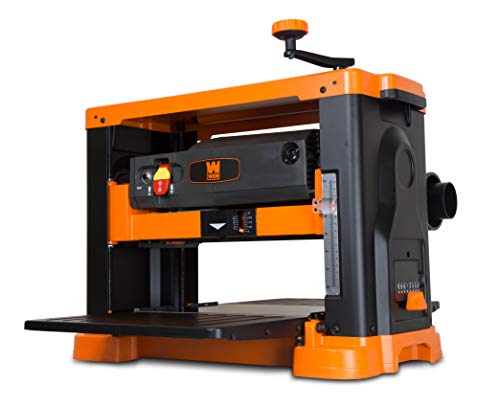
The cutterhead is the heart of any planer. Straight knife heads use two or three high-speed steel (HSS) blades that are reversible. They are affordable and easy to replace, but they can produce more noise and tearout on figured grain. Spiral cutterheads (found on models like the Cutech 40700H 12½-Inch Spiral Cutterhead Benchtop and the WEN PL1326 15-Amp 13-Inch Spiral Benchtop) use dozens of staggered carbide inserts that rotate independently. This design delivers a glass-smooth finish with less noise and significantly reduced tearout. Spiral heads cost more upfront, but the inserts last longer and can be rotated for multiple cutting edges.
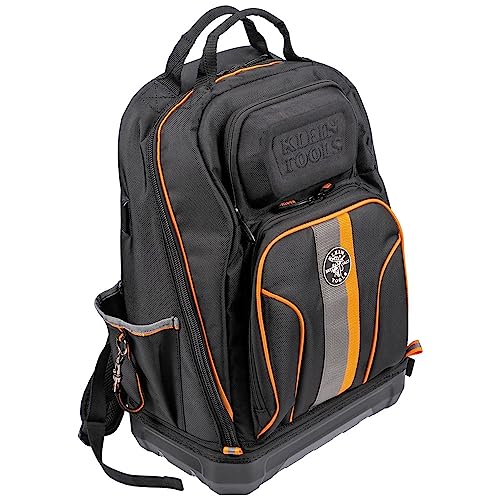
For heavy-duty work in hardwoods, a three-knife straight head like the one on the DEWALT DW734 still performs excellently. However, if you want a near-jointer finish straight from the planer, spiral is the way to go. If you are building a complete shop, you might also enjoy our roundup of the best tool bag for keeping your essentials organized.
Motor Power and Feed Speed
Most benchtop planers come with a 15-amp motor, which is sufficient for planing both softwoods and dense hardwoods up to 13 inches wide. The key metric is cutterhead speed, often measured in cuts per inch (CPI). For example, the DEWALT Benchtop Planer, 15-Amp, 12-1/2-Inch delivers 96 CPI at 20,000 RPM, while the DEWALT Thickness Planer, 13-inch Wood Planer offers a two-speed gearbox that lets you choose between 96 CPI and a finer 179 CPI for a smoother finish on figured stock. Two-speed models give you flexibility: use the faster feed rate for dimensioning and slow down for final passes. Always check the feed rate in feet per minute; slower rates typically mean a finer finish but slower throughput.
Motor power also affects how well the planer handles snipe. Models with a four-column carriage lock (like the DEWALT DW734) drastically reduce the movement that causes snipe. If you frequently work with hardwoods, prioritize a planer with a robust motor and a rigid carriage system.
Snipe Minimization and Table Design
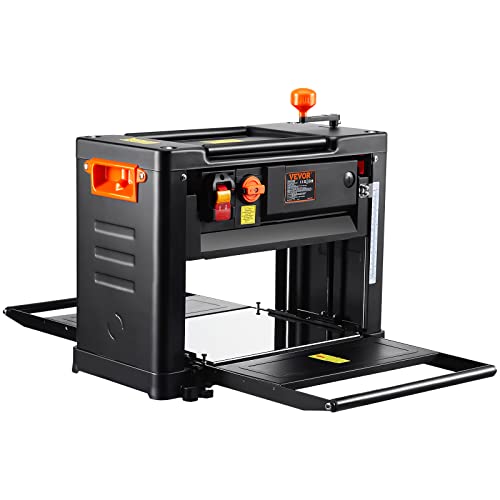
Snipe (a deeper cut at the beginning or end of a board) is the bane of every woodworker. The best benchtop planers use mechanical solutions to minimize it. Look for models with extra-long infeed and outfeed tables (33.5 inches or more), such as the DEWALT DW734. Many planers also incorporate an automatic carriage lock or a coupling mechanism that engages when the board leaves the rollers. The Cutech 40700H features a patented snipe minimizer that works without a manual lock. For a clean workspace, consider a planer with a fan-assisted chip ejection or a vacuum port. The DEWALT DW735X has a fan that vacuums chips off the cutterhead, while budget-friendly options like the VEVOR Power Benchtop Planer Three-Blade Two Speed include a standard 2-inch dust port.
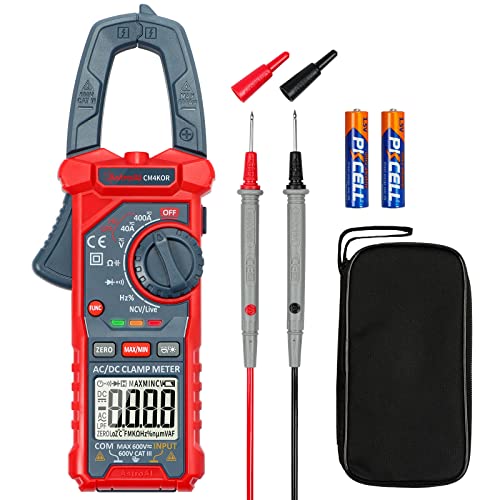
If you are new to woodworking, our multimeter basics can help you understand electrical measurements for your shop equipment.
Thickness Capacity and Build Quality
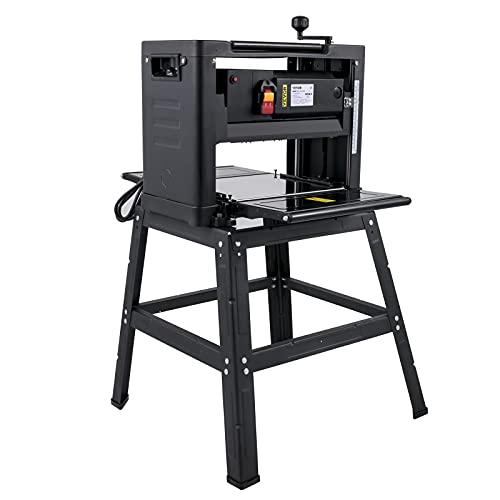
Most benchtop planers accept boards up to 13 inches wide and 6 inches thick. The cutting depth per pass typically ranges from 1/32 inch to 1/8 inch. A material removal gauge helps you set the depth accurately. Stepping up to a cast-iron bed (like on some VEVOR models) ensures flatness and reduces vibration. Also consider the weight: heavier planers from DEWALT and CRAFTSMAN stay more stable during operation. If you have limited bench space, look for models with folding tables or detachable stands, such as the VEVOR Thickness Planer – 13-Inch Benchtop Wood.
Final Thoughts
After evaluating all ten benchtop planers, two models stand out for different needs. For professional-grade power and the finest finish, the DEWALT Benchtop Planer, 15-Amp, 12-1/2-Inch delivers exceptional snipe control and a 4.9 rating, making it our top overall pick. If you are on a tighter budget but still want spiral-cutterhead performance, the Cutech 40700H 12½-Inch Spiral Cutterhead Benchtop offers outstanding value with its tungsten carbide inserts and automatic snipe minimizer. No matter which you choose, upgrading to a reliable benchtop planer will transform your woodworking projects. For more tool category recommendations, visit our Tools page.
Related Guides
Frequently Asked Questions
What is the best benchtop planer for hardwood?
For hardwoods like oak and maple, look for a planer with at least a 15-amp motor and a feed rate of 15 to 20 feet per minute. The DEWALT DW734 and DW735X both handle hardwoods with ease thanks to their powerful motors and three-knife cutterheads. Spiral cutterhead models also excel in reducing tearout on figured hardwoods.
How do I reduce snipe on a benchtop planer?
Snipe is minimized by using the carriage lock (if your planer has one), feeding boards into the planer with a consistent pressure, and using auxiliary support tables. Many modern planers like the Cutech 40700H include an automatic snipe minimizer. Also, ensure the infeed and outfeed tables are coplanar to the cutterhead.
Can a benchtop planer be used for jointing?
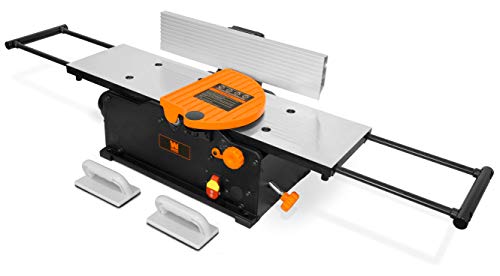
No, a benchtop planer only surface planes to a consistent thickness; it does not square edges. To joint boards, you need a jointer. However, you can use a planer to smooth faces after jointing one side. Many woodworkers combine a benchtop planer with a jointer for full preparation.
What is the difference between straight knife and spiral cutterheads?
Straight knife cutterheads use two or three blades that run the full width of the cutterhead. They are less expensive but louder and more prone to tearout. Spiral cutterheads have many small carbide inserts arranged in a helix, producing a smoother finish with less noise. Spiral heads generally require less sharpening and last longer.
For more tool comparisons and reviews as of 2026, explore our Tools section.