

Manually leveling a 3D printer bed is one of the most frustrating parts of the hobby. You spend minutes adjusting knobs, only to find the first layer uneven or the nozzle scraping the surface. Auto leveling changes everything: with a sensor that measures the bed at multiple points, the printer compensates automatically for any tilt or warp. Whether you are a beginner looking for a hassle-free start or an experienced maker wanting consistent quality, the best auto leveling 3D printers save time and material. In this guide, we evaluated five top models from Bambu Lab and Flashforge, focusing on leveling accuracy, speed, build volume, and extra features like multi-color printing. For more options, check our printers category page.




Buying Guide: What to Look for in an Auto Leveling 3D Printer
Type of Auto Leveling System
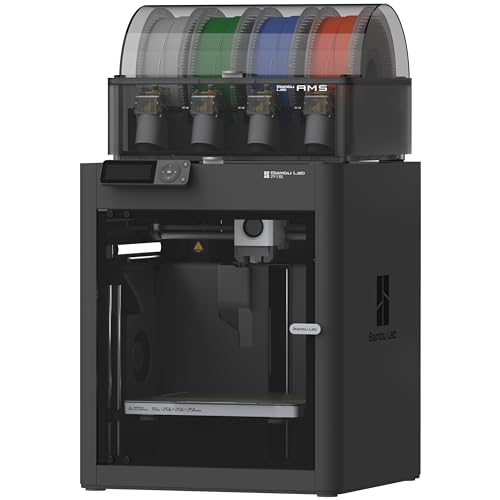
Not all auto leveling sensors are the same. Inductive sensors detect metal beds, while capacitive sensors work with glass or other surfaces. Some printers use a strain gauge on the nozzle for direct touch feedback. For beginners, a fully automatic system that requires no manual Z-offset adjustment is ideal. Models like the Flashforge Adventurer 5M series offer one-click leveling that calibrates the entire bed in seconds. More advanced printers, such as the Bambu Lab P1S, combine an inductive sensor with a flexible PEI plate for reliable adhesion across different filaments.
Print Speed and Build Volume
Auto leveling is most valuable on fast printers where every second counts. CoreXY machines can reach speeds of 600 mm/s and accelerations of 20,000 mm/s² without sacrificing quality, thanks to vibration compensation algorithms. A larger build volume (220x220x220 mm is common) lets you print bigger parts or multiple objects in one batch. If you plan to print functional prototypes or large decorative items, prioritize a printer with a sturdy frame and a heated bed that stays flat under thermal stress. For more on printer categories, visit our printers section.
Multi-Color and Multi-Material Capability
Auto leveling becomes even more critical when you add multiple filaments. A perfectly leveled first layer ensures that color changes and supports adhere correctly. The Bambu Lab P1S Combo includes an AMS unit that handles up to 16 colors, while the Flashforge AD5X supports four colors via a built-in system. Both rely on precise bed leveling to prevent oozing and stringing during filament swaps. If you plan to experiment with dissolvable supports or flexible materials, choose a printer with a direct-drive extruder and a wide temperature range.
Ease of Setup and Software
The best auto leveling printers are ready to print within minutes of unboxing. Look for models that come pre-assembled or require minimal assembly. A user-friendly slicer with pre-configured profiles for the auto leveling sensor saves hours of tweaking. Remote monitoring via a mobile app is a bonus, allowing you to check the first layer from another room. The Flashforge Adventurer 5M Pro, for example, includes a built-in camera and a 4.3-inch touchscreen that guides you through the leveling process step by step.
Final Thoughts
After reviewing the top contenders, the Bambu Lab P1S Combo, P1S 3D Printer and AMS stands out for makers who want vibrant multi-color prints without manual leveling fuss, while the FLASHFORGE AD5X Multi-Color 3D Printer offers an excellent balance of speed, reliability, and value for those on a tighter budget. Both deliver the effortless first layers that make 3D printing enjoyable, so choose the one that fits your creative ambitions.
Frequently Asked Questions
How does auto leveling work on a 3D printer?
Auto leveling uses a sensor (inductive, capacitive, or strain gauge) to measure the distance between the nozzle and the bed at several points. The printer then creates a height map and adjusts the Z-axis during printing to compensate for any unevenness. This ensures a consistent first layer across the entire build plate.
Is auto leveling worth it for beginners?
Absolutely. Auto leveling removes the steep learning curve of manual bed leveling, which is the most common cause of failed prints for newcomers. With a printer that has one-click leveling, you can focus on learning design and slicing instead of fiddling with knobs. Many modern printers, like those from Flashforge and Bambu Lab, make this process completely automatic.
Can auto leveling fix a warped bed?
Yes, within limits. Auto leveling can compensate for minor warps or tilts by adjusting the nozzle height across the bed. However, if the bed is severely warped (more than a few millimeters), the printer may struggle to maintain adhesion in extreme areas. In such cases, replacing the build plate or using a glass bed with a capacitive sensor is recommended.
What is the best auto leveling 3D printer for 2026?
The best overall is the Bambu Lab P1S Combo for its multi-color capability and rock-solid leveling. For a budget-friendly option with similar speed, the Flashforge AD5X is a top contender. Both have been verified by the community and offer reliable performance straight out of the box. For more recommendations, browse our printers collection.


