

You’ve just returned from an unforgettable trip, and your phone is bursting with stunning landscapes and candid moments. But when you upload them to your computer, the colors look flat on your screen, and you know a standard office printer just won’t do them justice. If you’re serious about turning your digital memories into tangible keepsakes, you need a printer designed specifically for high-quality photo reproduction.
This guide is crafted for photographers, artists, and memory-keepers who demand more from their prints. We’ve evaluated a range of models to help you find the best printers for high quality photos, whether you need a compact companion for on-the-go printing or a professional wide-format workhorse for your home studio. Our goal is to simplify your decision by breaking down the key features that matter most, so you can choose with confidence.




Buying Guide: What to Consider When Choosing a Photo Printer
Selecting the right photo printer involves more than just picking a well-known brand. You need to consider how you’ll use it, what print sizes you need, and how much you’re willing to invest in consumables. Let’s break down the essential factors to help you make an informed choice that fits your creative workflow.
Print Technology and Color Gamut
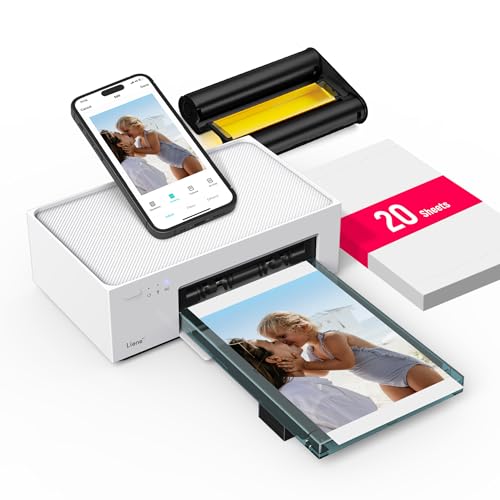
The heart of any photo printer is its printing technology. Inkjet printers with multiple color cartridges, such as the 8-color dye-based system in the Canon PIXMA PRO-200S, are excellent for producing a wide color gamut and smooth gradations. Thermal dye-sublimation printers, like those from Liene, use heat to transfer dye onto the paper, resulting in continuous-tone prints that are resistant to water and fading.
Consider the types of photos you print most. If you’re a landscape or portrait photographer, a printer with a broader color palette will give you more accurate and vibrant results. For casual snappers, a dye-sublimation model offers a perfect balance of quality and simplicity.
Print Size and Versatility
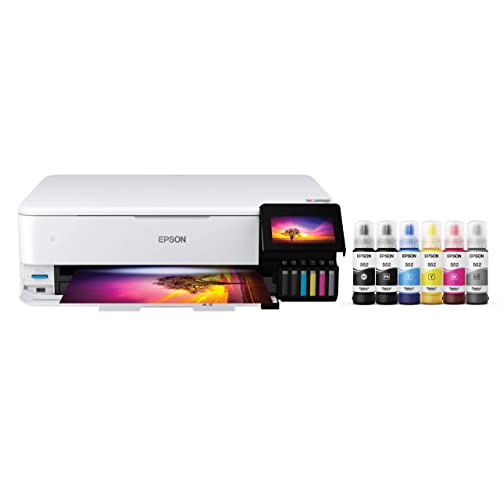
Think about the standard photo sizes you’ll be printing. If you prefer classic 4×6 inch prints for albums and sharing, a compact portable printer like the Liene M100 is a fantastic option. For larger statement pieces, such as 13×19 inch prints, you’ll need a wide-format model like the Epson EcoTank Photo ET-8550, which also offers borderless printing.
Versatility is key. Some printers offer dual trays for different paper sizes, while others allow you to print on various media types, from glossy to matte. Look for a model that supports the sizes and paper types that align with your creative projects. For more on this, you can check out our guide on the best 4×6 photo printers for home and travel.
Connectivity and Ease of Use
In our wireless world, connectivity is crucial. Look for printers with Wi-Fi, Bluetooth, or even built-in hotspots, so you can print directly from your smartphone or tablet without fiddling with cables. The Liene Amber M110, for instance, pairs via Bluetooth in seconds, while the Liene M100 creates its own Wi-Fi hotspot for a stable connection.
Ease of use also extends to the printer’s software and controls. A clear color touchscreen, like the one on the HP Envy Photo 7975, simplifies navigation and settings. Also, consider the companion app; a good app will let you edit, add filters, and even print ID photos, enhancing your overall printing experience.
Running Costs and Ink Efficiency
The initial price of the printer is just the beginning. The cost of ink and paper can add up quickly, especially if you print frequently. Cartridge-free systems like the Epson EcoTank use refillable ink tanks, which significantly reduce the cost per print and minimize waste. This is a smart choice for high-volume users.
For dye-sublimation printers, the paper and ink are often sold in bundles, which can simplify budgeting. When comparing costs, think about how many prints you’ll make in a month and the price per print. This will help you avoid any surprise expenses down the line. For a deeper dive into large-format options, see our article on large format photo printers.
Final Thoughts
Choosing the right photo printer is a personal journey that hinges on your specific creative needs and lifestyle. If you’re a professional or enthusiast seeking gallery-quality, wide-format prints, the Canon PIXMA PRO-200S Professional 13″ is an exceptional choice, while for those who prioritize portability and instant sharing, the Liene Amber M110 Bluetooth Photo Printer 80 offers unbeatable convenience without sacrificing quality. Whichever you choose, you’ll be well-equipped to bring your memories to life.
Frequently Asked Questions
What is the best printer for high-quality photos for a beginner?
For beginners, we recommend the Liene M100 4×6” Photo Printer. It’s incredibly user-friendly, with a built-in Wi-Fi hotspot that makes connecting your phone a breeze. The thermal dye-sublimation technology ensures vibrant, long-lasting prints right out of the box, so you can focus on capturing moments rather than troubleshooting technical issues.
How do I get the best print quality from my photo printer?
To achieve the best print quality, always use genuine ink and paper designed for your specific printer model. Ensure your print settings match the paper type you’re using, and consider calibrating your monitor for color accuracy. Additionally, allow prints to dry completely before handling them to prevent smudging.
Are dye-sublimation printers good for photos?
Yes, dye-sublimation printers are excellent for photos. They produce continuous-tone prints with smooth color transitions and are more resistant to water and fading compared to traditional inkjets. This makes them a great choice for creating durable, scrapbook-ready prints at home, especially for 4×6 inch photos. For more ideas, check out our article on photo printers for art prints.
Can I print borderless photos with a standard photo printer?
Yes, many modern photo printers support borderless printing up to a certain size. For example, the Canon PIXMA PRO-200S can print borderless up to 13×19 inches, which is perfect for large, frame-worthy prints. Always check the printer’s specifications to confirm the maximum borderless size it supports, as it varies by model.


