

You’ve seen the amazing things people create with 3D printers, and now you’re ready to jump in. But with so many options, choosing your first machine can feel overwhelming. You want something that’s easy to set up, safe to use, and produces quality prints without a steep learning curve.
This guide is your starting point. We’ve reviewed the top 3D printers for beginners in 2026, focusing on models that prioritize ease of use, safety features, and reliability. Whether you’re a parent looking for a creative toy for your kids or a hobbyist ready to bring ideas to life, we’ll help you find the perfect fit.




Buying Guide
Ease of Setup and Calibration
The last thing you want is to spend hours fiddling with manual leveling and complex firmware. Look for a printer that offers automatic bed leveling, like the best budget printers under $100 often do, and a simple, guided setup process. A machine that’s ready to print out of the box saves you frustration and gets you creating faster.
Many modern models feature one-touch calibration and pre-leveled beds. Consider how much time you want to spend on maintenance. For true beginners, a printer with minimal manual adjustments is a game-changer.
Safety Features
Safety is non-negotiable, especially if kids or pets are around. Look for an enclosed printer to protect from hot parts and moving components. Features like filament runout sensors and power-loss recovery add peace of mind.
Also, check for a heated bed that’s covered and a nozzle that’s protected. For a family-friendly option, some printers come with certified safe materials and quiet operation, making them ideal for a home environment.
Print Quality and Speed
You want prints that look good without waiting forever. A printer with a stable frame and a decent print speed, like those with CoreXY structure, can offer a good balance. Look for features like vibration compensation and a direct-drive extruder for better detail.
For beginners, a standard layer height and nozzle size are fine. But having the option to swap nozzles for finer details or faster prints is a plus. Check the printer’s supported filament types, as some materials are easier to print with than others.
Software and Connectivity
Good software makes slicing and controlling your prints simple. A user-friendly interface that works with your computer or phone is essential. Look for printers with a dedicated app that allows you to monitor prints remotely and access a library of pre-designed models.
Connectivity options like Wi-Fi and USB are standard, but app integration offers the most convenience. Some ecosystems even provide cloud-based model libraries, which is a fantastic resource for beginners. For more guidance on choosing the right printer, check out our printers category.
Final Thoughts
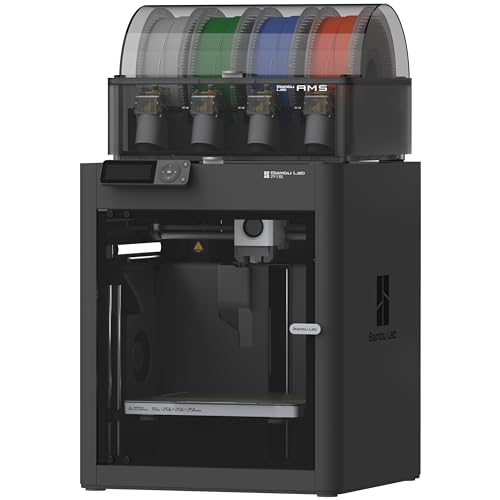
Choosing your first 3D printer is an exciting step. For a seamless, beginner-friendly experience with a strong focus on safety and creativity, the AOSEED AI 3D Printer for Kids, Fast 400mm/s is an excellent all-in-one choice, while the Bambu Lab P1S 3D Printer offers a more advanced, enclosed option for those ready to grow. Both are fantastic starting points that will have you printing in no time.
Frequently Asked Questions
What is the best 3D printer for a complete beginner in 2026?
For a complete beginner, we recommend looking for a printer that offers automatic bed leveling and a fully assembled design out of the box. Models like the Bambu Lab A1 mini are praised for their ease of use and reliable performance. The AOSEED AI 3D Printer is also a great choice if you’re looking for something with built-in safety features and a simplified interface.
Are 3D printers safe for kids to use?
Yes, many 3D printers are designed with kids in mind, featuring enclosed frames to prevent contact with hot parts and moving components. Look for models with low-noise operation and non-toxic filament options, like the PLA used in the AOSEED. Always supervise young children and use printers in a well-ventilated area.
What is the difference between an FDM and a resin 3D printer for beginners?
FDM (Fused Deposition Modeling) printers are the most common for beginners because they are easier to use, safer, and have a lower learning curve. They work by melting plastic filament through a nozzle. Resin printers use a vat of liquid resin and a UV light to cure layers, offering higher detail but requiring more post-processing and ventilation. For most beginners, an FDM printer is the better starting point.
Do I need to know how to design 3D models to use a 3D printer?
No, you don’t need to be a designer to enjoy 3D printing. Most beginner-friendly printers come with a library of pre-designed models that you can download and print. The AOSEED AI 3D Printer even lets you create simple models using AI prompts. You can also find thousands of free models on sites like MakerWorld, which is integrated into the Bambu Lab ecosystem.

