You hop in your car, crank up the volume, and all you hear is distorted, muddy sound. Factory speakers often leave you wanting more clarity, depth, and punch. Whether you are a daily commuter, a road trip enthusiast, or an audiophile on a budget, upgrading to a set of high-quality car speakers transforms your driving experience. In this guide, we have hands-on evaluations of ten top contenders from trusted brands like Pioneer, JBL, KICKER, and Rockford Fosgate. We break down what matters most so you can confidently choose the right speakers for your vehicle and listening preferences. For more on automotive audio upgrades, check out our Automotive category.



Buying Guide
Speaker Size and Fitment
Car speakers come in standard sizes like 5.25-inch, 6.5-inch, 6×8-inch, and 6×9-inch. Your vehicle’s factory cutouts determine which size fits without modification. Most modern cars accept 6.5-inch or 6×9-inch speakers, but always verify your door or rear deck dimensions before buying. The models we reviewed include a range of sizes to suit different vehicles. For a broader look at speaker types, see our Speakers category.
Power Handling and Sensitivity
Power handling (measured in watts) tells you how much power a speaker can handle from your stereo or amplifier. Higher peak numbers mean the speaker can handle short bursts of loud music, while continuous (RMS) rating reflects everyday performance. Sensitivity (dB) indicates how efficiently the speaker converts power into volume. A rating of 88 dB or higher lets you enjoy clear sound even with a factory head unit. For example, the Pioneer A-Series Plus TS-A6971F boasts 92 dB sensitivity, making it easy to drive without distortion.
Speaker Design: Coaxial vs. Component
Coaxial speakers combine woofer, tweeter, and sometimes a midrange driver in one unit, offering a simple upgrade path. Two-way designs separate bass and treble, while three-way and four-way models add dedicated midrange and super-tweeter for more detailed sound. Component systems deliver the best audio staging but require separate crossovers and more installation work. All products here are coaxial, ideal for direct factory replacement. If you are new to car audio, our best automotive products for beginners guide can help you get started.
Brand and Build Quality
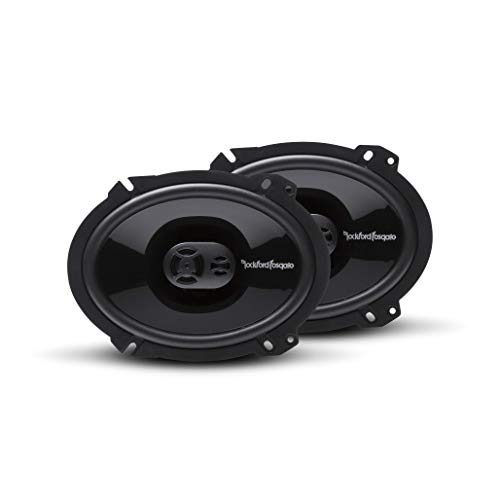
Trusted brands like Pioneer, JBL, KICKER, and Rockford Fosgate offer reliable performance and good warranties. Look for materials like polypropylene cones, butyl rubber surrounds, and PEI dome tweeters, which resist wear and deliver consistent sound. The Rockford Fosgate P1683 Punch series, for instance, features a FlexFit basket for easier installation and a mineral-filled cone for accurate frequency reproduction. Investing in a reputable brand ensures longevity and better resale value.
Final Thoughts
After reviewing ten leading models, our top recommendations cater to different priorities. For budget-conscious drivers who want impressive sound without breaking the bank, the Pioneer F-Series TS-F1634R 6.5″ 2-Way Coaxial Car delivers surprising clarity and easy installation. If you crave richer detail and higher power handling, the JBL GTO629 6.5″ Grand Touring Series Car Audio offers a premium listening experience with its advanced driver design. Whichever you choose, upgrading your car speakers instantly elevates every drive.
Frequently Asked Questions
What size car speakers do I need?
Check your vehicle’s manual or measure the existing speaker cutout. Common sizes include 5.25-inch, 6.5-inch, 6×8-inch, and 6×9-inch. Most sedans and hatchbacks use 6.5-inch speakers in the doors and 6×9-inch in the rear deck. Our buying guide above covers fitment details for each model.
Are coaxial speakers good enough for music?
Yes, modern coaxial speakers like the Pioneer A-Series Plus TS-A1681F produce full-range sound with clear highs and solid bass. They are an excellent upgrade from factory speakers and work well with both stock and aftermarket head units. For audiophiles, component systems offer even better staging, but coaxials are a practical choice for most drivers.
Do I need an amplifier for new car speakers?
Not necessarily. Many aftermarket speakers, especially those with sensitivity above 90 dB, perform well with factory head units. However, adding an amplifier unlocks their full potential, delivering cleaner power and deeper bass. If you plan to upgrade your speakers in 2026, consider pairing them with a small amplifier for the best experience.
How do I install car speakers myself?
Installation is straightforward for most coaxial speakers. You need basic tools like screwdrivers, wire cutters, and possibly a trim removal tool. Remove the door panel, disconnect the old speaker, connect the new one using included wiring harnesses, and secure it. For detailed steps, refer to our best automotive products for beginners guide, which includes installation tips.