

You are deep in a ranked match, and suddenly your ping spikes. The screen freezes, and by the time you regain control, your team has lost. That lag is often caused by a weak or congested home network. Standard single-router setups struggle to deliver consistent, low-latency connections across every room, especially when multiple devices are online. A mesh router system can solve this by spreading multiple nodes throughout your home, creating a seamless blanket of high-speed WiFi. In this guide, we have reviewed four of the top mesh routers for gaming in 2026, focusing on models that prioritize speed, tri-band performance, and advanced features like WiFi 6E. Whether you are a competitive PC gamer or a console enthusiast, we will help you find the system that keeps your connection stable and your reaction times sharp. For more on whole-home coverage, check out our roundup of the Best Mesh Routers for Home in 2026.

Pros
- WiFi 6E delivers future-proof performance with access to the uncongested 6 GHz spectrum for faster, more stable connections
- Exceptional value at this price point for a tri-band router with PCMag Editors' Choice recognition
- Superior device capacity with 4x increase in simultaneous connections through OFDMA technology
- Robust security features including VPN server and client support plus HomeShield protection at no extra cost
- Excellent customer support with 24/7 availability and extended 3-year warranty coverage
Cons
- Requires a separate modem for most internet service providers, adding to overall setup costs
- 6 GHz band adoption still limited as many devices lack WiFi 6E compatibility, though backward compatibility ensures broad device support
- Advanced features like VPN and HomeShield premium features may require technical knowledge for optimal configuration
The TP-Link Archer AXE75 represents a significant leap forward in home networking, bringing WiFi 6E technology to users who demand next-generation performance. This tri-band router is engineered for households with multiple devices, gamers seeking competitive advantages, and streaming enthusiasts who refuse to compromise on speed or reliability.
What sets the AXE75 apart is its access to the new 6 GHz band, which provides a dedicated, interference-free channel for your most demanding tasks. The 5400 Mbps total bandwidth is distributed across three bands, with 2402 Mbps on both the 6 GHz and 5 GHz bands, plus 574 Mbps on 2.4 GHz. This architecture, combined with OFDMA technology, increases device capacity by four times compared to standard routers, meaning you can connect significantly more devices without experiencing slowdowns or lag.
The hardware design emphasizes longevity and reliability, featuring a 1.0 GHz dual-core CPU, 512 MB of high-speed memory, and an optimized housing design for superior heat dissipation. These specifications translate to consistent performance during extended use and fewer connection drops during peak usage times. EasyMesh compatibility allows you to expand your network seamlessly by adding compatible routers or extenders, effectively eliminating dead zones throughout your home.
Security and privacy features are comprehensive, including VPN server and client support for OpenVPN, PPTP, and L2TP protocols. The included HomeShield service provides network security scanning, IoT device identification, and parental controls at no additional cost, with premium features available for enhanced protection. Universal ISP compatibility means the router works with virtually every major internet provider without requiring proprietary equipment.
The primary consideration is that most ISPs require a separate modem, and full benefits require devices that support WiFi 6E, though backward compatibility ensures excellent performance with existing devices. At this price point with PCMag Editors' Choice recognition, the AXE75 delivers exceptional value for anyone ready to upgrade to next-generation wireless technology.
Performance: Total WiFi Speed: 5400 Mbps (6 GHz: 2402 Mbps, 5 GHz: 2402 Mbps, 2.4 GHz: 574 Mbps). Processor: 1.0 GHz Dual-Core CPU. Memory: 512 MB High-Speed RAM.
Connectivity: WiFi 6E Tri-Band Router. Gigabit Ethernet ports for wired connections. EasyMesh compatible for network expansion. Works with all major ISPs including Comcast, Verizon, AT&T, Charter, Xfinity, Spectrum, and others.
Security: VPN Server and Client support (OpenVPN, PPTP, L2TP). TP-Link HomeShield with basic network security, IoT device identification, parental controls, and quality of service management.
Support: 24/7 technical support. 3-year warranty coverage. EasyMesh technology for seamless whole-home mesh network expansion.
Best For: Power users, gamers, content creators, and households with 10+ connected devices. Ideal for those seeking future-proof WiFi 6E technology, low-latency gaming, 4K streaming, and comprehensive network security without monthly subscription fees.
Consider If: You have a large home with multiple dead zones, rely on multiple simultaneous high-bandwidth activities, need VPN capabilities for privacy, or want access to the latest WiFi standard at an affordable price.
May Not Be Right If: You only need basic WiFi for light browsing and email, have a very small space, or your devices don't support WiFi 6E (though backward compatibility with older devices is fully supported).


Pros
- Exceptional range and WiFi signal strength even at distances from the router
- Simple setup process that takes just minutes with clear instructions
- Handles multiple devices and heavy network traffic without lag or performance drops
- Excellent value for the price with WiFi 6 performance at an affordable cost
- CISA Secure-by-Design pledge ensures advanced security features built into the device
Cons
- Requires a separate modem for internet connection, which may be an additional purchase
- Phone app setup can be problematic for some users, though web browser setup is more reliable
- Dual-band design does not support the 6 GHz band like higher-end WiFi 6 routers
The TP-Link Archer AX21 is a dual-band WiFi 6 router engineered for households seeking a significant upgrade from older networking equipment. It delivers 1.8 Gbps total bandwidth (1200 Mbps on 5 GHz, 574 Mbps on 2.4 GHz) and is compatible with all major internet service providers. This router is ideal for families with multiple connected devices, gamers, streamers, and anyone frustrated with slow or unreliable WiFi performance.
The standout feature of this router is its exceptional range and coverage capability. Four high-gain antennas combined with advanced beamforming technology focus signal strength toward your devices, ensuring strong connections even in distant rooms or areas with obstacles. WiFi 6 technology with OFDMA support allows the router to communicate with multiple devices simultaneously, eliminating the congestion and slowdowns common with older routers handling heavy network traffic.
Setup is remarkably straightforward, with users reporting successful connections in just minutes using either the mobile app or web browser interface. The router features a modern, compact black design that fits discreetly in most home environments. Built-in security includes WPA3 protocol support and compliance with the CISA Secure-by-Design pledge, giving you confidence in your network's protection. Additional features include VPN server support, parental controls, and Alexa voice integration for hands-free management.
The primary consideration is that this router requires a separate modem for internet connectivity, which may mean an additional purchase if you don't already have one. The phone app can occasionally present setup challenges, though the web browser interface provides a more reliable alternative. As a dual-band router, it does not support the 6 GHz band available on premium WiFi 6E models.
The Archer AX21 represents exceptional value for budget-conscious buyers seeking genuine WiFi 6 performance. With industry-leading support, a 2-year warranty, and proven reliability from a trusted networking brand, this router delivers the speed and coverage upgrades that frustrated users consistently praise in real-world usage.
Wireless Performance: WiFi 6 (802.11ax), AX1800 with 1.8 Gbps total bandwidth, 1200 Mbps on 5 GHz band, 574 Mbps on 2.4 GHz band.
Connectivity: 4 high-gain fixed antennas, beamforming technology, OFDMA support, 5 ports (Gigabit Ethernet), Alexa voice control compatible.
Security: WPA/WPA2, WPA/WPA2-Enterprise (802.1x), WPA3 protocol, OpenVPN and PPTP VPN server support, CISA Secure-by-Design pledge signatory.
Physical: Dimensions 10.28 inches L x 5.3 inches W x 1.61 inches H, weight 1.1 pounds, black color, 12V power adapter included.
Support: 2-year manufacturer warranty, 24/7 technical support at +1 866-225-8139, compatible with Internet Explorer 11+, Firefox 12.0+, Chrome 20.0+, Safari 4.0+.
Is This Router Right for You? The Archer AX21 is ideal if you're upgrading from a router older than 5 years, experiencing slow speeds despite paying for higher-tier internet plans, or adding numerous smart home devices that overwhelm your current network. It's perfect for households with 2,000-3,000 square foot homes seeking reliable coverage without premium pricing.
What You'll Need: A cable or DSL modem (not included), active internet service provider subscription, and a compatible browser for setup. Most major ISPs like Comcast, Charter, AT&T, Verizon, and Spectrum are fully supported without additional configuration.
Setup Expectations: Plan 10-15 minutes for initial configuration using either the Tether mobile app or web browser interface. The included ethernet cable and quick installation guide make the process straightforward even for non-technical users. Consider using the web browser setup method if you encounter app-related issues.
Performance Considerations: Actual speeds depend on your internet plan, distance from the router, obstacles like walls, and the number of connected devices. The router's 1.8 Gbps capacity is more than sufficient for gigabit internet plans and handles streaming, gaming, and video conferencing simultaneously without degradation.
Buying Guide: What to Look for in a Gaming Mesh Router
WiFi 6 vs. WiFi 6E: Which Band Matters Most
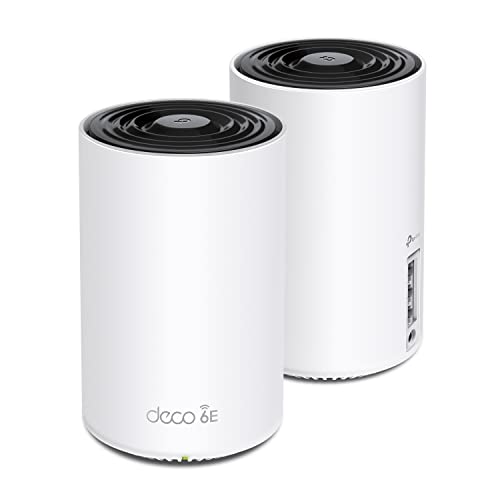
For gaming, the frequency band you choose directly impacts latency and interference. WiFi 6 (2.4 GHz + 5 GHz) is already a huge upgrade over older standards, but WiFi 6E adds a 6 GHz band that is dedicated to newer devices. This extra band means less congestion from legacy gadgets like smart bulbs or older phones. The TP-Link AXE5400 Tri-Band WiFi 6E Router and the TP-Link Deco XE75 AXE5400 Tri-Band WiFi 6E Mesh both support 6 GHz, giving you a cleaner channel for gaming traffic. If you already own WiFi 6E-compatible devices, these models will provide near-zero latency. For a deeper look at WiFi 6 options, see our best mesh WiFi routers guide.
Tri-Band vs. Dual-Band: Dedicated Backhaul for Speed
Mesh systems use one band to communicate between nodes (backhaul) and another to serve your devices. A tri-band system reserves a whole band for backhaul, so your gaming traffic never competes with node-to-node communication. The TP-Link Deco XE75 is a true tri-band mesh with a dedicated 6 GHz backhaul option, ensuring maximum throughput even in large homes. Dual-band systems like the TP-Link AX1800 WiFi 6 Router (Archer AX21 V5) share the same band for backhaul and device traffic, which can cause slowdowns if many clients are active. For competitive gaming, a tri-band mesh is strongly recommended.
Coverage and Node Placement
Gaming setups often span multiple rooms, from the living room console to a bedroom PC. A mesh system should cover your entire home without dead zones. The TP-Link Deco XE75 two-pack covers up to 5,500 square feet, while the Tenda AX3000 WiFi 6 Router uses high-gain antennas and EasyMesh to extend coverage. For larger homes, consider adding extra nodes or a system with dedicated backhaul. Our Best Mesh Routers for Large Homes article covers systems built for expansive layouts.
Latency-Reducing Technologies: OFDMA and MU-MIMO
Modern WiFi 6 routers use OFDMA and MU-MIMO to split channels into smaller sub-channels, allowing multiple devices to transmit simultaneously without waiting. This reduces latency spikes when family members are streaming or browsing. All four products we reviewed support these technologies, but the TP-Link AXE5400 and Deco XE75 also include additional RAM and a faster CPU to handle heavy gaming loads. For esports titles where every millisecond counts, these features are essential.
Final Thoughts
After careful evaluation, we recommend two standout systems for different gaming needs. If you want a single, powerful router that delivers exceptional WiFi 6E performance and wired reliability, the TP-Link AXE5400 Tri-Band WiFi 6E Router is our top pick for gamers who prioritize low latency and future-proofing. For whole-home coverage without any signal drops, the TP-Link Deco XE75 AXE5400 Tri-Band WiFi 6E Mesh two-pack provides seamless roaming and dedicated backhaul, making it ideal for larger households with multiple gamers. Both models leverage WiFi 6E to keep your connection fast and interference-free, so you can focus on winning.
Related Guides
- Best WiFi Router For Gigabit Internet
- Top Routers with Parental Controls for 2026
- Top Routers Under $200 for 2026
Frequently Asked Questions
Do I really need a mesh router for gaming?
If you live in a home larger than 1,500 square feet or have thick walls that block WiFi signals, a mesh router is a smart investment. It eliminates dead zones and reduces latency by placing nodes closer to your gaming devices. Even in smaller spaces, a mesh system can improve stability if you have many connected devices.
Is WiFi 6E worth it for gaming in 2026?
Yes, if you own WiFi 6E-compatible devices such as the latest laptops, phones, or gaming consoles. The 6 GHz band is less crowded, offering lower latency and higher throughput. For competitive online gaming, the difference can be noticeable. However, if your devices are older, a high-quality WiFi 6 router like the TP-Link AX1800 still delivers excellent performance.
How many mesh nodes do I need for a large home?
For homes over 3,000 square feet, a two-pack system like the TP-Link Deco XE75 is often sufficient. If you have multiple floors or thick concrete walls, adding a third node can help. You can always expand with additional compatible units. For guidance on coverage, read our Best Mesh Routers for Large Homes guide.
Can I use a mesh router with my existing modem?
Yes, all the routers we reviewed work with any standard internet service provider. You simply connect the main node to your modem via Ethernet. Some ISPs require a compatible modem, so check compatibility before purchasing. The setup process is usually handled through a mobile app, making it straightforward.


