

Imagine pulling into a scenic RV park after a long drive, only to find the campground Wi-Fi is slow, unreliable, or requires repeated logins for every device. That frustration is all too common for RVers who depend on a stable internet connection for work, streaming, or staying in touch. A travel router solves this by creating your own private, secure network from any available connection, whether it’s campground Wi-Fi, a wired Ethernet port, or even your phone’s cellular data. In this guide, we review the two best travel routers for RV use in 2026: the Roam 6 AX1500 Portable Wi-Fi 6 Travel Router and the GL.iNet GL-SFT1200 Opal Travel Router. Both are compact, affordable, and packed with features to keep you connected wherever the road takes you. For more on selecting the right networking gear, explore our Routers category.

Buying Guide: What to Look for in a Travel Router for Your RV
Portability and Durability
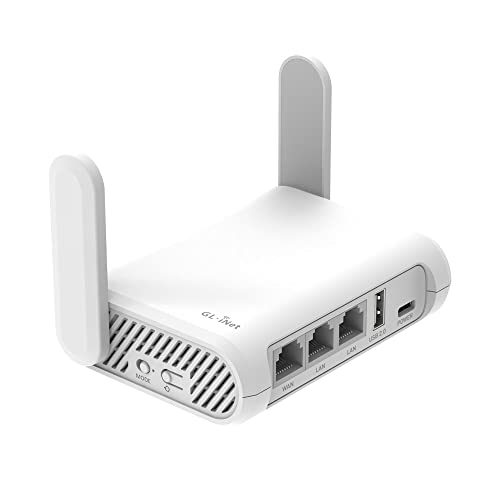
An RV travel router must be small enough to stow in a glove compartment or backpack, yet rugged enough to handle the bumps and temperature swings of life on the road. Look for pocket-sized designs that weigh under 200 grams. Both the TP-Link Roam 6 and the GL.iNet Opal fit this bill, with compact bodies that slip easily into a side pocket. The Roam 6 features a durable plastic shell, while the Opal includes retractable antennas for better signal reception when you need it.
Wi-Fi Speeds and Standards
Your router’s speed determines how smoothly you can stream, video call, or game. The TP-Link Roam 6 supports Wi-Fi 6 (AX1500), offering combined speeds up to 1,201 Mbps on the 5 GHz band and 300 Mbps on 2.4 GHz. This is ideal for handling multiple devices simultaneously, a common scenario in an RV with phones, laptops, and smart TVs. The GL.iNet Opal uses Wi-Fi 5 (AC1200) with up to 867 Mbps on 5 GHz and 300 Mbps on 2.4 GHz, which is still plenty for most tasks. If you have many Wi-Fi 6 devices, the Roam 6 is the future-proof choice.
Security and VPN Support
Public Wi-Fi at campgrounds and coffee shops is notoriously insecure. A travel router protects your data by creating a private network that encrypts all traffic. Both routers support VPN protocols: the Roam 6 works with OpenVPN and WireGuard, while the Opal also pre-installs OpenVPN and WireGuard and even offers a physical toggle switch to enable VPN quickly. This is crucial for remote workers who need to access company resources safely. For more on secure networking, check our Best VDSL Modem Routers guide, which covers VPN-friendly options.
Connectivity Options
An RV router should adapt to various internet sources: campground Ethernet, public Wi-Fi, or cellular tethering. The TP-Link Roam 6 offers multiple modes (Router, AP, Repeater, Client) and can be powered via USB-C from a power bank, making it incredibly flexible. It also has one WAN/LAN and one LAN port for wired devices. The GL.iNet Opal includes two Gigabit LAN ports and one WAN port, plus the ability to repeat public Wi-Fi. However, note that the Opal does not support EasyTethering for USB tethering, so the Roam 6 is better if you plan to use a phone as a modem. For more wired connectivity insights, see our Top Cable Modem Routers for Gaming article.
Final Thoughts
Choosing the right travel router for your RV comes down to your specific needs: if you want the fastest Wi-Fi 6 speeds, USB-C power flexibility, and robust VPN support for remote work, the Roam 6 AX1500 Portable Wi-Fi 6 Travel Router is the clear winner. If you prefer a budget-friendly option with a physical VPN toggle and retractable antennas for better range, the GL.iNet GL-SFT1200 Opal Travel Router is a solid, reliable companion. Both will keep you securely connected on the road, whether you’re parked at a full-hookup site or boondocking with only a cellular signal.
Frequently Asked Questions
Can I use a travel router in an RV without internet?
Yes, a travel router can create a local network for file sharing or connecting devices to each other even without an internet source. However, to access the web, you need an internet connection from campground Wi-Fi, a wired Ethernet port, or a cellular hotspot. Many RVers tether their phone to the router for on-the-go connectivity.
How do I set up a travel router in an RV?
Setup is straightforward. For campground Wi-Fi, put the router in Repeater or Client mode, connect it to the campground network, and then connect your devices to the router’s private network. For wired connections, plug an Ethernet cable from the campground’s port into the router’s WAN port. Both the TP-Link and GL.iNet routers have intuitive mobile apps or web interfaces to guide you through the process.
Do travel routers work with campground Wi-Fi?
Absolutely. That’s one of their primary uses. A travel router connects to the campground’s public Wi-Fi and rebroadcasts it as a secure, private network. This eliminates the need to log in on every device and adds a layer of encryption. The TP-Link Roam 6 even offers one-step captive portal authentication through its app, so you only log in once.
What is the difference between a travel router and a hotspot?
A hotspot (like a dedicated mobile hotspot or your phone’s hotspot) uses cellular data to create a Wi-Fi network. A travel router, on the other hand, can take any internet source (Wi-Fi, Ethernet, or cellular via USB tethering) and create a secure network. Travel routers often offer more advanced features like VPN support, multiple device management, and better signal range. For RVers, a travel router is more versatile because it can work with campground Wi-Fi or a wired connection.


