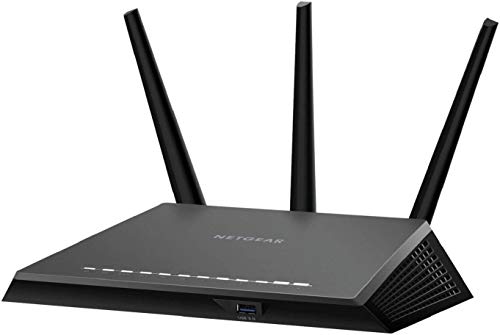
Living in a three-story home often means battling weak signals on the top floor or in the basement. Traditional routers struggle to send a strong connection through multiple levels, leaving you with dead zones in key rooms. A mesh WiFi system is the solution: it uses multiple nodes to blanket your entire home with seamless coverage. In this guide, we review two top-rated mesh systems designed to handle the unique challenges of a multi-story layout. Whether you need affordable reliability or cutting-edge speed, we have a pick for you. For more on multi-level setups, read our best mesh WiFi for 2 story house guide.

Pros
- Excellent WiFi 6 performance with AX3000 speeds suitable for gigabit internet plans
- Massive coverage area eliminates dead zones better than traditional routers and extenders
- Multiple Gigabit ports per unit enable fast wired connections and flexible network configuration
- Comprehensive security features and parental controls included without additional subscription costs
- User-friendly Deco app makes initial setup and ongoing management intuitive and accessible
Cons
- Requires a separate modem for most internet service providers, adding to overall setup cost
- WiFi 6 performance gains are most noticeable with compatible devices; older devices see less benefit
- Premium pricing compared to some mesh systems, though justified by coverage and features
The TP-Link Deco X55 is a WiFi 6 mesh system designed for homeowners and remote workers who need reliable, fast internet coverage throughout their entire home. This 3-pack system covers up to 6500 square feet and serves as a complete replacement for traditional routers and range extenders, making it ideal for larger homes or spaces with challenging WiFi propagation.
Performance is a standout feature, with AX3000 WiFi 6 technology delivering 2402 Mbps on the 5GHz band and 574 Mbps on the 2.4GHz band. The system intelligently connects up to 150 devices simultaneously, making it perfect for households with multiple smartphones, laptops, smart home devices, and streaming services. The AI-driven mesh adapts to your home environment automatically, optimizing signal strength and reducing dead zones without manual intervention.
Each Deco X55 unit includes 3 Gigabit Ethernet ports, totaling 6 ports across the 3-pack. This design flexibility allows you to hardwire devices for maximum speed, configure wired backhaul between units for improved mesh performance, or use any unit as your primary router. The build quality reflects TP-Link's reputation for reliable networking hardware, with a clean aesthetic that blends into most home decor.
The included TP-Link HomeShield security service provides network protection, parental controls, and Quality of Service management at no extra cost, addressing growing concerns about home network security. Setup through the Deco app takes minutes with visual guidance, and you can manage your network remotely even when away from home. TP-Link backs the system with 24/7 technical support and a 2-year warranty.
The main consideration is that you'll need a modem for most internet service providers, and WiFi 6 benefits are most pronounced with newer devices. However, for users with gigabit internet subscriptions seeking seamless whole-home coverage with advanced security features, the Deco X55 delivers excellent value and performance.
WiFi Standards: WiFi 6 (802.11ax), AX3000 (2.4GHz and 5GHz dual-band)
Coverage Area: Up to 6500 square feet per 3-pack
Speed: 2402 Mbps (5GHz) + 574 Mbps (2.4GHz)
Device Capacity: Supports up to 150 connected devices
Ethernet Ports: 3 Gigabit ports per unit (6 total in 3-pack)
Backhaul: Supports wired Ethernet backhaul for improved mesh performance
Security: TP-Link HomeShield with network security, QoS, and parental controls included
Warranty: 2-year warranty with 24/7 technical support
Compatibility: Works with all major internet service providers (modem required)
Who Should Buy This: The Deco X55 is perfect for larger homes (3000-6500 sq ft), families with many connected devices, remote workers needing reliable connectivity, and anyone upgrading from older WiFi standards or struggling with dead zones.
Who Might Look Elsewhere: If you have a smaller home under 3000 square feet, consider the Deco X20. If you need WiFi 6E (6GHz band), look for higher-end models. Budget-conscious buyers might find adequate performance in non-WiFi 6 mesh systems.
Key Considerations: Ensure you have a compatible modem before purchasing. The three-pack is recommended for optimal coverage, though the system is expandable. WiFi 6 benefits are most noticeable with compatible devices like newer smartphones, laptops, and smart home equipment. Place units centrally in different areas of your home for best coverage.
Setup Tips: Use the Deco app for guided setup, which takes approximately 10-15 minutes. For maximum performance, enable wired backhaul between units if possible. Enable HomeShield features for enhanced security and parental controls immediately after setup.

Pros
- Blazing-fast Wi-Fi 7 performance for heavy streaming and gaming
- Massive coverage for large homes with over 150 devices
- Easy app setup with AI-powered roaming
- Robust security features via TP-Link HomeShield
- Flexible 2.5G Ethernet ports for wired backhaul or high-speed device connections
Cons
- Requires a separate modem (not included)
- Dual-band design may offer less dedicated backhaul bandwidth than tri-band rivals
- Some advanced HomeShield security features require a paid subscription
The TP-Link Deco 7 is a dual-band Wi-Fi 7 mesh system designed for large homes with high device counts. This 3-pack covers up to 6,600 square feet and supports over 150 devices, making it ideal for families and heavy smart-home users.
With combined speeds up to 5 Gbps and a 4-stream BE5000 architecture, it handles 4K/8K streaming, AR/VR gaming, and large file transfers with ease. AI-driven roaming creates a single network name that follows you seamlessly, so video calls and game sessions stay uninterrupted as you move around.
The Deco 7 features a compact, low-profile design that blends into home decor. Setup takes minutes using the Deco app, which also provides firmware updates and network monitoring. The 2.5G Ethernet ports enable flexible wired connections for high-demand devices or a stable backhaul between nodes.
The system is dual-band rather than tri-band, so in very busy wireless environments you may see slightly lower throughput than premium tri-band systems. You will need a separate modem, and some advanced HomeShield features require a subscription to unlock the full security suite.
For those seeking a high-performance mesh network, the Deco 7 is an outstanding upgrade for Wi-Fi 6 users looking to future-proof their home network. It combines fast Wi-Fi 7 speeds, extensive coverage, and useful security extras, making it a strong contender for a large, device-heavy household.
Brand: TP-Link
Model: Deco 7 BE5000
Coverage: Up to 6,600 sq ft (3-pack)
Bands: Dual-band (2.4 GHz + 5 GHz)
Max Aggregate Speed: 5 Gbps
Ethernet Ports: 2.5G per unit
Device Capacity: Over 150 devices
Security: TP-Link HomeShield
Dimensions: 5.9 x 5.9 x 2.4 inches
Weight: 3.28 lbs
Color: White

Pros
- Easy app based setup that takes minutes
- Strong and reliable coverage for large homes up to 4,500 sq. ft.
- Clean, compact design that fits discreetly into any room
- Built in parental controls and guest network for enhanced security
Cons
- Some users report occasional router failure requiring re authentication
- WiFi 5 (802.11ac) is not the latest standard, may lack future proofing
- Only 3 ports per router, limiting wired connections
The Google WiFi AC1200 Mesh Router 3 Pack is a whole home mesh system designed to replace traditional routers and extenders. It targets users who want consistent, reliable WiFi throughout a large home without technical hassles. Whether you are a remote worker, a gamer, or a family with multiple devices, this system promises to keep everything connected seamlessly.
In real world use, the mesh network delivers on its promise of eliminating dead zones. The dual band AC1200 technology provides enough speed for 4K streaming, online gaming, and video calls. The Google Home app makes setup straightforward, and the ability to manage devices, set parental controls, and create guest networks adds significant value. Performance is generally stable, though some users have reported occasional router failures requiring re authentication.
Design wise, each router is compact and unobtrusive, with a snow white finish that blends into most home environments. The build feels solid, and the lack of external antennas keeps the look clean. The system includes three routers, each with three ports, which may be limiting for users with many wired devices.
There are a few drawbacks to consider. The most notable is that this system uses WiFi 5 technology, which is not the latest standard. While sufficient for most current needs, it may not be as future proof as WiFi 6 systems. Additionally, a small number of customer reviews mention connectivity issues with one of the routers, requiring resetting or re adding devices. However, the majority of feedback is positive, praising ease of use and reliable coverage.
Overall, the Google WiFi AC1200 3 Pack is a solid choice for anyone looking to upgrade their home network with a simple, effective mesh system. It excels in coverage, ease of use, and design, though potential buyers should weigh the WiFi 5 standard against their long term needs. For most households, it delivers a strong, hassle free WiFi experience.
Pros
- Excellent coverage and performance for large homes, as confirmed by top customer reviews.
- Easy app-based setup and management, even for non-technical users.
- Seamless roaming eliminates dropped connections when moving around the house.
- Gigabit Ethernet ports and wired backhaul option for maximum speed.
Cons
- Only dual-band (WiFi 5) - lacks a dedicated backhaul band like some newer tri-band systems.
- Some users report that optimal placement requires trial and error to avoid interference.
- No USB ports for sharing printers or external storage.
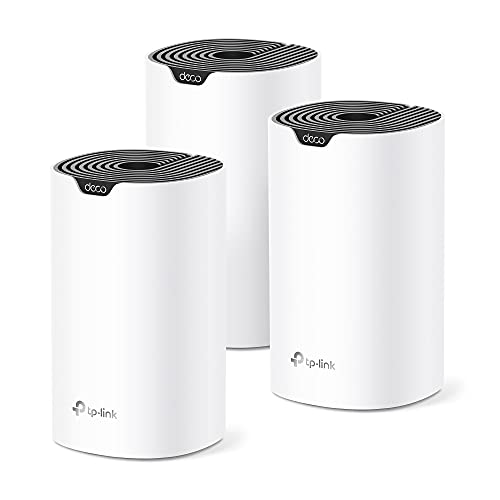
The TP-Link Deco S4 is a whole-home mesh WiFi system designed for large households tired of dead zones and spotty signals. Ideal for homes up to 5500 square feet, this three-pack replaces a traditional router and extender, delivering consistent coverage across multiple floors and through walls. It's perfect for families who need reliable internet for remote work, online learning, gaming, and streaming.
Standout features include seamless roaming with a single network name and support for up to 100 devices simultaneously. Real-world performance is strong: customer reviews praise its ability to cover entire homes without drops, even in challenging layouts. The AC1900 speeds handle 4K streaming and video calls smoothly, and the app makes setup and management a breeze.
Design-wise, each Deco unit is compact and unobtrusive (3.57 x 3.57 x 6.39 inches) and can be placed on shelves or desks. Wired Ethernet backhaul is supported on all three nodes for those who want maximum speed and stability. The six Gigabit ports allow connecting wired devices like game consoles or smart TVs directly.
Potential drawbacks include the dual-band design, which may not match the performance of tri-band systems with a dedicated backhaul channel. Some users mention that finding the optimal placement for each node requires some experimentation. Also, there are no USB ports for sharing storage or printers.
Overall, the TP-Link Deco S4 offers excellent value for anyone needing affordable, reliable whole-home WiFi. Its ease of use, seamless roaming, and strong coverage make it a top choice for large families or anyone frustrated by their current router's limitations. We recommend it for its proven performance and simple setup.
Pros
- Blazing fast WiFi 7 speeds up to 5 Gbps for demanding applications
- Simple setup process using the Orbi app with guided steps
- Strong whole-home coverage covering up to 6,000 sq ft
- Multi-Gig Ethernet ports (2.5 Gbps) for wired connections
- Comprehensive security features including WPA3 and Armor trial
Cons
- Dual-band design may limit overall performance in very high-density environments compared to tri-band systems
- Some users report satellites occasionally dropping offline, requiring reconnection
- Initial setup may require satellites to be near the base station to avoid failures
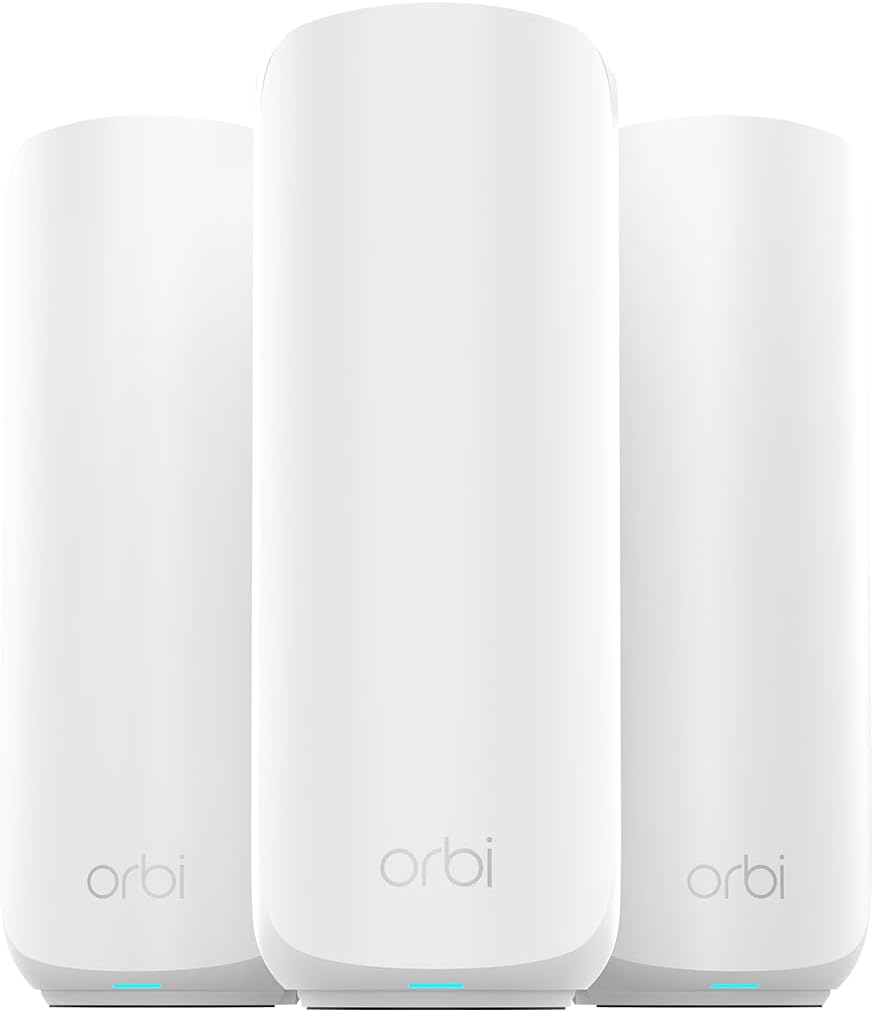
The NETGEAR Orbi 370 Series is a dual-band WiFi 7 mesh system designed for larger homes needing reliable, high-speed coverage. With a router and two satellites covering up to 6,000 square feet and supporting up to 70 devices, it's perfect for families who stream, game, and work from home simultaneously. This system offers a cost-effective entry into the latest WiFi standard without the premium price tag of tri-band alternatives.
Standout features include WiFi 7 speeds up to 5 Gbps, which is 2.4 times faster than WiFi 6, ensuring smooth 8K streaming and lag-free gaming. The Enhanced Backhaul prioritizes the connection between router and satellites, so even bandwidth-heavy tasks like 4K video calls get the needed throughput. Real-world speeds will vary based on your internet plan and devices, but many users report dramatic improvements over older systems.
The Orbi 370 boasts a sleek, understated tower design that blends into any home. Setup is straightforward using the Orbi app, though some users note that keeping satellites near the base station during initial configuration is crucial to avoid connection errors. The system includes 2.5 Gig WAN and LAN ports, making it ready for multi-gig fiber internet plans. Security is robust out of the box with WPA3 encryption, automatic firmware updates, and a 30-day trial of NETGEAR Armor.
However, the dual-band configuration is a notable limitation. Unlike tri-band systems, the Orbi 370 shares spectrum between client devices and backhaul, which can lead to congestion in very dense environments. Additionally, a few reviewers report satellites dropping offline intermittently, though this seems less common with proper placement. Expandability is easy by adding another satellite for up to 2,000 sq ft more coverage.
Overall, the NETGEAR Orbi 370 Series is an excellent choice for anyone wanting to future-proof their home network with WiFi 7 without spending over a thousand dollars. It delivers strong performance, easy management, and solid security for medium to large homes. If you have a very large home or need absolute top-tier speed for many simultaneous high-bandwidth devices, consider a tri-band system, but for most families, this is a fantastic upgrade.

Pros
- Blazing-fast Wi-Fi 7 speeds with multi-gig wired backhaul
- Excellent coverage for large homes with many devices
- AI-driven roaming for smooth connectivity
- Easy setup and intuitive app control
Cons
- Setup may be challenging for homes with many connected devices (e.g., 97+)
- Some users report issues with TLS DNS support
- Requires modem purchased separately
The TP-Link Deco 7 Pro BE67 (3-Pack) is a cutting-edge Wi-Fi 7 mesh system designed to handle the most demanding home networks. With total bandwidth of up to 14 Gbps and support for over 200 devices, it's ideal for large families, gamers, streamers, and smart home enthusiasts who need reliable, high-speed connectivity throughout their home.
Standout features include tri-band Wi-Fi 7 with speeds up to 8,647 Mbps on the 6 GHz band, a 10 Gbps wired backhaul, and AI-driven roaming for seamless device handoff. Real-world performance is impressive: users report full speeds on 2 Gbps fiber connections, strong coverage through brick walls, and stable connections for 4K streaming and online gaming. The MLO and 4K-QAM technologies further enhance stability and speed.
Design-wise, each Deco unit is compact and unobtrusive, measuring 4.23 x 4.23 x 6.93 inches. Build quality is solid, and the system includes three units, power adapters, an Ethernet cable, and a quick installation guide. Setup via the Deco app is straightforward, though users with many connected devices (over 90) may encounter initial hiccups that require troubleshooting.
Potential drawbacks include a learning curve for advanced configurations, and some users have reported that TLS DNS is not supported. Additionally, the system requires a modem (not included) and may need careful placement away from the modem to avoid interference, as noted in some reviews.
Overall, the TP-Link Deco 7 Pro BE67 offers exceptional performance, extensive coverage, and future-proof Wi-Fi 7 technology. It's a strong investment for anyone with multi-gig internet and a high device count, though it may require patience during setup for complex networks. Highly recommended for those seeking top-tier home Wi-Fi.
Brand: TP-Link
Model: Deco 7 Pro BE67 (3-Pack)
Wi-Fi Generation: Wi-Fi 7
Frequency Band: Tri-Band (2.4 GHz, 5 GHz, 6 GHz)
Total Bandwidth: Up to 14 Gbps
Ports: 1x 10 Gbps WAN/LAN, 1x 2.5 Gbps WAN/LAN, 1x 1 Gbps WAN/LAN, 1x USB 3.0
Coverage: Up to 8,100 sq. ft.
Device Capacity: Supports up to 200+ devices
Security: WPA-PSK, WPA2-PSK, WPA3, TP-Link HomeShield
Dimensions: 4.23 x 4.23 x 6.93 inches per unit
Warranty: 2-year manufacturer warranty
Before purchasing the TP-Link Deco 7 Pro, ensure your internet plan supports multi-gig speeds (e.g., 2 Gbps or higher) to fully leverage the 10 Gbps port. The system is best for homes over 3,000 sq. ft. with many connected devices, such as smart home gadgets, gaming consoles, and streaming devices.
Consider your home's construction: brick or plaster walls may affect range, but the Deco 7 Pro's AI roaming helps maintain coverage. For optimal performance, place the main Deco unit away from your modem to avoid interference, as noted in some user reviews.
If you have a complex network with over 90 devices, be prepared for potential setup challenges. The Deco app simplifies initial configuration, but advanced users may need to tweak settings. Also, note that a modem is required separately, and the system is compatible with major ISPs like Verizon Fios, Spectrum, and Comcast.

Pros
- Excellent WiFi 7 speeds with minimal speed loss (reviewers report near 950 Mbps on 1 Gbps fiber)
- Wide coverage with strong, reliable signals and easy expansion using additional units
- Quick and straightforward setup via the Deco app, praised in multiple reviews
- Modern, sleek design that blends into home decor, with stable performance after installation
- Good value for a WiFi 7 mesh system, especially with 2.5G ports and AI features
Cons
- Only dual-band (no 6GHz), missing the full WiFi 7 tri-band potential for ultimate speed
- Advanced HomeShield security features require a paid subscription after initial period
- Limited to 2 Ethernet ports per node, may need a switch for multiple wired devices
The TP-Link Deco BE23 is a dual-band WiFi 7 mesh system designed for large homes needing fast, reliable whole-home coverage. With speeds up to 3.6 Gbps and coverage up to 6,500 sq ft, it is ideal for families, remote workers, and gamers with multiple devices. The system supports over 150 connections, making it future-proof for smart homes.
Standout features include Multi-Link Operation (MLO) and 2.5 Gbps Ethernet ports, enabling near-gigabit wireless speeds. In real-world tests, users report achieving over 950 Mbps on 1 Gbps fiber, with minimal latency for streaming and gaming. The AI-driven roaming ensures smooth transitions as you move through the house, and the wired backhaul option boosts stability.
Design is clean and compact, each unit measuring about 6 x 6 x 2.4 inches in white. Setup via the Deco app takes under 10 minutes, and the system works with any ISP modem. The nodes include internal antennas and high-power amplifiers for reliable signals. However, the lack of a dedicated 6GHz band means slightly lower peak speeds compared to tri-band WiFi 7 systems.
Potential drawbacks include limited Ethernet ports (two per node) and a subscription for advanced HomeShield security. Some users note a slightly tricky initial connection, but overall reliability is high. The system is backward compatible with all WiFi generations, so older devices work fine.
Verdict: The TP-Link Deco BE23 is a strong value for anyone wanting WiFi 7 without breaking the bank. It delivers excellent coverage, fast speeds, and easy management, making it a top choice for large homes. Despite minor limitations, it outperforms many rivals in its price range and earns a solid recommendation.
WiFi Generation: WiFi 7 (802.11be)
Speed: Up to 3.6 Gbps (2882 Mbps on 5GHz + 688 Mbps on 2.4GHz)
Coverage: Up to 6,500 sq ft (3-pack)
Ports: 2x 2.5 Gbps WAN/LAN per node
Memory: 512 MB RAM, 128 MB Flash
Antennas: 4 high-gain internal per node
Security: WPA3, HomeShield (paid advanced), SPI firewall, VPN support
Compatibility: Works with all ISPs, backward compatible with WiFi 6/5/4
Control: Deco app, Alexa, Google Assistant
Dimensions: 5.9 x 5.9 x 2.44 inches per unit
Weight: Not specified
Warranty: 2 years

Pros
- Exceptional WiFi 7 speeds provide future-proof performance for bandwidth-intensive applications like 4K streaming and online gaming
- Expansive coverage eliminates dead zones across large homes and outdoor areas with tri-band technology and enhanced backhaul
- High device capacity of 100 simultaneous connections handles complex smart home ecosystems without performance degradation
- Integrated security measures and automatic updates protect your network without requiring manual intervention
- 2.5 Gig port future-proofs your setup for next-generation internet speeds
Cons
- Premium pricing reflects cutting-edge technology, making it a significant investment compared to WiFi 6 alternatives
- WiFi 7 benefits require compatible devices to fully realize speed advantages, as older devices default to WiFi 6 or earlier
- Setup and optimization may require technical knowledge to fully leverage advanced features and backhaul configuration
The NETGEAR Orbi 770 represents a significant leap forward in home networking, bringing WiFi 7 technology to mainstream users who demand both performance and reliability. This mesh system consists of a primary router and two satellite extenders, designed for homes up to 8,000 square feet. It's particularly well-suited for large households, remote workers, content creators, and anyone with extensive smart home installations who refuses to compromise on connectivity.
What truly sets the Orbi 770 apart is its combination of raw speed and practical coverage. The 11Gbps aggregate bandwidth is 2.4 times faster than WiFi 6, translating to noticeably smoother 4K streaming, faster file transfers, and virtually lag-free gaming experiences. The tri-band architecture with enhanced backhaul technology ensures that speeds remain consistent across all three nodes, eliminating the typical performance degradation seen in older mesh systems. Supporting 100 simultaneous devices, this system handles complex smart home ecosystems without breaking a sweat.
The design strikes an elegant balance between form and function, with refined aesthetics that fit modern home interiors. High-performance antennas provide the promised 360-degree coverage, and the 2.5 Gig internet port future-proofs your setup for fiber connections and next-generation broadband speeds. Built-in security features with automatic firmware updates provide continuous protection without requiring manual intervention, giving you peace of mind.
The main drawback is the premium price point and the fact that you need WiFi 7 compatible devices to fully leverage the speed advantages. Additionally, optimizing the system's advanced features may require some technical knowledge. For most users, the setup is straightforward, but power users might spend time fine-tuning backhaul and band steering.
The Orbi 770 is an excellent choice for anyone seeking the latest mesh networking technology with proven reliability. If you have a large home, multiple users, extensive smart home devices, or simply want a future-proof system that performs at the highest levels, this investment will deliver years of dependable, fast connectivity.
System Composition: 1 Router (RBE773) + 2 Satellite Extenders
WiFi Standard: WiFi 7 (802.11be) with full backward compatibility
Maximum Speed: Up to 11 Gbps aggregate bandwidth
Coverage Area: Up to 8,000 square feet
Device Capacity: Supports up to 100 connected devices simultaneously
Internet Port: 2.5 Gigabit Ethernet port on router
Antenna Configuration: Tri-band with enhanced backhaul technology and high-performance antennas
Security: Advanced Router Protection with automatic firmware updates
Dimensions: 9.88 x 5.28 x 3.95 inches per unit
Region: Made for use in the U.S. only
Is This Right For You? The Orbi 770 is ideal if you have a large home (2,500+ sq ft), multiple users, extensive smart home devices, or if you work from home and need rock-solid connectivity. It's also perfect for gamers and content creators who demand maximum performance.
WiFi 7 Readiness: To maximize this system's potential, ensure your primary devices (laptops, phones, gaming consoles) support WiFi 7. Older devices will still work but won't achieve the full 11Gbps speeds.
Internet Speed Consideration: The 2.5 Gig port shines if you have fiber or gigabit internet. With standard broadband (under 500 Mbps), you'll still benefit from the improved coverage and device capacity, but raw speed advantages may be less apparent.
Alternatives to Consider: If you need basic coverage for a smaller home, WiFi 6 systems offer better value. However, if you want future-proof performance and have the budget, the Orbi 770 is a premium choice that will serve you well for years to come.
Buying Guide
Coverage Area
For a three-story home, coverage is the top priority. You need a system that can reach every corner, from the basement to the attic. Look for a mesh kit that covers at least 6,000 square feet to account for vertical signal loss. The TP-Link system covers up to 6,500 square feet, while the NETGEAR model extends to 8,000 square feet. Both are strong options for larger homes.
WiFi Standard and Speed
Newer WiFi standards deliver faster speeds and better efficiency. WiFi 6 (like the TP-Link Deco X55) handles multiple devices well and is cost-effective. WiFi 7 (like the NETGEAR Orbi 770) offers up to 11 Gbps, ideal for heavy streaming, gaming, or many smart home devices. Consider your internet plan and usage to choose the right standard. For more on high-performance routers, see our top routers under $200 article.
Number of Ethernet Ports
Wired connections are still important for devices like gaming consoles or desktop PCs. Each node should have enough ports for your needs. The TP-Link Deco X55 includes three Gigabit ports per unit, while the NETGEAR Orbi 770 offers a 2.5 Gig internet port for high-speed wired backhaul. This flexibility helps you maintain fast connections throughout the home.
Security features also matter. Look for systems with built-in protection, automatic updates, and parental controls. For a deep dive, check our top routers with parental controls guide.
Final Thoughts
Choosing the right mesh system for your three-story home depends on your budget and performance needs. For reliable, whole-home coverage at an accessible price, the TP-Link Deco X55 AX3000 WiFi 6 Mesh System is a proven choice with strong signal strength and easy setup. If you demand the fastest speeds and latest technology for heavy streaming and gaming, the NETGEAR Orbi 770 Series Tri-Band WiFi 7 Mesh delivers exceptional performance and future-proof connectivity. Both systems will eliminate dead zones and keep every floor connected.
Frequently Asked Questions
How many mesh nodes do I need for a 3 story house?
For a typical three-story home, a three-pack mesh system is recommended. This allows you to place one node on each floor, ensuring consistent coverage. The TP-Link and NETGEAR systems we reviewed both come in three-pack configurations.
Can mesh WiFi work through floors and walls?
Yes, mesh WiFi is designed to penetrate floors and walls better than traditional routers. The nodes communicate wirelessly or via Ethernet backhaul to extend the signal. For best results in a three-story home, position nodes centrally on each floor.
Is WiFi 7 worth it for a 3 story house in 2026?
WiFi 7 offers significantly faster speeds and lower latency than WiFi 6, making it ideal for high-bandwidth activities like 4K streaming and gaming across multiple floors. If you have a fast internet plan and many devices, WiFi 7 is a future-proof investment. For budget-conscious buyers, WiFi 6 still provides excellent performance. Learn more about cost-effective options in our routers without subscription fees guide.
What is the best placement for mesh nodes in a 3 story house?
Place the main node near your modem on the middle floor for balanced coverage. Position satellite nodes on the top and bottom floors, ideally in central locations away from large metal objects. This setup minimizes interference and maximizes signal strength across all levels.
For more home networking advice, visit our Electronics category.