

You’re walking down a bustling city street, the light is perfect, and you see a moment unfold. You raise your camera, but by the time you focus, the moment is gone. Finding a camera that keeps up with your eye and feels natural in your hands is key. This guide focuses on the best Fujifilm mirrorless cameras for street photography, a brand known for its compact, discreet, and beautifully styled bodies. We’ve reviewed two excellent models to help you choose the one that fits your shooting style.
Whether you’re a seasoned shooter or just starting out, we’ve got you covered. We’ll explore the key features that matter most for street work, from autofocus speed to the tactile feel of manual controls. For more options in the mirrorless world, you might also check out our guide to top Nikon mirrorless cameras for a different perspective.


Buying Guide
Autofocus Performance for Candid Moments
Street photography is all about capturing fleeting moments, often without your subject’s knowledge. A camera with reliable and fast autofocus (AF) is non-negotiable. Look for models with AI-powered subject detection, which can track eyes and faces with precision, even in challenging lighting. This allows you to compose your shot and let the camera do the heavy lifting, ensuring your subject is tack sharp.
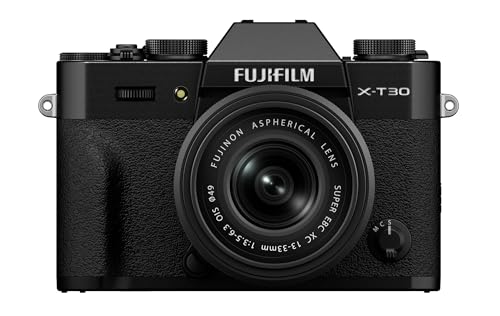
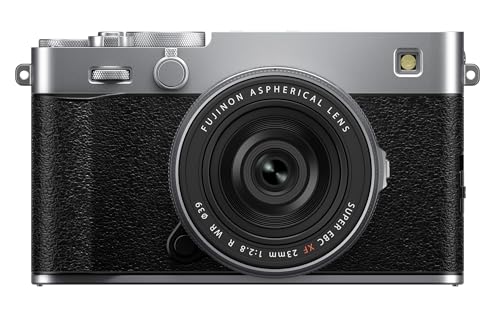
In our review, we looked for cameras that offer quick, silent focusing, which is crucial for staying inconspicuous. The FUJIFILM X-T30 III, for example, features AI-powered subject detection that keeps up with moving subjects. Similarly, the FUJIFILM X-E5 uses deep learning AI to recognize a broader range of subjects, making it a versatile tool for the streets.
Image Quality and Film Simulations
The heart of any Fujifilm camera is its image quality and the famous Film Simulations. These presets allow you to achieve stunning, film-like looks straight out of camera, saving you time in post-processing. For street photography, having a unique color palette can define your style. The X-Trans sensor technology delivers excellent detail and dynamic range, giving you flexibility in editing.
We evaluated the 40.2-megapixel sensor found in the X-E5, which offers incredible resolution for cropping. The X-T30 III also delivers superb image quality with its 26.1-megapixel sensor, a sweet spot for most photographers. Both cameras give you access to Fujifilm’s legendary Film Simulations, allowing you to experiment with different looks without a computer.
Build Quality and Portability
Street photography means carrying your camera for hours, so size and weight matter. A compact, lightweight body is easier to have with you at all times, ensuring you never miss a shot. The build quality should feel robust yet discreet, with controls that are intuitive and within reach. A camera that looks like a classic film camera can also be less intimidating to your subjects.
We considered the tactile experience of each model. The FUJIFILM X-T30 III offers a timeless design in a compact body, while the X-E5 features a machined aluminum top-plate, echoing the style of rangefinder cameras. Both are beautifully crafted, but the X-E5’s premium feel and dedicated Film Simulation dial might appeal to purists. For more on compact options, you can also see our roundup of Sony vlogging cameras.
Lens Ecosystem and Versatility
The beauty of a mirrorless system is the ability to change lenses to suit your needs. A fast prime lens, like a 23mm or 35mm, is a classic choice for street photography, offering a natural field of view and the ability to blur backgrounds. Consider the availability of compact, high-quality lenses that won’t weigh you down.
The X-T30 III comes with a versatile XC13-33mm kit lens, perfect for everyday shooting. The X-E5 is compatible with over 40 X Mount optics, giving you endless possibilities. Whether you prefer a fixed focal length or a zoom, having a system that grows with you is key. For more camera insights, you can explore our Cameras category page for more recommendations.
Final Thoughts
Choosing the right Fujifilm camera for street photography comes down to your personal style and needs. If you’re looking for a compact, easy-to-use camera with a great kit lens, the FUJIFILM X-T30 III Mirrorless Camera Body is an outstanding choice. For those who want the iconic rangefinder aesthetic with the flexibility of interchangeable lenses and a higher resolution sensor, the FUJIFILM X-E5 Mirrorless Digital Camera XF23mmF2.8 is a worthy investment. Both cameras will help you capture the soul of the city, one frame at a time.
Frequently Asked Questions
What is the best Fujifilm camera for street photography in 2026?
The best Fujifilm camera for street photography in 2026 depends on your preference for compactness versus advanced features. The FUJIFILM X-T30 III is a fantastic all-rounder, while the FUJIFILM X-E5 offers a higher resolution sensor and more premium build. Consider your budget and whether you prefer a kit lens or a prime lens.
What lens is best for street photography on a Fujifilm camera?
A 23mm f/2 lens is a classic choice for street photography on a Fujifilm camera, as it provides a 35mm equivalent field of view, which is versatile and natural. A 35mm f/1.4 is also popular for its beautiful bokeh. The new XF23mmF2.8 R WR is a compact and weather-resistant option that pairs perfectly with the X-E5.
Are Fujifilm cameras good for low-light street photography?
Yes, Fujifilm cameras are excellent for low-light street photography. Models like the X-T30 III and X-E5 feature advanced sensors that handle high ISOs well, and the X-E5’s in-body image stabilization (IBIS) helps reduce camera shake in dim conditions. Pairing them with a fast prime lens will further enhance their low-light performance.
What is the difference between the Fujifilm X-T30 III and the X-E5?
The main differences are the sensor resolution and design. The X-E5 has a higher 40.2-megapixel sensor and a more premium, rangefinder-style body with a machined aluminum top-plate. The X-T30 III is slightly more compact and comes with a kit lens, making it a great value for beginners. Both are excellent for street photography, but the X-E5 offers more room for cropping and a unique aesthetic.




