

Whether you’re a budding vlogger or a seasoned photographer, choosing the right camera can feel overwhelming. You need something that keeps up with your creative vision, delivers stunning image quality, and fits your lifestyle. That’s where Sony excels, offering a diverse lineup that caters to everyone from casual shooters to content creators. In this guide, we’ve evaluated four standout Sony cameras and a top-tier lens to help you decide which one is the right fit for your needs. We’ll break down their strengths, ideal use cases, and key features so you can make an informed choice. If you’re also exploring other brands, you might find our guide to beginner-friendly Nikon cameras a useful comparison point.


Buying Guide: What to Look for in a Sony Camera
Before diving into specific models, it helps to understand what makes a camera great for your particular needs. Here are the key factors we considered when evaluating these Sony cameras. Each one plays a crucial role in how the camera performs in real-world situations.
Sensor Size and Image Quality
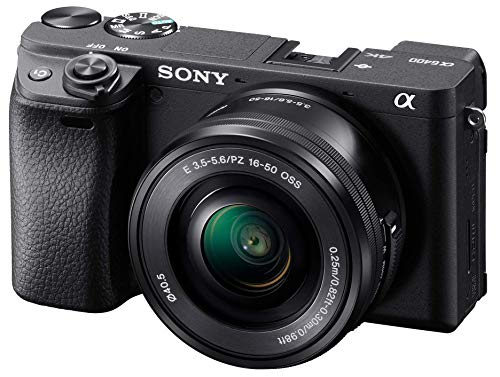
The sensor is the heart of any camera, and Sony offers different sizes to suit various needs. A larger sensor, like the 1.0-type found in the RX100 VII and ZV-1F, excels in low-light conditions and provides beautiful background blur. For even greater detail and creative control, the APS-C sensor in the Alpha a6400 is a step up.
Think about where you’ll be shooting most often. If you’re frequently in dimly lit environments or want that creamy bokeh for portraits, a larger sensor is worth prioritizing. For most vloggers and travel photographers, the 1.0-type sensor strikes a great balance between quality and portability.
Autofocus and Tracking Performance
Fast and accurate autofocus can make or break a shot, especially when capturing moving subjects. Sony’s Real-Time Eye AF and tracking technology are among the best in the industry, ensuring your subject stays sharp whether you’re filming a pet or a running child. The a6400 and RX100 VII feature advanced 425-point phase-detection systems that lock onto eyes with remarkable precision.
If you shoot a lot of action or vlog while moving, prioritize a camera with robust autofocus. The ability to touch-track a subject and have the camera hold focus is a game-changer. We recommend checking out our top picks for video-centric Nikon cameras to see how other brands compare in this area.
Video Capabilities and Vlogging Features
For content creators, video quality and usability are critical. Look for 4K recording, a flip-out screen for self-framing, and a microphone input for clear audio. The ZV-1F is designed specifically for vlogging with its ultra-wide lens and directional microphone, while the a6400 offers more advanced controls and interchangeable lens options.
Consider your shooting style. If you’re always on the go and need a compact all-in-one, a fixed-lens camera might be ideal. If you want to grow your kit with different lenses, the a6400 is a more flexible choice. For more ideas on building your gear, explore our beauty and lifestyle product roundups for creators.
Lens Ecosystem and Versatility
Interchangeable lens cameras offer the most versatility, letting you switch between wide-angle, zoom, and prime lenses. Sony’s E-mount system has a vast selection of lenses, including excellent options from third-party makers like Tamron. The Tamron 17-70mm f/2.8 is a fantastic all-around zoom lens for APS-C bodies, offering a bright aperture and image stabilization.
If you’re just starting, a kit lens might be all you need. But as you improve, having the option to upgrade your glass is invaluable. For more on building a versatile kit, check out our favorite Canon cameras under a budget for a different perspective.
Final Thoughts
Choosing the right Sony camera ultimately comes down to your personal shooting style and needs. For vloggers and social media creators who want a pocket-friendly camera with incredible audio and a wide lens, the Sony ZV-1F Compact Digital Camera 4K Video is a fantastic choice. On the other hand, if you’re a photographer or hybrid shooter who wants the flexibility of interchangeable lenses and top-tier autofocus, the Sony Alpha a6400 Mirrorless Camera is a versatile workhorse that won’t disappoint. Both deliver exceptional value and are sure to elevate your creative projects.
Related Guides
Frequently Asked Questions
Which Sony camera is best for vlogging in 2026?
For most vloggers, the Sony ZV-1F is an excellent choice due to its ultra-wide lens, flip-out screen, and built-in directional microphone. It’s designed to make self-recording easy, with features like background defocus and product showcase mode. If you need 4K at 30p and a compact body, this is a top pick.
What is the difference between the Sony a6400 and the RX100 VII?
The a6400 is an interchangeable lens camera with an APS-C sensor, offering better low-light performance and more creative control through lens choices. The RX100 VII is a premium compact with a built-in 24-200mm zoom lens, making it more portable but less versatile. Choose the a6400 for flexibility and image quality, or the RX100 VII for pocketability and reach.
Is the Tamron 17-70mm lens worth it for Sony APS-C cameras?
Yes, the Tamron 17-70mm f/2.8 is widely considered one of the best standard zoom lenses for Sony APS-C bodies. It offers a bright constant aperture, effective image stabilization, and sharp optics, all in a relatively compact package. It’s a great investment for photographers who want a versatile everyday lens that performs well in various conditions.
Can I use Sony full-frame lenses on the a6400?
Yes, you can use Sony full-frame E-mount lenses on the a6400, but they will have a 1.5x crop factor. This means a 35mm full-frame lens will effectively become a 52.5mm equivalent. While this can be beneficial for telephoto work, it makes wide-angle shots more challenging. For APS-C-specific lenses like the Tamron 17-70mm, you get the intended field of view.




