You step outside on a clear night, look up, and see the Milky Way stretching across the sky. You want to explore the craters of the Moon, the rings of Saturn, or the glowing Orion Nebula, but you don’t know which telescope will give you the best view without a steep learning curve. That’s where we come in. This guide reviews the top telescopes of 2026 across all types, from smart app-controlled models that do the work for you to classic reflectors that offer hands-on astronomy. Whether you’re a beginner or a seasoned observer, we’ve got you covered.
We’ve evaluated each telescope for optical performance, ease of use, portability, and value, and we’ve included a range of price points to fit any budget. Our picks include the innovative DWARFLAB Dwarf 3, the reliable Celestron StarSense Explorer, and the premium Vaonis Vespera Pro, among others. If you’re new to astronomy, you might also enjoy our guide to camping gear for kids to make your outdoor adventures family-friendly.





Buying Guide: What to Look for in a Telescope
Aperture Size: The Light-Gathering Power
Aperture, the diameter of the main lens or mirror, is the most critical specification. A larger aperture collects more light, allowing you to see fainter objects and more detail. For beginners, a 70mm to 90mm refractor or a 114mm reflector is a solid starting point. For serious astrophotography, consider a 100mm or larger smart telescope like the Vaonis Vespera Pro or the UNISTELLAR Odyssey series.
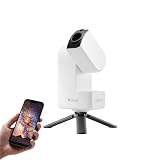
Remember, the best telescope is the one you’ll actually use. A bulky, heavy scope that’s hard to set up will stay in the closet. Portability matters, especially if you plan to travel to dark-sky sites. The DWARFLAB Dwarf 3 weighs just 3 pounds, making it the ultimate grab-and-go option.
Mount Type: Alt-Azimuth vs. Equatorial vs. Smart
The mount determines how smoothly you can track celestial objects. Alt-azimuth mounts are intuitive, moving up-down and left-right, perfect for beginners. Equatorial mounts align with Earth’s axis, allowing manual tracking of stars as they drift across the sky, but they have a steeper learning curve. Smart telescopes, like the Celestron StarSense Explorer, use your smartphone’s GPS and sky recognition to automatically locate objects, making them incredibly user-friendly.
For a completely hands-free experience, the ZWO Seestar S30 Pro and the Vaonis Vespera Pro offer fully automated go-to and tracking. They align themselves, find targets, and even stack images live. If you’re also into camping, you might want to check out our family camping tent guide to plan a stargazing weekend.
Optical Design: Refractor, Reflector, or Catadioptric
Refractors use lenses and offer sharp, high-contrast views, especially of the Moon and planets. Reflectors use mirrors and provide more aperture per dollar, ideal for deep-sky objects. Catadioptric scopes combine lenses and mirrors for a compact tube, but they are often pricier. Smart telescopes typically use a refractor design with built-in image processing, like the DWARFLAB Dwarf 3’s dual-lens system.
Each design has pros and cons, but for most beginners, a quality refractor or a smart telescope is the easiest path to success. The Celestron StarSense Explorer LT 114AZ is a Newtonian reflector that offers excellent value and comes with smartphone guidance, making it a great hybrid choice.
Smart Features and Connectivity
Modern telescopes often come with Wi-Fi, Bluetooth, and companion apps that enhance the experience. Features like automatic object location, live image stacking, and remote control are game-changers. The UNISTELLAR Odyssey series, for example, offers autofocus and live stacking, while the JVAXS Smart Telescope includes a 4K flip screen and remote control for direct viewing without a phone.
Consider your comfort with technology. If you love apps and instant results, a smart telescope is perfect. If you prefer a classic, hands-on experience, a manual scope like the Celestron StarSense Explorer still uses your phone but in a more traditional way. For more outdoor gear inspiration, see our best sleeping bag for car camping to pair with your stargazing trips.
Final Thoughts
After reviewing the top telescopes of 2026, our overall recommendation is the DWARFLAB Dwarf 3 Smart Telescope for its unbeatable portability and dual imaging capabilities, perfect for travelers and beginners who want stunning astrophotography without the complexity. For those who prefer a more traditional yet tech-assisted approach, the Celestron StarSense Explorer LT 114AZ Newtonian offers excellent value and a rewarding observing experience. Whichever you choose, you’ll be amazed by what the universe has to offer.
Frequently Asked Questions
What is the best telescope for a beginner in 2026?
For beginners, we recommend the Celestron StarSense Explorer LT 114AZ because it combines a user-friendly smartphone app with a classic reflector, offering great views with minimal setup. Alternatively, the DWARFLAB Dwarf 3 is perfect if you want an all-in-one smart telescope that’s incredibly easy to use.
Can I use a smart telescope without a smartphone?
Most smart telescopes require a smartphone for setup and control, but some models like the JVAXS Smart Telescope include a built-in 4K flip screen and remote control, so you can operate it without a phone. However, apps enhance the experience by providing sky maps and automatic object detection.
What is the difference between a smart telescope and a traditional telescope?
A smart telescope uses computerization and apps to automatically locate and track celestial objects, often with built-in image processing. Traditional telescopes require manual aiming and tracking, which can be challenging for beginners. Smart telescopes are more convenient but usually cost more.
How much should I spend on a first telescope?
For a quality first telescope, expect to spend between $200 and $500 for a reliable manual scope or a basic smart model. Premium smart telescopes with advanced features can cost over $2,000, but they offer professional-level results. Consider your budget and how much you value convenience.
If you’re planning a stargazing camping trip, you might also want to check our best electric bikes for adults for an eco-friendly way to reach your dark-sky spot.
For more outdoor adventures, our best pellet grill and smoker can help you cook up a feast after a night of observing.