

🔥 TV Black Friday Deals 2026: picks worth watching →
You are standing at the trailhead with a pack full of gear, wondering whether a featherweight body will survive the weather or whether you should haul a full-frame rig for maximum detail. The OM System vs Canon decision usually starts exactly there, with weight and sensor size pulling in opposite directions.
This guide breaks down six bodies across both brands so you can match the camera to your actual shooting habits, whether that means mountain hikes, wedding floors, or cinema sets. If you are still weighing other brands, our fujifilm vs sony covers the same ground from a different angle.



Buying Guide: What Actually Separates These Two Brands
Sensor Size and Low-Light Behavior
Canon’s full-frame bodies, like the EOS R5 C and EOS R6 Mark II, gather more light per pixel and deliver shallower depth of field. That matters for portraits, events, and any scene where you want creamy background separation without working the lens hard.
OM System sticks with Micro Four Thirds, which trades some high-ISO headroom for smaller lenses and deeper reach. The OM-1 Mark II’s stacked BSI sensor closes much of that gap, and its computational modes stretch low-light capability in ways full-frame bodies cannot match.
Weather Sealing and Field Durability
OM System builds its reputation on IP53-rated sealing, and the OM-1 Mark II is rated dustproof, splashproof, and freeze-proof down to -10 degrees Celsius. If you shoot in rain, snow, or coastal spray, that certification is a real advantage.
Canon’s R6 Mark II and R5 C are weather-sealed too, but the sealing is described rather than certified. Both brands hold up well in the field, though OM System publishes a specific rating you can plan around.
Video Capability and Workflow
The Canon EOS R5 C records 8K Cinema RAW up to 60p and 4K up to 120p, making it a genuine hybrid for filmmakers who also need 45MP stills. The R6 Mark II covers oversampled 4K/60p and 6K RAW externally, which suits most commercial and event work.
OM System counters with unlimited 4K recording and computational tools like Live ND and Handheld High Res. For run-and-gun creators, our budget vlogging camera picks show how far that value stretches.
Lens Ecosystem and Portability
Canon’s RF mount offers premium L-series glass, including the RF 24-105mm f/4L IS USM bundled with the R5 C and R6 Mark II kits. Those lenses are sharp and stabilized, but they add bulk and cost to any bag.
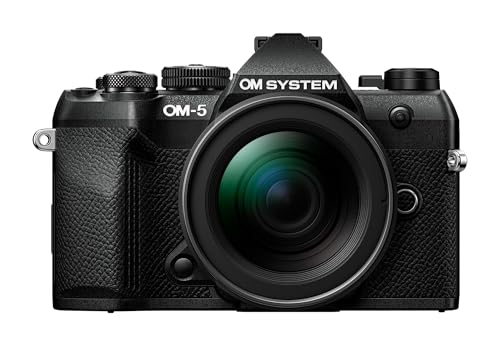
OM System’s M.ZUIKO PRO lenses are notably compact, and the 12-45mm f/4 PRO kit keeps the OM-5 Mark II genuinely pocketable for a system camera. The 14-150mm superzoom bundle pushes reach even further without a second lens.
If you want a broader view of how body and lens pairings affect portability, browse our full cameras category for more comparisons.
Final Thoughts
If your priority is cinematic depth, 8K RAW flexibility, and premium full-frame glass, the Canon EOS R5 C Mirrorless Cinema Camera 45MP Full is the obvious anchor for a professional hybrid kit. If you want a weather-sealed body that disappears into a daypack and still shoots unlimited 4K, the OM SYSTEM OM-5 Mark II BLK w/M.ZUIKO Digital ED is the smarter travel companion.
Frequently Asked Questions
Is OM System better than Canon for travel photography?
For most travelers, yes. OM System bodies like the OM-5 Mark II are lighter, and the M.ZUIKO lenses pack smaller while still offering weather sealing. Canon’s full-frame kits deliver more dynamic range and cleaner high-ISO files, but they weigh more and take up more bag space.
Can Micro Four Thirds keep up with full-frame for professional work?
In good light and with modern computational features, the OM-1 Mark II holds its own for wildlife, events, and outdoor editorial work. The gap widens in very low light or when you need extreme background blur. Many professionals run both systems for exactly that reason.
Which brand is better for video in 2026?
Canon leads on pure cinema specs thanks to 8K RAW and Dual Pixel AF tracking on the R5 C. OM System wins on portability and unlimited 4K recording in a body you can carry all day. Your workflow should decide which trade-off matters more.
Do OM System lenses work on Canon bodies?
No, the mounts are different. M.ZUIKO lenses use the Micro Four Thirds mount, while Canon RF bodies accept RF and adapted EF glass. Budget for a full lens switch if you change systems, and check our family vlogging camera guide if you need a low-hassle starting point.



