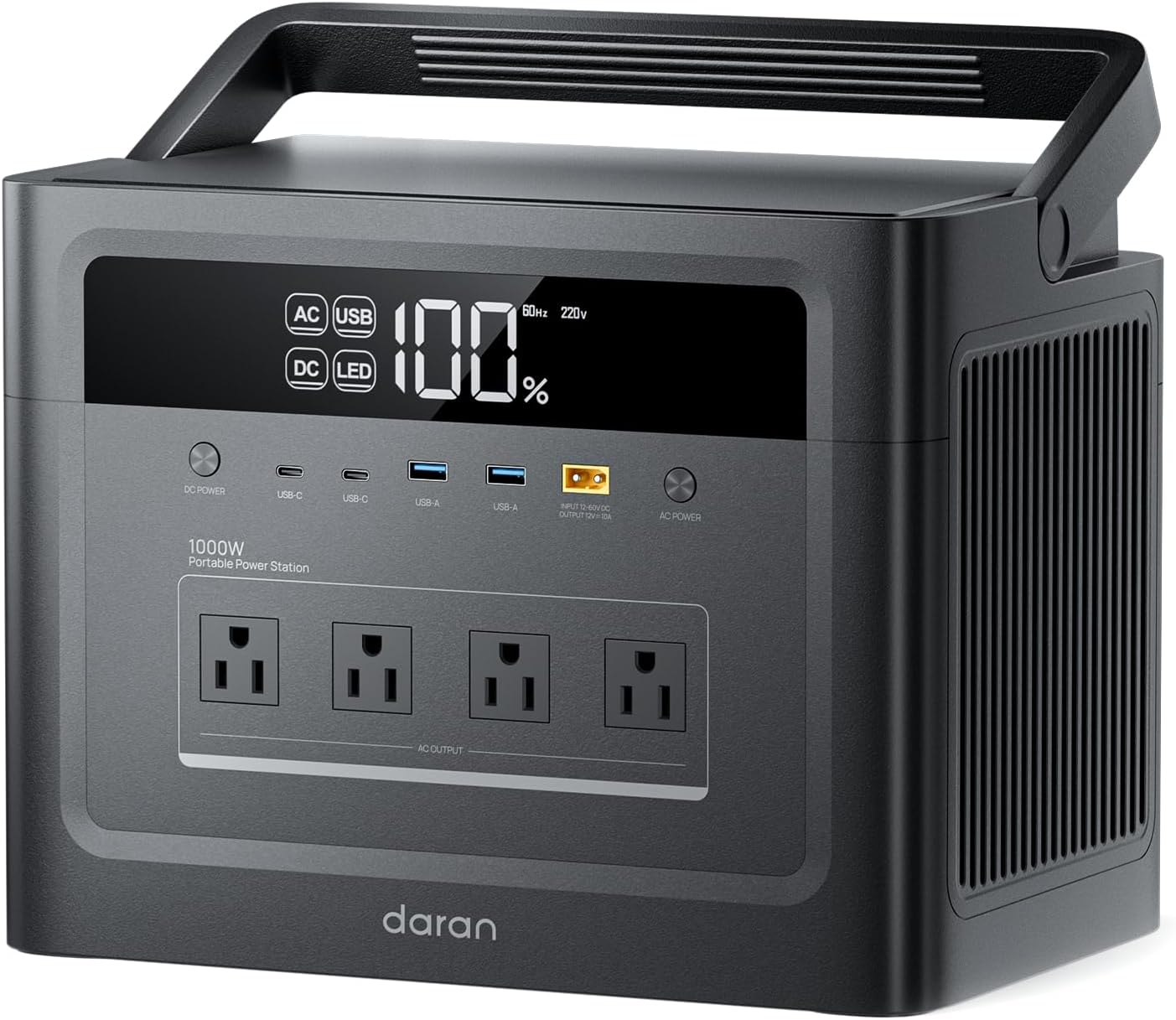
Waking up gasping for air because your CPAP ran out of power is a nightmare no one should experience. Whether you are camping in the backcountry, riding out a storm at home, or living life on the road, having a dependable portable power station keeps your therapy running through the night without interruption.
This guide is built for CPAP users who need real-world power solutions, not just generic battery reviews. We evaluated three standout options across different capacity ranges and use cases, so you can find the right fit for your lifestyle. If you are also planning outdoor adventures, our roundup of the best portable power stations for camping covers even more options worth considering.

Pros
- Exceptional portability at 6.5 lbs with compact 9x5.5x7.5 inch dimensions
- Multiple output options including pure sine wave AC, DC, USB, and USB-C ports
- Reliable performance for camping, road trips, emergency backup, and outdoor work
- Fast 2-hour charging with 65W input capability from multiple sources
- Advanced protection system prevents overcharging, short circuits, and overload damage
Cons
- Solar panel charging is relatively slow compared to wall outlet charging
- Not weatherproof, requires protective enclosure for outdoor use in rain or dusty environments
- Limited to 300W output, unsuitable for high-power appliances requiring 500W or more
The EnginStar R300 is a portable power station designed for outdoor enthusiasts, emergency preparedness, and anyone needing reliable backup power on the go. This 296Wh battery system delivers 300W continuous output in a remarkably compact 6.5-pound package, making it practical for camping trips, road travel, RV adventures, and emergency situations.
The standout feature is its versatile 8-port charging configuration: two 110V pure sine wave AC outlets protect sensitive devices like laptops and cameras, two 12V/24V regulated DC outputs power appliances like mini-fridges and car vacuums, plus fast USB and USB-C ports for phones and tablets. Real-world user feedback confirms it successfully powers laptops for hours, charges multiple devices simultaneously, and even runs CPAP machines reliably. The pure sine wave technology ensures clean, stable power that won't damage electronics.
Build quality centers on high-grade lithium-ion batteries rated for over 1000 charge cycles, paired with an advanced battery management system featuring voltage and temperature controls. The compact aluminum and plastic housing feels sturdy, though the design prioritizes portability over ruggedness. Charging flexibility includes three methods: compatible solar panels (not included), standard wall outlets, or 12V car charging, with 65W maximum input reaching 80% capacity in 2 hours.
The main limitation is weather vulnerability. The open port design and lack of weatherproofing mean extended outdoor use in rain or dusty conditions requires a protective enclosure. Additionally, 300W output handles most personal devices and small appliances but cannot support high-power tools or large heating appliances. These constraints are reasonable trade-offs for the exceptional portability.
The EnginStar R300 delivers excellent value for casual outdoor users and emergency preparedness. It's proven reliable for camping, travel, and backup power scenarios, backed by a 12-month warranty and strong user satisfaction. If you need portable, multi-device charging without breaking your budget, this power station is a smart investment.
Power Capacity: 296 watt-hours / 300W continuous output
Dimensions and Weight: 9.1 inches L x 5 inches W x 7 inches H, weighs 6.5 lbs
Output Ports: 2x 110V pure sine wave AC outlets, 2x 12V/24V DC outputs, 1x USB-A (5V/3.1A), 1x USB-C (18W)
Battery Type: Lithium-ion with 1000+ charge cycles
Charging Methods: Solar panels (12-25V compatible), AC wall outlet, 12V car charging
Maximum Charging Speed: 65W input, 80% charge in 2 hours
Safety Features: Overcharge protection, short circuit protection, overload protection, temperature control, voltage regulation
Warranty: 12 months limited from date of purchase
Included: Power station, wall charger, car charger cable, user manual
Ideal Users: Campers and outdoor adventurers seeking lightweight backup power, road trippers needing multi-device charging capability, emergency preparedness planners, RV owners, and professionals working in remote locations or vehicles.
Best Use Cases: Camping trips, extended road travel, power outages, tailgating and outdoor events, CPAP machine operation during travel, keeping coolers powered in vehicles, charging work laptops and tools, emergency home backup power.
Not Ideal For: Users needing weatherproof outdoor equipment, those requiring 500W+ power output for large appliances, or applications requiring constant outdoor exposure without protective housing.

Pros
- Extremely portable at only 7.5 pounds
- Over 4,000 charge cycles for decade-long reliability
- Multiple output ports including USB-C PD for fast device charging
- Quiet, fume-free operation compared to gas generators
- Fast solar charging capability for off-grid adventures
Cons
- Cannot power high-wattage appliances like refrigerators or air conditioners
- Solar panel not included, requires separate purchase
- Limited capacity may not cover multi-night camping with a portable fridge
The Jackery Explorer 300 is a compact portable power station designed for outdoor enthusiasts and emergency preparedness. With a 292Wh capacity and a weight of just 7.5 pounds, it strikes an excellent balance between power and portability. It is ideal for campers, hikers, tailgaters, and anyone who needs a reliable off-grid power source for small electronics.
Standout features include a LiFePO4 battery that lasts over 4,000 charge cycles, ensuring more than 11 years of use. It can power up to six devices simultaneously through two AC outlets, a 100W USB-C PD port, two USB-A ports, and a car port. Real-world performance is strong: users report it easily handles laptops, drones, cameras, and CPAP machines during camping trips or blackouts.
The design is rugged yet lightweight, with a built-in handle for easy carrying. The plastic enclosure feels durable and withstands outdoor conditions. Fast solar charging (80% in 2.8 hours with a 100W panel) makes it a great companion for off-grid adventures, though the solar panel is sold separately. The unit charges via AC in about 4 hours.
Drawbacks include the inability to run large appliances like refrigerators or air conditioners due to the 300W output. Some users note that for multi-night camping with a portable fridge, the capacity may fall short. Additionally, the solar panel not being included adds to the initial cost if you want full off-grid capability.
Overall, the Jackery Explorer 300 is a top choice for lightweight, reliable portable power. It earns high marks from thousands of users for its build quality, long battery life, and versatility. If you need a compact power station for small devices and occasional off-grid use, this is an excellent investment.
Pros
- Exceptional portability at 6.4 lbs makes it ideal for backpacking, camping, and vehicle storage
- LiFePO4 chemistry offers superior longevity and safety compared to standard lithium batteries
- Fast 60W USB-C charging handles modern laptops and tablets efficiently
- Dual charging capability cuts full recharge time to just 2-2.5 hours for quick turnaround
- Built-in MPPT controller maximizes solar panel efficiency for true off-grid independence
Cons
- 256Wh capacity may be insufficient for power-hungry devices like space heaters or large appliances
- Peak power output of 600W limits simultaneous high-draw device usage despite six ports
- Solar panel sold separately, adding to overall system cost for complete off-grid setup
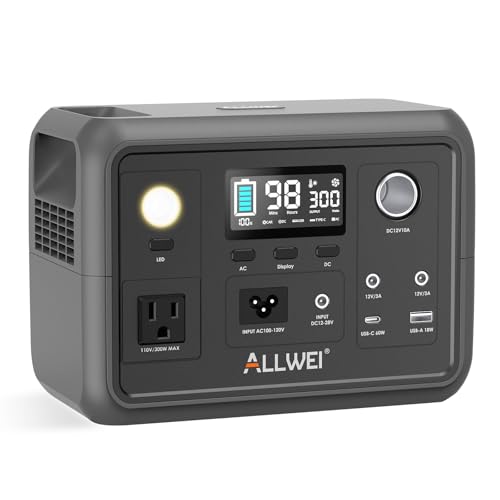
The ALLWEI 300W Portable Power Station is a compact, versatile backup power solution designed for campers, road trippers, and homeowners seeking emergency backup. With 256Wh capacity and 300W continuous output, it handles laptops, mini fridges, CPAP machines, and smartphones without breaking a sweat. This unit bridges the gap between ultra-portable power banks and bulky home generators.
Performance is the standout here. The LiFePO4 battery chemistry guarantees 3000 charge-discharge cycles, translating to roughly a decade of regular use. The pure sine wave inverter safely powers sensitive electronics that cheaper modified sine wave units would damage. Six output ports let you charge up to six devices simultaneously, while the 60W USB-C port handles modern laptops far better than most competitors in this price range. Dual charging capability is genuinely useful, cutting full recharge time to 2.5 hours when combining AC and solar input.
Design and build quality impress for the price point. At just 6.4 lbs and measuring 9.25 x 5 x 6.81 inches, this power station fits easily in backpacks and car trunks. The integrated LED light with SOS mode proves handy during camping trips and power outages. The 6-layer BMS protection and pass-through charging function add confidence for both outdoor and home use scenarios.
The main limitation is capacity. At 256Wh, this isn't meant for running heavy-draw appliances like space heaters or power tools for extended periods. The 600W peak surge rating also means you can't run multiple high-power devices simultaneously despite the six ports. Additionally, solar panels are sold separately, requiring additional investment for true off-grid independence.
Verdict: The ALLWEI 300W delivers exceptional value for casual campers, emergency preparedness, and outdoor enthusiasts. The LiFePO4 battery, fast charging, and multiple ports justify the investment. This is the smart choice if you need reliable, portable power without excessive bulk or cost.
Battery Technology: LiFePO4 (Lithium Iron Phosphate)
Capacity: 256Wh
Continuous Output: 300W
Peak Surge Power: 600W (pure sine wave)
Charge Cycles: 3000 cycles (approximately 10 years)
Output Ports: 1x AC outlet, 2x DC5521 ports, 1x car cigarette lighter port, 1x USB-A fast charge 18W, 1x USB-C PD 60W
Charging Methods: AC wall (3.5-4 hours), 12V car charger (3.5-4 hours), solar panel (4-5 hours with 100W panel), dual charging (2-2.5 hours)
Built-in Features: MPPT controller, 6-layer BMS protection, pass-through charging, 3-level LED light with SOS mode
Physical Dimensions: 9.25 x 5 x 6.81 inches
Weight: 6.4 lbs
Warranty: 5-year manufacturer warranty
Package Includes: Power station, AC cable, DC car cable, user manual
Who Should Buy: Campers and outdoor enthusiasts needing portable emergency power, homeowners building emergency backup systems, road trippers requiring multi-device charging, and off-grid cabin owners seeking supplemental power generation.
Who Should Skip: Users needing to run high-power appliances like space heaters or power tools for extended periods, those requiring 24/7 home backup for entire households, or minimalists unwilling to invest in a separate solar panel for true off-grid capability.
Best Use Cases: Weekend camping trips, vehicle emergency kits, backup power during outages, charging multiple devices on road trips, powering CPAP machines during travel, and supplemental power for small cabins or RVs.
Tips for Maximum Value: Pair with a 100W solar panel for complete off-grid independence, use the pass-through charging feature to charge both the station and devices simultaneously, and leverage the dual AC and solar charging for fastest recharge times. Store in cool, dry conditions and avoid complete discharge for longest battery lifespan.

Pros
- Comes with all necessary CPAP cables for popular brands, eliminating the need for separate purchases
- Exceptional runtime on battery allows 3-5 nights of camping with CPAP operation and phone charging capability
- LiFePO4 chemistry provides superior safety with built-in protection against overcurrent, overheating, and short circuits
- Multiple charging methods including solar and car adapters make it ideal for RVs, remote camping, and emergency backup
- Pass-through charging keeps your CPAP running seamlessly during grid power failures without interruption
Cons
- Car charging cable not included in the box, requiring a separate purchase for RV and vehicle use
- Humidification and heating features significantly reduce battery runtime, limiting it to 1-2 nights with these options enabled
- Connector alignment issues reported by some users, potentially requiring adjustment for proper fit with certain CPAP models
The EASYLONGER ES960 PRO is a purpose-built portable power solution for CPAP users who refuse to compromise on sleep therapy during camping trips, RV travel, or emergency situations. With its 297.6Wh capacity and smart voltage adjustment, this battery bridges the gap between home-based sleep apnea treatment and outdoor adventures. It's designed for both occasional campers seeking backup power and frequent travelers who need reliable CPAP support away from the grid.
The standout feature is the inclusion of four pre-fitted CPAP charging cables covering the major manufacturers, eliminating guesswork and compatibility concerns right out of the box. Users report consistently achieving 3-5 nights of CPAP operation per charge when humidification and heating are disabled, with the ability to simultaneously charge phones and other devices. The 100W USB-C fast charging is genuinely useful, powering MacBook Pro models to 50% in under 30 minutes while your CPAP battery remains ready for nighttime use.
Build quality reflects the premium LiFePO4 chemistry, which supports over 3000 charge cycles and retains 80% capacity after extended use. The smart digital display provides real-time feedback on battery status and voltage, with a voltage memory function that eliminates repetitive adjustments between uses. The unique water-transfer camo design adds personality to outdoor gear while the compact 6.6-pound form factor remains portable for camping scenarios.
Real-world performance shows the pass-through charging feature works as advertised, keeping your CPAP running during power outages without interruption. However, enabling humidification and heating features significantly reduces runtime to 1-2 nights, requiring users to make trade-offs based on their comfort needs. Some users reported minor connector alignment issues with certain CPAP models, though this appears to be an exception rather than the norm.
The EASYLONGER ES960 PRO delivers genuine value for CPAP users who prioritize reliable therapy during outdoor activities and emergency situations. The comprehensive cable selection, multiple charging options, and proven durability make it a practical investment for anyone dependent on CPAP therapy who wants freedom from grid limitations. If you're willing to disable heating features for extended trips, this battery provides the peace of mind that your sleep therapy won't be interrupted by location or power availability.
Capacity and Power Output: 297.6Wh total capacity with 100W output wattage and 24V nominal voltage. Supports 3000+ full charge cycles with LiFePO4 chemistry.
Charging Speed and Methods: 100W USB-C fast charging fully recharges the battery in 4-5 hours using the included AC adapter. Also supports solar panel charging and car adapter charging for versatile off-grid recharging.
Compatibility: Pre-configured with 4 CPAP cables compatible with ResMed AirSense 11/10, AirCurve 11/10, AirMini, Luna TravelPAP, Philips DreamStation, and DreamStation 2. Additional cables available for other CPAP models.
Physical Dimensions: 2.9 inches L x 6.2 inches W x 8.8 inches H, weighing 6.6 pounds. Includes storage pouch for transport and protection.
Warranty and Safety: 5-year manufacturer warranty. Advanced BMS provides protection against overcurrent, overheating, overcharging, and short circuits. Digital display shows real-time battery level, voltage, and charging status.
Is This Right for You? Choose the ES960 PRO if you use CPAP therapy and regularly camp, travel in RVs, or want emergency backup power for power outages. It's ideal for users of ResMed and Philips CPAP machines who prioritize reliable therapy away from home.
Runtime Expectations: Without humidification and heating, expect 3-5 nights of CPAP operation per charge. With these features enabled, runtime drops to 1-2 nights. Plan your trips accordingly and consider solar charging options for extended stays.
Cable Compatibility: Verify your specific CPAP model is covered by the included cables before purchasing. The package includes cables for major brands, but always confirm your exact model number matches the compatibility list.
Additional Purchases to Consider: A car charging adapter cable is highly recommended for RV users but not included in the base package. Solar panels can extend your off-grid capabilities significantly during extended camping trips.
Setup Tips: Note your CPAP's required voltage settings before your first trip to avoid repetitive adjustments in the field. The voltage memory function will store this setting, but knowing it in advance ensures smooth operation from day one.

Pros
- Long-lasting LiFePO4 battery with 4,000+ cycles and 80% capacity retention.
- Fast 1.5-hour recharge to 80% via AC or 400W solar input.
- Five AC outlets – most in its class for versatile device charging.
- Ultra-quiet operation below 25dB, ideal for indoor use.
- UL2743 certified with comprehensive safety protections.
Cons
- Relatively heavy at 25.8 pounds, less portable than smaller units.
- Battery capacity not explicitly stated, limiting runtime for high-wattage appliances like air fryers (1500W) to short bursts.
- Limited customer reviews available, though all are positive.
The UDPOWER S1200 is a versatile portable power station designed for home emergency backup, RV trips, and outdoor camping. With a 1200W pure sine wave inverter and 1800W surge capacity, it can handle essential appliances like refrigerators, CPAP machines, and even air fryers during power outages. Its LiFePO4 battery chemistry sets it apart from cheaper lithium-ion units, offering over 4,000 charge cycles with 80% capacity retention, meaning it will last for many years of regular use.
Standout features include an ultrafast 1.5-hour recharge to 80% via 800W AC input, plus support for up to 400W solar panels for off-grid charging. The 14-port hub includes five AC outlets and two 100W USB-C PD ports, allowing simultaneous charging of laptops, drones, power tools, and phones. Real-world users report reliable performance for CPAP machines over multiple nights, confirming its suitability for medical devices.
The unit is built with a rugged metal casing and features a digital display for monitoring battery level and output. Safety certifications UL2743 and FCC ensure overload, short-circuit, and overheating protection. The cooling fan operates below 25dB, making it whisper-quiet – ideal for use in bedrooms or home offices without disturbing sleep or work.
Potential drawbacks include its weight of 25.8 pounds, which is heavier than some competitors and limits true portability. The battery capacity is not explicitly listed, so users with high-draw appliances like air fryers (1500W) should expect limited runtime. Additionally, with only three customer reviews so far, long-term reliability data is still emerging, though all reviews are positive.
Overall, the UDPOWER S1200 offers excellent value for those needing a durable, fast-charging power station with a long-lasting battery. It is particularly well-suited for home backup, RV living, and anyone requiring quiet, clean power for sensitive electronics. The combination of LiFePO4 longevity, multiple outlets, and UPS functionality makes it a strong contender in the 1200W class.
Continuous Output: 1200W (1800W surge)
Battery Type: LiFePO4 (4,000+ cycles)
AC Input: 800W (0-80% in 1.5 hours)
Solar Input: 400W max
AC Outlets: 5 (pure sine wave)
USB Ports: 2x USB-C PD 100W, plus USB-A
UPS Switch Time: <0.01s
Noise Level: <25dB
Weight: 25.8 lbs
Dimensions: 13.7 x 9.53 x 9.72 inches
Certifications: UL2743, FCC
Warranty: 5 years
Pros
- Exceptional portability and weight ratio delivers serious power in a compact package that fits easily in backpacks and vehicles
- Versatile charging ecosystem with AC wall, solar, and car lighter options provides genuine off-grid independence
- Fast charging speeds for multiple devices simultaneously with QuickCharge 3.0 support and dedicated USB-C port
- Proven reliability with over 1,500 verified customer reviews averaging 4.3 stars, including users praising real-world performance
- Silent operation and zero emissions make it suitable for bedrooms, RVs, and indoor emergency situations unlike gas generators
Cons
- AC charging speed is modest at 7-8 hours for full capacity, requiring advance planning for emergencies
- Limited to 300W continuous power output, restricting use with high-wattage appliances like microwave ovens or power tools
- Solar panel sold separately adds additional cost to achieve true off-grid capability
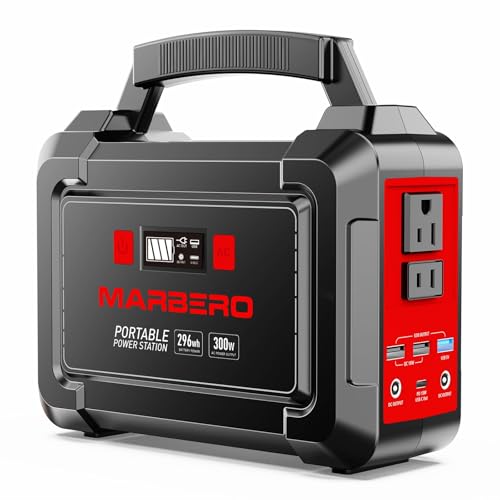
The MARBERO M188 is a 296Wh portable power station designed for campers, emergency preparedness, and anyone needing reliable backup power without fuel or noise. This lightweight unit targets outdoor enthusiasts, homeowners in areas prone to outages, and travelers who need consistent device charging on the go.
The standout feature is its versatility across three charging methods and multiple output types. Real-world testing shows it easily charges phones, laptops, and even powers small appliances like fans and LED lights simultaneously. The 110V AC outlets work surprisingly well for devices under 100W, while the USB-C with QuickCharge 3.0 and dual USB ports ensure compatibility with virtually any modern device. Users consistently praise how the battery percentage barely drops when charging multiple items at once.
Build quality feels solid with an ABS plastic exterior, comfortable carry handle, and intelligent BMS circuitry that prevents damage from overcharging or power surges. The integrated LED flashlight with steady and SOS modes proves genuinely useful during camping trips or power outages. At just 5.7 pounds, it's genuinely portable without sacrificing serious capacity.
The main limitation is its 300W continuous power output, which restricts use to smaller appliances and prevents operation of high-draw tools or kitchen equipment. Additionally, the 7-8 hour AC charging time means you cannot quickly top it up before an emergency. The solar panel is sold separately, adding extra cost for those wanting true off-grid independence.
The MARBERO M188 delivers exceptional value for weekend camping, hurricane preparedness, and home backup power. Its combination of multiple outputs, lightweight design, and proven reliability across thousands of verified reviews makes it an excellent choice for anyone seeking a practical, quiet power solution.
Capacity and Power Output: 296Wh (80,000mAh) capacity with 300W continuous output and 350W peak output
Connectivity Ports: 2x USB-A (5V/2.1A), 1x USB-C with QC3.0 (5V-9V/2A), 1x QC3.0 USB (5V-9V/2A), 2x DC ports (12V-16.6V/10A), 2x AC outlets (110V/60Hz at 300W continuous)
Charging Methods: AC wall outlet (7-8 hours), solar panel compatible (DC 16.6-25V/1.5A, MC4 connectors included), car lighter outlet with included cable
Physical Specs: Weight 5.7 lbs, dimensions 8.26 inch L x 3.5 inch W x 7.48 inch H, red color, ABS material construction
Battery Performance: Retains 90% capacity after 1000 charge cycles, Li-ion technology with intelligent BMS protection against overcharge, over-discharge, over-current, and short circuits
Warranty and Support: 12-month manufacturer warranty with 24/7 customer service
Ideal For: Campers and outdoor enthusiasts needing portable device charging, homeowners preparing for hurricanes or power outages, travelers requiring laptop and phone charging, CPAP users wanting emergency backup power, off-grid cabin owners, and anyone seeking quiet backup power for home use
Best Use Cases: Weekend camping trips, emergency hurricane preparedness, short-term power outages, RV travel, fishing trips, outdoor events, home office backup during blackouts, and travel where grid access is limited
Not Ideal For: Users requiring constant operation of high-wattage appliances like microwaves or power tools, those needing instant emergency charging without advance preparation, or budget shoppers unwilling to invest in additional solar panels for extended off-grid use

Pros
- Compact and lightweight at only 3.3 pounds for easy portability
- Versatile output ports including AC, USB-A, USB-C PD, and DC for a wide range of devices
- Dual LED flashlights with SOS mode enhance safety during emergencies
- Three recharging methods including solar for off-grid use
- Pass-through charging support adds convenience for continuous use
Cons
- Limited capacity (148Wh) may not power larger appliances like refrigerators or heaters for extended periods
- AC output limited to 200W (270W peak) so high-wattage devices such as hair dryers or microwaves will not work
- Solar panel sold separately, and recharging via solar is relatively slow (requires 16.4-24V panel)
The MARBERO 200W Portable Power Station (model M822) is a compact solar generator designed for campers, outdoor enthusiasts, and anyone needing a reliable backup power source. With a 148Wh capacity and a 200W AC inverter, it can charge smartphones, tablets, laptops, CPAP machines, and small appliances, all while weighing just 3.3 pounds.
Standout features include multiple output ports: two USB-A QC3.0, two standard USB-A, one USB-C PD, a DC port, and two AC outlets (one 2-prong, one 3-prong). This versatility means you can power or charge almost any device under 200W simultaneously. The dual LED flashlights with adjustable brightness and SOS mode are a thoughtful addition for camping or emergencies.
Design and build quality are solid for its price point. The light red color is distinctive, and the compact dimensions (7.5 x 5.3 x 3.6 inches) make it easy to pack. The pass-through charging feature allows you to recharge the power station while it supplies power to your devices, which is convenient during long trips.
Potential drawbacks include the modest 148Wh capacity, which limits runtime for power-hungry devices like mini-fridges or heaters. The AC output is capped at 200W (270W peak), so high-wattage appliances won't work. Additionally, the solar panel is sold separately, and recharging via solar can be slow without a high-wattage panel.
Overall, the MARBERO 200W Portable Power Station is an excellent value for its price. It delivers reliable backup power for essential devices, offers multiple charging options, and includes handy LED lights. Ideal for weekend camping trips, CPAP users, or as a compact emergency power source.


Pros
- Extremely lightweight and compact design fits easily in backpacks or vehicle storage
- Multiple charging options provide flexibility whether at home, outdoors, or traveling
- Comprehensive port selection allows charging phones, tablets, laptops, and small appliances simultaneously
- LiFePO4 chemistry offers superior safety and longevity compared to standard lithium batteries
- Emergency LED flashlight adds practical value beyond power storage
Cons
- 200W continuous output limits use to smaller devices; high-power appliances not supported
- Solar panel sold separately, requiring additional investment for true off-grid charging
- No customer reviews available yet to validate real-world performance claims
The POWKEY R180 is a compact 192Wh portable power station designed for campers, outdoor enthusiasts, and anyone needing emergency backup power. Weighing just 4.7 pounds with a foldable handle, it prioritizes portability without sacrificing capacity. This unit is perfect for charging phones, tablets, laptops, cameras, and even CPAP machines during camping trips, power outages, or off-grid adventures.
What sets the R180 apart is its flexibility. You get three independent charging methods: solar panels (sold separately), standard wall outlets, and a 12V car charger (included). The six output ports include one 120V AC outlet, two USB ports, one USB-C port, and two DC outputs, allowing you to charge multiple devices simultaneously. This versatility makes it genuinely useful for real-world scenarios where you need to power different device types at once.
The build quality reflects its LiFePO4 battery technology, which supports over 3000 charge and discharge cycles and includes advanced protection systems against overcharging, short circuits, and overloading. The digital display shows remaining capacity, and the dual-mode LED flashlight with SOS functionality adds practical emergency features. The foldable handle and compact footprint make it genuinely easy to transport.
The main limitation is the 200W continuous output ceiling, which restricts use to smaller appliances and devices. High-power tools or large appliances won't work. Additionally, if you want true solar charging independence, you'll need to purchase a compatible solar panel separately. Battery runtime depends on device wattage, so power-hungry devices will drain it quickly.
Overall, the POWKEY R180 delivers excellent value for portable power needs. It's reliable, well-featured, and genuinely portable. Whether you're a frequent camper, emergency-prep focused, or simply want backup power for outdoor activities, this unit offers practical performance at an affordable price point.
Power Capacity: 192Wh / 60,000 mAh
Output Power: 200W continuous
Battery Type: LiFePO4 with 3000+ cycle life
AC Output: 1x 120V outlet (200W max)
USB Outputs: 2x USB ports (5V, 3.1A total)
USB-C: 1x port (5V 3A / 9V 2A)
DC Outputs: 2x 12V 10A
Charging Methods: Solar panel, AC wall outlet, 12V car charger
Weight: 4.7 pounds
Dimensions: 7.1 x 5.3 x 5.5 inches
Features: Digital display, LED flashlight (3 brightness levels, 3 modes), foldable handle
Safety: Overcharge protection, short circuit protection, temperature control
Warranty: 12 months
Included: AC adapter, car charging cable, car cigarette lighter adapter, user manual
Is This Right For You? The R180 works best for campers, RV travelers, emergency preparedness, and anyone needing portable backup power for small to medium devices. It's not designed for powering large appliances, power tools, or high-wattage equipment.
Real-World Runtime: Battery life depends on what you're charging. The formula is 192Wh x 0.85 divided by your device's wattage. For example, a 100W device runs roughly 1.6 hours. Phones and tablets will last much longer.
Charging Timeline: Full recharge from wall outlet typically takes 8-10 hours. Car charging is slower. Solar charging speed depends on panel size and sunlight conditions (panel sold separately).
Storage Tips: If storing for extended periods, recharge every 2-3 months and maintain battery level between 40-70% capacity for optimal longevity.
Best Use Cases: Camping trips, emergency home backup, travel power, outdoor events, RV adventures, boating, CPAP backup power, and emergency preparedness kits.
What to Look for in a Portable Power Station for CPAP
Battery Capacity and Estimated Runtime
Capacity is measured in watt-hours (Wh), and it directly determines how many nights you can run your CPAP on a single charge. A standard CPAP machine draws roughly 30 to 60 watts per hour, so a 256Wh unit like the ALLWEI Portable Power Station 300W can realistically power a CPAP for four to seven hours depending on your pressure settings.
If you need multiple nights of backup or plan to power additional devices simultaneously, stepping up to a 1,024Wh unit makes a significant difference. More capacity also gives you a comfortable buffer if your machine uses a humidifier, which can double power consumption.
Pure Sine Wave Output
CPAP machines are sensitive medical devices, and they require clean, stable electricity to function correctly. A pure sine wave inverter replicates the smooth AC power that comes from a wall outlet, protecting your machine’s motor and electronics from damage caused by irregular current.
Both the ALLWEI Portable Power Station 300W and the EnginStar Portable Power Station 300W 296Wh Solar deliver pure sine wave AC output, making them safe choices for CPAP therapy. Never use a modified sine wave inverter with your CPAP, as it can shorten the machine’s lifespan or void its warranty.
Recharging Speed and Flexibility
How quickly a power station recharges matters just as much as how long it lasts. The Anker SOLIX C1000 Gen 2 Portable Power Station stands out with its HyperFlash technology, capable of fully recharging at 1,600W in under 50 minutes. That kind of speed is invaluable when you have a brief window of grid access between off-grid stretches.
For solar-dependent setups, look for a built-in MPPT controller, which maximizes energy harvested from solar panels. The ALLWEI unit supports dual charging via AC and solar simultaneously, cutting recharge time to roughly two to two and a half hours. If van life or full-time off-grid living is your goal, our guide to the best portable power stations for van life dives deeper into solar-compatible options.
Weight, Size, and Portability
If you are backpacking or traveling by air, every ounce counts. The ALLWEI and EnginStar units each weigh around 6.5 lbs and fit easily in a daypack or carry-on bag, making them practical companions for frequent travelers and campers alike.
Larger capacity units like the Anker SOLIX C1000 Gen 2 are still designed with portability in mind, being 14% smaller and 11% lighter than comparable models in its class. It is better suited for car camping, RV use, or home backup rather than ultralight trekking. You can explore more power station comparisons, including alternatives to popular brands, in our roundup of the best Jackery alternatives.
Final Thoughts
Every CPAP user deserves uninterrupted sleep, no matter where they are. For those who want maximum reliability and fast recharging for extended outages or multi-night camping trips, the Anker SOLIX C1000 Gen 2 Portable Power Station is the clear frontrunner with its enormous capacity and sub-50-minute recharge time. If you need a lightweight, budget-conscious solution for occasional camping or travel, the ALLWEI Portable Power Station 300W delivers dependable pure sine wave power, LiFePO4 longevity, and a compact form factor that fits your pack without complaint.
Related Guides
- Best Portable Power Station for Budget Buyers
- Best Portable Power Stations
- Best Portable Power Station for Emergencies
Frequently Asked Questions
Can I use a portable power station with my CPAP every night?
Yes, as long as the power station outputs pure sine wave AC power and has enough capacity for your machine’s wattage and your nightly usage hours. LiFePO4 batteries, like those in the ALLWEI unit, are especially well-suited for daily use because they support thousands of charge cycles over many years. Always check your CPAP’s power requirements before choosing a station.
How many nights can a 300Wh power station run a CPAP?
A 296Wh to 300Wh station can typically power a CPAP machine for one to two nights, depending on your pressure settings and whether you use a heated humidifier. Disabling the humidifier and using a CPAP-specific DC adapter, if your machine supports one, can extend runtime significantly. For longer trips, consider a higher-capacity unit or pair your station with a solar panel for daily recharging.
Is a portable power station safe to use with medical equipment like a CPAP?
A power station with a pure sine wave inverter is safe for CPAP machines and other sensitive medical devices. Modified sine wave output can cause buzzing, overheating, or long-term damage to your equipment. All three units reviewed here either feature pure sine wave output or UPS-grade switchover, making them medically appropriate choices. For more health-focused product guidance, browse our Health and Household category.
What is the best portable power station for CPAP users in 2026?
The best choice in 2026 depends on your specific needs. The Anker SOLIX C1000 Gen 2 Portable Power Station leads for high-capacity backup and rapid recharging, while the ALLWEI Portable Power Station 300W and EnginStar Portable Power Station 300W 296Wh Solar are excellent compact options for travelers and campers. Prioritize pure sine wave output, sufficient watt-hours for your machine, and a recharging method that suits your environment, whether that is solar, wall, or car charging. You can also browse our full Outdoor category for additional power and gear recommendations.