

You’ve set up your aquarium, added substrate, picked out plants, and chosen your fish. But something still feels off. The tank looks dim, your plants are struggling, and the colors of your fish just don’t pop. The problem is often the lighting. Selecting the best aquarium light isn’t just about brightness; it’s about finding a fixture that supports plant growth, brings out natural colors, and mimics a natural day-night cycle for your aquatic life. In this guide, we’ll walk you through the top options on the market, from budget-friendly basics to advanced programmable systems, so you can make an informed choice for your underwater world.
Whether you’re a beginner or a seasoned aquascaper, the right light can make all the difference. We’ve assessed dozens of models, focusing on light spectrum, durability, ease of use, and features like timers and sunrise-sunset simulation. For more detailed insights on LED technology, check out our guide to LED aquarium lights.
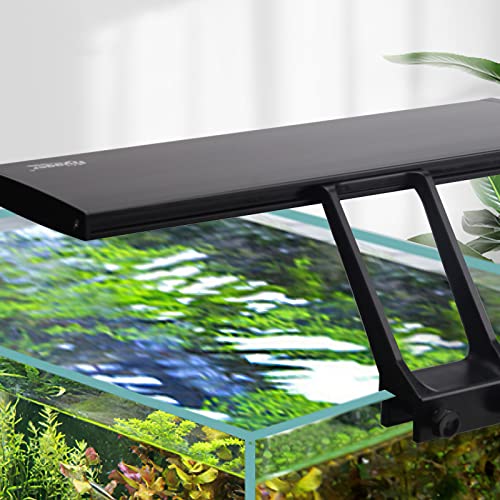

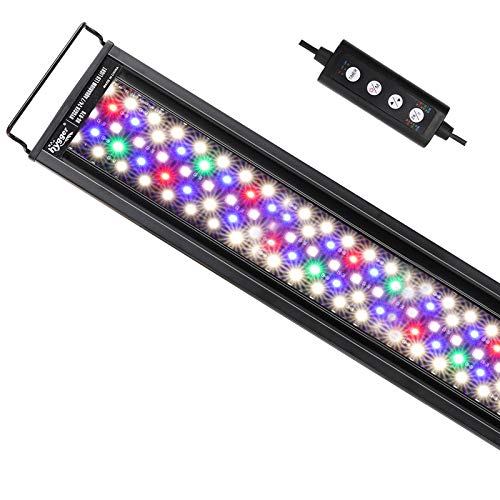
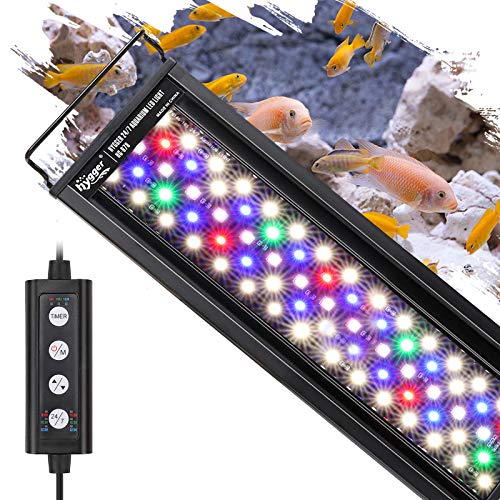


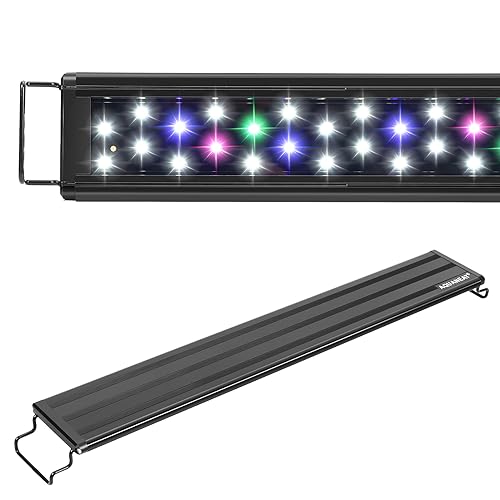
Buying Guide
Light Spectrum and PAR
Not all light is created equal. For healthy plant growth, you need a full spectrum that includes red and blue wavelengths. Look for lights with a high Color Rendering Index (CRI) and PAR (Photosynthetically Active Radiation) values. A PAR rating of 30 to 50 is considered low-to-medium light, suitable for low-light plants like Java fern and Anubias. Higher PAR (above 80) supports demanding plants like carpeting species. Models like the hygger 24/7 lights offer 6500K white LEDs combined with RGB to achieve a balanced spectrum.
Timer and Modes (24/7 Cycles)
An automatic timer is a game-changer. It ensures consistent photoperiods without manual intervention. Many top-tier lights now offer a built-in 24/7 mode that gradually transitions from warm sunrise to bright daylight and then to a moonlight phase. This not only reduces stress on fish but also prevents algae blooms by eliminating sudden light changes. For busy hobbyists, lights with memory backup (like SEAOURA and hygger) are ideal, as they retain settings even after a power outage.
Tank Size Compatibility
Always match the light length to your tank dimensions. Most lights come with adjustable brackets to fit a range of tank lengths. For example, the hygger 18W model suits 18 to 24 inch tanks, while the 42W version covers 48 to 54 inch tanks. A light that’s too short will leave dark corners; one that’s too long may not mount securely. Check the mounting style: clip-on brackets work for rimless tanks, while extendable legs suit rimmed aquariums.
Build Quality and Waterproofing
Water and electricity don’t mix. Look for lights with a waterproof rating of at least IP68 (like the AQQA model) or a silicone-coated LED board (like the SEAOURA). Aluminum housing improves heat dissipation, extending the lifespan of the LEDs. A separable adapter is a plus, as it allows replacement without discarding the entire unit. Avoid lights without any waterproof protection if your tank has open top or you have jumping fish.
Final Thoughts
After reviewing the top contenders, our recommendation depends on your specific needs. For planted tank enthusiasts who want precise control over light cycles and color temperatures, the hygger 26W 24/7 Lighting Aquarium LED Light offers an excellent balance of features and performance. If you’re on a tighter budget or have a smaller freshwater setup, the AQUANEAT LED Aquarium Light Full Spectrum for 18 provides reliable illumination without unnecessary frills. Both options are well-reviewed and will help your aquatic ecosystem thrive.
Frequently Asked Questions
How long should I run my aquarium light each day?Most planted tanks benefit from 8 to 10 hours of light per day. Too much can cause algae, too little will stunt plant growth. Using a timer with a 24/7 cycle, like the hygger models, automates this perfectly. For more tips, see our article on aquarium maintenance.
What is PAR, and why is it important?PAR (Photosynthetically Active Radiation) measures the light intensity available for photosynthesis. Higher PAR values mean more energy for plants. For low-light plants, aim for 20 to 40 PAR; for high-light plants, 80 to 100 PAR is recommended. The FZONE Solo Series provides customizable WRGB spectrum to optimize PAR for your specific plants.
Do I need a 24/7 lighting mode?If you want to mimic natural sunrise and sunset, a 24/7 mode is beneficial. It reduces stress on fish and creates a beautiful visual effect. Brands like hygger and AQQA offer this feature. However, for simple setups, a manual timer may suffice.
Can I use an LED light for a planted tank?Yes, many modern LED lights are designed specifically for planted tanks. Look for full-spectrum LEDs with a Kelvin rating around 6500K and built-in RGB channels. The SEAOURA and hygger Advanced models are excellent choices for freshwater planted aquariums in 2026.


