

Whether you are a hobbyist prototyping your next invention, a teacher bringing STEM to life, or a small business owner producing custom parts, finding the best 3D printer can transform your workflow. The market in 2026 offers incredible options—from lightning-fast CoreXY machines to multi-color systems that rival injection molding. But with so many choices, how do you pick the right one for your needs?
We have evaluated dozens of models across brands like Bambu Lab, Creality, Flashforge, and Snapmaker. Our focus: real-world print quality, speed, reliability, and value. Whether you are a beginner looking for a simple unbox-and-print experience or a pro needing advanced materials, this guide covers the top contenders. For more on printer options, check our roundup of budget-friendly printers for your home office.




Buying Guide: What to Look for in a 3D Printer
Print Speed and Acceleration
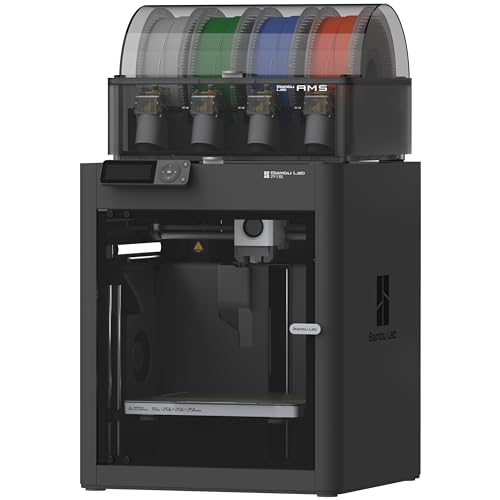
Speed matters when you are printing large prototypes or batch production. Modern CoreXY designs like those from Bambu Lab and Creality reach up to 600 mm/s with accelerations of 20,000 mm/s² or more. But raw speed isn’t everything—look for vibration compensation and stable frames to maintain quality at high speeds. The Bambu Lab P1S 3D Printer and the FLASHFORGE AD5X both excel here, balancing pace with precision.
Multi-Color and Multi-Material Capabilities
If you want to print models with multiple colors or combine rigid and flexible materials, a multi-color system is a game-changer. Options like the Bambu Lab P1S Combo (with AMS) or the Snapmaker U1 4-Toolhead system let you switch filaments automatically. The Snapmaker U1 swaps toolheads in seconds, reducing waste compared to traditional filament purging. For large projects, the Creality K2 Plus Combo can link up to four CFS units for 16-color prints.
Build Volume and Enclosure
Consider the size of your typical prints. A 220 mm cube is standard for many machines, but the Creality K2 Plus offers a spacious 350 mm cube for larger objects. An enclosed chamber is essential for printing engineering materials like ABS or ASA—it maintains stable temperatures and reduces warping. The Bambu Lab P2S Combo and FLASHFORGE Adventurer 5M Pro both feature enclosures suitable for more demanding filaments.
Ease of Use and Automation
For beginners, automatic bed leveling, quick setup, and smart features make all the difference. Many models now include AI cameras for failure detection, remote monitoring via apps, and power-loss recovery. The Bambu Lab A1 3D Printer is particularly beginner-friendly with full-auto calibration and a 15-minute setup. If you are on a tight budget, the best printers under $100 offer simpler alternatives for basic tasks, though they lack the speed and multi-color features of premium models.
For more insights on printer categories, see our reviews of Canon PIXMA printers and Brother laser printers, which share many usability principles.
Final Thoughts
After reviewing the top contenders, our top recommendation for most users is the Bambu Lab P1S 3D Printer—it combines speed, multi-color options via AMS, and an enclosed build volume at a reasonable price. For those who need even faster multi-material printing with minimal waste, the Snapmaker U1 3D Printer,4-Toolhead with 5s stands out with its tool-changer system and large build area. Whether you are a maker, educator, or entrepreneur, these machines will elevate your 3D printing experience in 2026.
Frequently Asked Questions
What is the best 3D printer for beginners in 2026?
The Bambu Lab A1 3D Printer is our top pick for beginners. It offers full-auto calibration, a 15-minute setup, and easy multi-color printing with the optional AMS Lite. Its quiet operation and user-friendly touchscreen make it ideal for home or classroom use.
Can I print with multiple colors on a single 3D printer?
Yes, many recent models support multi-color printing. The Bambu Lab P1S Combo and Creality K2 Plus Combo allow up to 16 colors using filament changers. The Snapmaker U1 uses a tool-changer system that swaps whole toolheads for fast, low-waste multi-color prints.
What speed should I look for in a 3D printer?
For most hobbyists, a printer capable of 300 to 600 mm/s with good acceleration (around 10,000 to 20,000 mm/s²) is excellent. Models like the FLASHFORGE AD5X and Bambu Lab P2S offer these speeds while maintaining print quality through vibration compensation.
Do I need an enclosed 3D printer?
An enclosure is recommended if you plan to print with engineering materials like ABS, ASA, or polycarbonate, as it maintains a consistent temperature and reduces warping. Open-frame printers work well for PLA and PETG. For a breakdown of different printer types, visit our printers category page.


