

You’ve finally decided to upgrade your home theater, and you’re set on a 65 inch screen. The problem? The sheer number of options can be overwhelming. With so many models claiming to be the best, how do you pick the one that fits your viewing habits, gaming needs, and budget? This guide cuts through the noise, comparing four top contenders from Hisense, Samsung, TCL, and Roku to help you find your perfect match.
Whether you’re a movie buff, a sports fan, or a dedicated gamer, we’ve assessed these TVs on picture quality, smart features, and gaming performance. We’ll break down the key differences so you can make an informed choice. If you’re also considering other sizes, check out our guides for the best 50 inch smart TVs and best 43 inch smart TVs to see how they compare.


Buying Guide: What to Look For in a 65 Inch 4K TV
Picture Quality: The Heart of the Experience
The most critical factor is picture quality. Look for technologies like QLED or Mini-LED, which deliver brighter highlights, deeper blacks, and more vibrant colors than standard LED TVs. High Dynamic Range (HDR) support, such as Dolby Vision or HDR10+, is also essential for enjoying content the way creators intended.
Consider the viewing environment. If you have a bright room, a TV with higher peak brightness is crucial. For dark room viewing, contrast ratio and local dimming become more important. All the models we reviewed offer excellent 4K resolution, but their handling of color and contrast varies, so think about what matters most to you.
Smart Platform and Connectivity
Your TV’s operating system determines how you access streaming apps, control smart home devices, and interact with voice assistants. Popular platforms include Roku, Google TV, and Samsung’s Tizen. Each has its strengths: Roku is known for its simplicity, Google TV for its personalized recommendations, and Samsung for its integration with other Samsung devices.
Also, check the available ports. For gaming, you’ll want HDMI 2.1 with support for 120Hz or higher refresh rates and features like Variable Refresh Rate (VRR) and Auto Low Latency Mode (ALLM). For streaming, ensure it has built-in Wi-Fi and maybe Bluetooth for connecting wireless headphones.
Gaming Performance
If you’re a gamer, pay attention to input lag, refresh rate, and gaming-specific features. A 120Hz or 144Hz panel ensures smooth motion in fast-paced games. VRR reduces screen tearing, and ALLM automatically switches to game mode for the lowest latency.
Some TVs also have a dedicated Game Mode Plus or similar feature that optimizes settings for gaming. For more gaming-focused options, you might also want to explore our TV category page for additional recommendations.
Final Thoughts
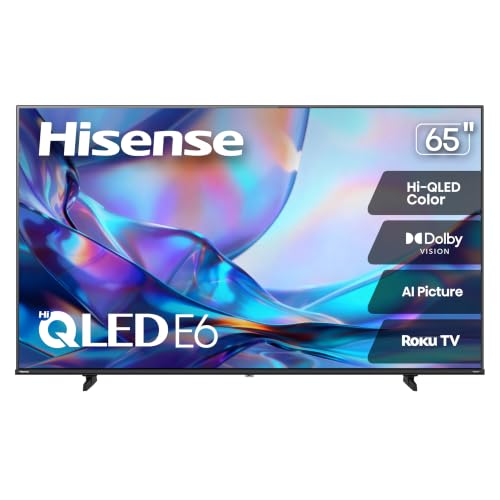
Choosing the right 65 inch 4K TV ultimately comes down to your personal priorities. For a well-rounded, budget-friendly option with excellent picture quality and the simplicity of Roku, we highly recommend the Hisense 65″ Class E6SR Series Hi-QLED 4K UHD. If gaming is your primary focus and you want the ultimate smoothness, the TCL 65″ T7 4K QLED Google TV with 144Hz is a fantastic choice, delivering top-tier performance for next-gen consoles. No matter which you pick, you’re getting a massive upgrade for your home entertainment.
Frequently Asked Questions
What is the best 65 inch 4K TV for gaming in 2026?
For gamers, the TCL 65″ T7 stands out with its 144Hz panel, which provides ultra-smooth motion and reduces blur in fast-paced games. It also supports VRR and ALLM, making it a top pick for serious players.
Is QLED better than regular LED for a 65 inch TV?
Yes, QLED TVs use quantum dots to produce a wider color gamut and higher brightness levels compared to standard LED TVs. This results in more vibrant and lifelike images, especially in well-lit rooms.
Do I need a 4K TV if I mostly watch cable or streaming?
Absolutely. Even if your current content isn’t all in 4K, these TVs upscale lower-resolution content to near-4K quality, making it look sharper and more detailed. Plus, most streaming services now offer a vast library of 4K titles.
How do I choose between Roku TV and Google TV?
It comes down to personal preference. Roku is known for its simple, intuitive interface and extensive free content. Google TV offers more personalized recommendations and integrates seamlessly with Google services. Both are excellent, so consider which ecosystem you prefer.


