

You’re hiking a rugged trail, your heart pounding as you reach the summit, and you pull out your action camera to capture the breathtaking view. But when you review the footage later, it’s shaky, blurry, and disappointing. This is the all-too-common problem that a gimbal-equipped action camera solves. In this guide, we’ve evaluated the best action cameras with gimbal stabilization to help you shoot smooth, professional-looking videos, whether you’re an adrenaline junkie, a vlogger, or a casual traveler.
We’ve compared top models from AKASO, DJI, Insta360, and Xtra Edge, focusing on stabilization technology, video quality, and usability. Our goal is to help you choose a camera that matches your adventure style and budget. For more insights on choosing the right camera, check out our guide on the best action camera for beginners.




Buying Guide: What to Look For in an Action Camera with Gimbal
Stabilization Technology
The core of any gimbal action camera is its stabilization system. A mechanical 3-axis gimbal physically counteracts motion, providing the smoothest results, ideal for fast-paced activities like mountain biking or skiing. Electronic Image Stabilization (EIS) is a software-based approach that crops the image to reduce shakiness, which is lighter and more affordable but less effective in extreme conditions.
When choosing, consider your primary activities. If you need rock-solid footage in high-action scenarios, a mechanical gimbal is worth the investment. For casual use, EIS might suffice. Our review of the best action camera with zoom also highlights stabilization as a key factor.
Video Quality and Resolution
Resolution and frame rate are crucial for capturing detail and smooth motion. 4K at 30fps is now standard, but higher frame rates like 60fps or 120fps allow for stunning slow-motion effects. Sensor size also matters: a larger 1-inch sensor, like that in the Xtra Muse, captures more light, improving low-light performance and dynamic range.
Consider what you’ll be shooting. For vlogging, a flip screen and good audio are essential. For action sports, prioritize high frame rates and a wide field of view. The best vlogging camera with mic guide offers additional tips for content creators.
Durability and Waterproofing
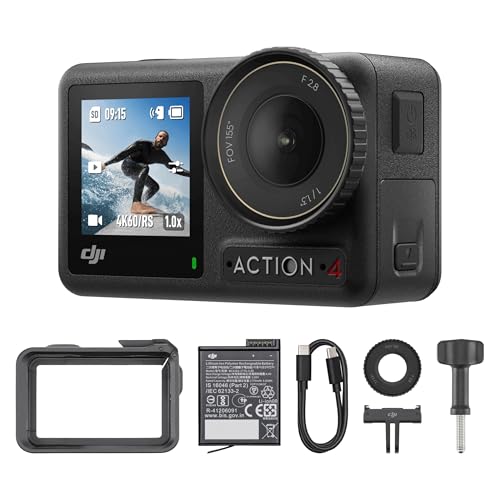
Action cameras are meant for the outdoors, so durability is non-negotiable. Look for cameras that are waterproof without a case (like the DJI Osmo Action 4, which goes to 18m) or come with a waterproof housing. Cold resistance is also vital for winter sports, and battery life in low temperatures can make or break a shoot.
Think about the environments you’ll encounter. A camera with a rugged build and replaceable lens, like the Insta360 X5, offers peace of mind for extreme adventures. For boat owners, our guide on the best security camera for a boat emphasizes similar durability concerns.
Ease of Use and Features
User-friendly controls, touchscreens, and companion apps can greatly enhance your experience. Features like voice control, gesture recognition, and magnetic mounts make it easier to capture shots on the fly. Also, consider the included accessories: a carrying case, spare batteries, or a handle with a tripod mount can add significant value.
For those new to action cameras, an intuitive interface is a must. The AKASO EK7000, for instance, offers a simple layout and a wireless remote for easy operation. If you’re exploring different types of cameras, our best mirrorless camera for nature article might also interest you.
Final Thoughts
Choosing the best action camera with gimbal ultimately comes down to your specific needs and budget. For a budget-friendly entry point that still delivers steady footage, the AKASO EK7000 4K30FPS 20MP WiFi Action Camera is a solid choice, offering EIS and a waterproof case at an accessible price. If you’re a serious adventurer or content creator seeking the ultimate in stabilization and image quality, the Insta360 X5 – Waterproof 8K 360° Action Camera stands out with its 360° capture and invisible selfie stick effect, making it perfect for immersive storytelling. Both options represent the best in their class, so consider your priorities and hit the road with confidence.
Frequently Asked Questions
What is the difference between a gimbal and electronic image stabilization?
A gimbal uses physical motors to keep the camera steady, providing superior stabilization, especially in high-motion scenarios. Electronic Image Stabilization (EIS) crops the image and uses software to reduce shakiness, which is lighter but less effective. For professional-grade smoothness, a gimbal is the way to go.
Can I use an action camera with a gimbal underwater?
Yes, many action cameras with gimbals are waterproof or come with waterproof cases. For example, the DJI Osmo Action 4 is waterproof up to 18 meters without a case, making it ideal for snorkeling and diving. Always check the manufacturer’s ratings before submerging your camera.
How long do action camera batteries last in cold weather?
Cold temperatures can significantly reduce battery life. Look for cameras with cold-resistant batteries, like the DJI Osmo Action 4, which operates in temperatures as low as -20°C and lasts up to 150 minutes. It’s also wise to carry spare batteries and keep them warm in your pocket.
What is the best action camera with gimbal for vlogging in 2026?
For vlogging, the Xtra Muse with its 1-inch sensor and 3-axis gimbal is an excellent choice, offering 4K/120fps video and a flip-up touchscreen for easy framing. The Insta360 X5 also excels with its 360° capabilities and invisible selfie stick, making it perfect for capturing immersive vlogs. Both are top contenders in 2026.

