

You have arrived at a scenic overlook just as the golden hour light begins to wash over the valley. The challenge is capturing that depth, that texture, and that mood with a camera that does justice to the scene. For landscape photographers, choosing the right gear is critical. In 2026, Canon offers several compelling options that balance image quality, versatility, and portability. Whether you are stepping into landscape photography for the first time or upgrading your kit, this guide focuses on the best Canon cameras for landscape photography, covering three models that cater to different skill levels and budgets.
We have evaluated each camera based on sensor performance, lens compatibility, and real-world usability for outdoor shooting. If you want a broader overview of Canon’s lineup, check out our guide to the best Canon cameras in 2026.




Buying Guide: What to Look for in a Canon Landscape Camera
Selecting the right camera for landscape photography involves more than megapixels. Below are four key criteria we used to assess these models. Each factor directly affects your ability to capture sharp, well-exposed images in outdoor environments.
Sensor Resolution and Dynamic Range
Landscape photography demands fine detail and the ability to retain highlights and shadows. A sensor with high resolution (24 megapixels or more) and good dynamic range ensures that distant mountains remain crisp and that the sky does not blow out. All three cameras here feature APS-C sensors with 24.2 megapixels, offering a solid foundation for landscape work. The Canon EOS Rebel T7 uses a proven CMOS sensor, while the mirrorless R10 and R100 benefit from newer processing engines that improve noise handling.
Lens Versatility and Compatibility
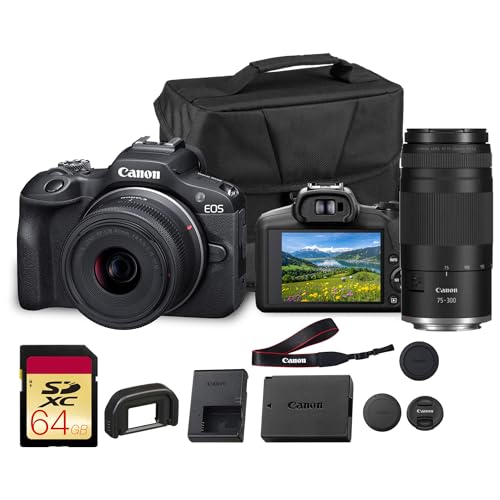
Your lens choice often matters more than the camera body. For landscapes, a wide-angle zoom (like 18-45mm or 18-55mm) provides the expansive field of view you need. The Canon EOS Rebel T7 comes with an 18-55mm lens, while the R100 bundles an 18-45mm plus a telephoto 75-300mm for distant subjects. The R10 kit includes an 18-150mm all-in-one zoom, which covers wide to telephoto without swapping lenses. All three cameras are compatible with Canon’s extensive lens systems, including EF/EF-S (via adapter for mirrorless) and RF/RF-S lenses. For more on Canon’s ecosystem, visit our Cameras category page.
Portability and Durability for Outdoor Use
Landscape photographers often hike to remote locations. A lightweight, compact camera reduces fatigue and makes it easier to carry extra lenses. The Canon EOS Rebel T7 DSLR is slightly heavier due to the mirror mechanism, while the mirrorless R10 and R100 are more travel-friendly. All three are built with sturdy construction, but none are weather-sealed. For added protection in the field, consider a camera bag or rain cover. Our outdoor-ready essentials guide includes accessories that pair well with your camera kit.
Autofocus and Shooting Speed
While landscapes are often static, you may need quick autofocus for moving elements like wildlife or flowing water. The Canon EOS Rebel T7 uses a 9-point AF system, adequate for most scenes. The mirrorless R10 and R100 feature Canon’s Dual Pixel CMOS AF, which provides fast, accurate focusing across the frame and includes subject tracking. The R10, in particular, offers up to 15 fps burst shooting, useful for capturing fleeting light changes. If you also shoot video of your adventures, the R10’s 4K oversampled from 6K is a bonus. See our best video cameras for YouTube and top vlogging cameras for more on hybrid shooters.
Final Thoughts
After reviewing these three Canon cameras, our recommendation depends on your priorities. For budget-minded beginners who want a reliable DSLR with proven image quality, the Canon EOS Rebel T7 DSLR Camera with 18-55mm Lens delivers excellent value and a straightforward shooting experience. For those who prefer a modern mirrorless system with greater lens flexibility and advanced autofocus, the Canon EOS R10 Mirrorless Camera with 18-150mm bundle is a versatile choice that grows with your skills. Both cameras will help you capture the stunning landscapes you seek, whether you are just starting out or ready to explore more creative possibilities.
Frequently Asked Questions
What is the best Canon camera for landscape photography for beginners?
The Canon EOS Rebel T7 is an excellent entry-level choice. Its 24.1-megapixel sensor, user-friendly Scene Intelligent Auto mode, and included 18-55mm lens make it easy to start capturing wide landscapes without a steep learning curve. For a more detailed comparison, refer to our best Canon cameras guide.
Is a mirrorless or DSLR better for landscape photography?
Both types can produce excellent landscape images. Mirrorless cameras like the Canon EOS R10 and R100 are generally lighter and offer faster autofocus, which is helpful for dynamic scenes. DSLRs like the Rebel T7 are often more affordable and have longer battery life. Your choice should depend on budget, weight preference, and whether you plan to use legacy EF lenses.
What lens should I use for landscape photography with a Canon camera?
A wide-angle zoom lens, such as the 18-55mm or 18-45mm included in these kits, is a great starting point. For even wider views, consider a dedicated ultra-wide-angle lens like the Canon RF 16mm f/2.8 or an EF-S 10-18mm. Telephoto lenses can also be useful for compressing distant elements, as seen in the 75-300mm bundled with the R100 and R10 kits.
Can the Canon EOS Rebel T7 handle low-light landscape photography?
Yes, the Rebel T7’s ISO range of 100 to 6400 (expandable to 12800) allows for handheld shooting in dim conditions, though noise increases at higher ISOs. For best results in low light, use a tripod and longer exposure to keep the ISO low. The mirrorless R10 and R100 offer slightly better noise performance thanks to newer processors.




