

You have been juggling multiple windows, spreadsheets, and video calls on a flat screen, and your neck is starting to ache. A curved monitor can change that. By gently wrapping around your field of view, it reduces eye movement and creates a more natural viewing experience. Whether you are a gamer seeking deeper immersion or a professional managing complex workflows, a curved display brings a new level of comfort and focus. In this guide, we review the best curved monitors available now, with top picks from LG and Samsung that suit different budgets and needs. For more context on choosing a monitor, check out our guide to the best monitor for the money.


Buying Guide: What to Look For in a Curved Monitor
Screen Size and Resolution
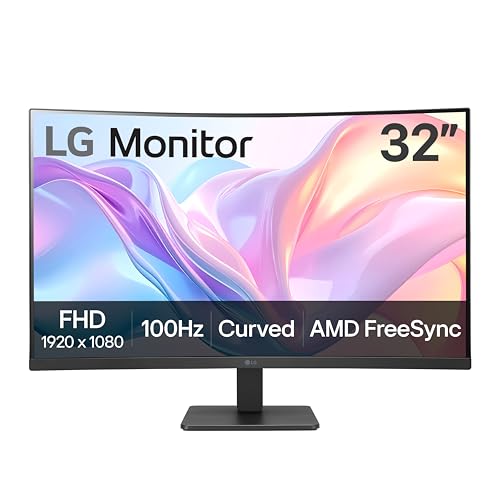
Curved monitors come in various sizes, from compact 27-inch models to expansive 34-inch ultrawide screens. The resolution matters just as much. A 27-inch FHD (1920×1080) display is great for everyday use and casual gaming, while a 34-inch WQHD (3440×1440) panel offers extra horizontal space for multitasking. For most users, a 32-inch FHD curved monitor strikes a balance between immersion and pixel density. If you work with multiple documents or timelines, an ultrawide resolution can replace a dual-monitor setup.
Refresh Rate and Gaming Features
A higher refresh rate makes motion appear smoother, which is essential for fast-paced games and even for scrolling through web pages. Most curved monitors now offer 100Hz, a significant step up from standard 60Hz. Technologies like AMD FreeSync reduce screen tearing, and features such as Black Stabilizer or Game Mode help you see details in dark scenes. If you are a competitive gamer, prioritize a monitor with a fast refresh rate and adaptive sync. For a deeper look at gaming-oriented displays, read our review of the best monitors on Amazon.
Connectivity and Ergonomics
Modern curved monitors should offer a range of ports to connect your laptop, console, or peripherals. USB Type-C with power delivery is a huge plus, as it can charge your device and transmit video through a single cable. HDMI and DisplayPort are standard, and built-in USB hubs add convenience. An ergonomic stand with height and tilt adjustment lets you position the screen for comfort during long sessions. If you plan to use the monitor for productivity, look for a model with a fully adjustable stand. For more tips on selecting a versatile monitor, visit our roundup of the best computer monitors.
Panel Technology and Color Accuracy
Most curved monitors use VA (Vertical Alignment) panels, which deliver deep blacks and high contrast ratios. This makes them excellent for watching movies and playing games with rich shadows. Some higher-end models use IPS or similar technology for wider viewing angles and better color accuracy. If you do photo or video editing, look for a monitor with wide color gamut coverage like sRGB or HDR support. For general use, a good VA panel provides vibrant colors and solid performance. If you are exploring other electronics categories, you might also be interested in our Electronics collection.
Final Thoughts
Choosing the best curved monitor comes down to your specific needs and workspace. For those who crave extra screen real estate and a premium ultrawide experience, the LG 34WR55QK-B 34-inch UltraWide WQHD (3440 x 1440) delivers sharp details, USB-C convenience, and a height-adjustable stand that makes long workdays comfortable. If you prefer a more compact and budget-friendly option without sacrificing immersion, the Samsung 27″ Essential S3 (S36GD) offers a smooth 100Hz refresh rate and eye-care features that keep you comfortable during marathon sessions. Both models represent excellent value in their respective categories, ensuring you can find a curved monitor that transforms your daily computing experience.
Frequently Asked Questions
What size curved monitor is best for gaming?
A 27-inch curved monitor is a popular choice for gaming because it fits most desks and provides an immersive field of view without requiring excessive head movement. For a more cinematic experience, a 32-inch or 34-inch ultrawide model can pull you deeper into the game. In 2026, many gamers are opting for 32-inch FHD curved monitors with 100Hz refresh rates for a great balance of performance and price.
Is a curved monitor better for work?
Yes, especially for tasks that involve multiple windows or long reading sessions. The gentle curve reduces eye strain by keeping the entire screen at a consistent distance from your eyes. Ultrawide curved monitors are particularly effective for productivity, as they let you view two or three documents side by side without needing a second monitor. Look for a model with a height-adjustable stand and USB-C connectivity for a cleaner workspace.
Do curved monitors reduce eye strain?
Many users report less eye fatigue with curved monitors because the shape matches the natural curvature of the human eye, reducing the need for constant refocusing. Additionally, features like Reader Mode (low blue light) and flicker-free technology further minimize strain. For the best results, pair your curved monitor with proper room lighting and take regular breaks. You can find more eye-care tips in our blog.
What is the difference between 1800R and 1500R curvature?
The curvature rating (e.g., 1800R, 1500R) indicates the radius of the circle the monitor would form if extended. A lower number means a tighter curve. 1500R is more immersive and wraps closer around your vision, while 1800R is a gentler curve that still offers a wider field of view. Most modern curved monitors use 1800R or 1500R; both are comfortable for typical viewing distances. In 2026, 1500R is becoming more common on premium models.


