You just finished a meticulous wash, your car gleams under the sun, and then you reach for a towel. A few swipes later, water spots and streaks ruin the effort. The culprit is almost always a subpar drying towel. Choosing the right microfiber drying towel is the single most impactful upgrade you can make to your car care routine. In this guide, we break down the best drying towel for car in 2026, covering everything from GSM density to weave patterns, so you can dry your vehicle in one smooth pass without scratches or lint.
Whether you own a compact sedan or a full-size SUV, the right towel saves time and protects your paint. We evaluated eight top-rated models from brands like Meguiar’s, Chemical Guys, and Blackline, focusing on absorbency, size, and safety for clear coat. If you are also upgrading your wash process, check out our best foam gun for car wash guide to pair with your drying routine.




Buying Guide: What to Look for in a Car Drying Towel
GSM (Grams per Square Meter) and Absorbency
GSM measures the density of the microfiber. Higher GSM towels (1200 to 1400) are thicker, heavier, and can absorb more water without wringing. For example, the Singrune 2 Pack XL Car Drying Towel boasts 1300 GSM, while the KKV Full-Sized SUV Drying Towel reaches 1400 GSM. A higher GSM means you can dry an entire car with one towel, reducing the risk of water spots.
However, very high GSM can make the towel bulky and harder to wring out if needed. For most users, a 1200 to 1300 GSM towel offers the best balance of absorbency and manageability. Lower GSM towels (like waffle weaves around 600-800) are lighter and dry faster but may require multiple passes.
Weave Type: Twisted Loop vs. Waffle Weave
The weave determines how the towel interacts with your paint. Twisted loop microfiber (used by Singrune, KKV, and Blackline) creates a plush surface that lifts water away without dragging. These towels are excellent for a scratch-free finish and are preferred by detailers for final drying.
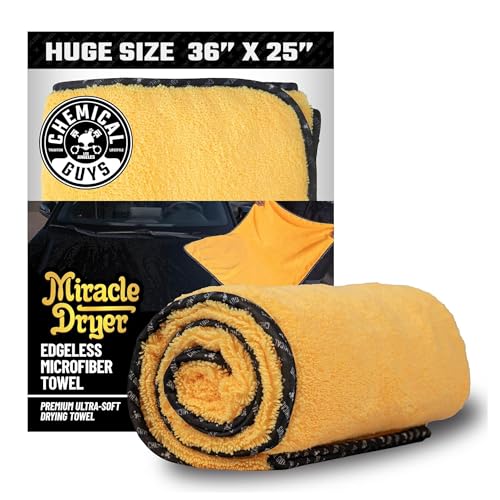
Waffle weave towels, like the Chemical Guys Gray Matter, use a textured pattern that increases surface area and wicks moisture quickly. They are thinner and more flexible, making them great for glass and chrome. But they may not hold as much water as a thick twisted loop towel. Choose based on your primary use: twisted loop for paint, waffle weave for glass and trim.
Size and Coverage
Size directly affects drying efficiency. A larger towel covers more surface area per pass. Standard sizes range from 24″ x 36″ to 48″ x 24″. Extra-large options like the TTRCB 2 Pack (48″ x 24″) or the KKV Full-Sized SUV Drying Towel (48″ x 24″) let you dry a hood or roof in one swipe. For smaller cars, a 24″ x 36″ towel like the Singrune or Blackline is easier to handle.
Consider your vehicle type. SUV and truck owners benefit from oversized towels that reduce passes. Compact car owners may prefer a more manageable size that still offers good coverage. Regardless, a towel that is too small will force you to wring frequently, increasing the chance of reintroducing dirt.
Edge Design and Paint Safety
Rough, unbound edges can scratch clear coat. Look for towels with soft-banded or edgeless designs. Brands like Chemical Guys and SMINDER emphasize seamless edges that glide over paint without marring. The Singrune and Blackline towels also feature smooth, twisted-loop construction that is safe for all finishes, including ceramic coatings.
If you are serious about paint protection, pair your drying towel with a proper drying aid. For interior care, our best car interior cleaner guide complements your exterior routine.
Final Thoughts
After evaluating absorbency, weave quality, size, and safety, we recommend the Singrune 2 Pack XL Car Drying Towel for its true 1300 GSM thickness, generous 24″ x 36″ size, and streak-free performance at an accessible value. For SUV owners who want maximum coverage, the KKV Full-Sized SUV Drying Towel delivers 1400 GSM and a 48″ x 24″ footprint that dries large panels in one pass. Both towels are machine washable and built to last through dozens of washes, making them smart investments for any car enthusiast.
Frequently Asked Questions
How often should I replace my car drying towel?
With proper care (machine wash with microfiber detergent, low heat dry), a quality drying towel can last 50 to 100 washes. Replace it when you notice reduced absorbency, frayed edges, or if it starts leaving lint. In 2026, most premium towels like the Singrune and Blackline retain performance for over a year of regular use.
Can I use a drying towel on ceramic coated cars?
Yes, in fact, a high-quality twisted loop microfiber towel is ideal for ceramic coated surfaces because it lifts water without scratching the delicate coating. The Singrune and KKV towels are specifically rated safe for coated and uncoated paint. Avoid using old or rough towels that may degrade the coating.
What is the difference between 1200 GSM and 1400 GSM towels?
Higher GSM means more microfiber per square inch, which translates to greater absorbency and thickness. A 1400 GSM towel (like the KKV) can hold up to a gallon of water, while a 1200 GSM towel (like the SMINDER) holds about 80% of that. The trade-off is weight and drying speed. For most cars, 1200-1300 GSM is sufficient; for large SUVs, 1400 GSM saves time.
Should I use a separate towel for windows and paint?
It is a good practice to use dedicated towels for different surfaces to avoid cross-contamination. A waffle weave towel works excellently for glass, while a plush twisted loop towel is best for paint. Many detailers keep two sets: one for the body and one for windows and trim. For a complete detailing setup, see our best car detailing brushes guide.