You are about to rinse a batch of delicate quinoa, and the last thing you want is grains slipping through a coarse colander. Or perhaps you are sifting flour for a cake and need a sieve that catches every lump without clogging. A fine mesh strainer solves these problems, it is the unsung hero of the kitchen, delivering smooth sauces, perfectly drained pasta, and flawlessly sifted dry ingredients. In this guide, we have evaluated eight top-rated fine mesh strainers, from budget-friendly sets to professional-grade single sieves. Whether you are a home baker or a busy cook, you will find the right tool for your counter. For more kitchen essentials, check out our best colander for draining larger items.




Buying Guide: What to Look for in a Fine Mesh Strainer
Mesh Size and Material
The mesh size determines what you can strain. A 30-mesh sieve is ideal for quinoa, rice, and flour, while a 60-mesh strainer catches finer particles like paint impurities or honey sediments. For kitchen use, look for food-grade stainless steel (18/8 or 304), it resists rust and won’t affect flavors. Avoid aluminum or coated meshes that may degrade over time.
Handle Design and Stability
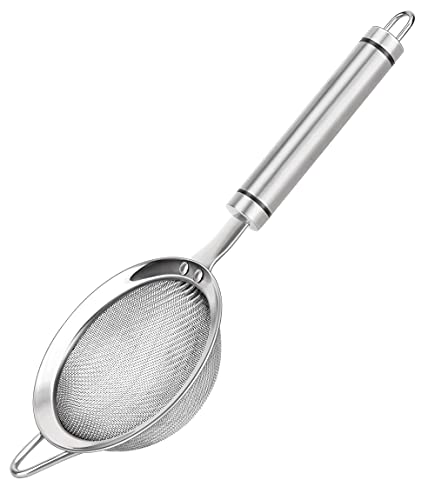
A sturdy handle makes all the difference. Riveted handles stay secure even under heavy loads, and a long handle protects your hands from steam when straining hot liquids. Some models include a hook or loop to rest securely on pots or bowls, a feature we found particularly useful on the OXO and Tiawudi designs. For salad prep, pairing a strainer with a salad spinner can streamline your workflow.
Size and Versatility
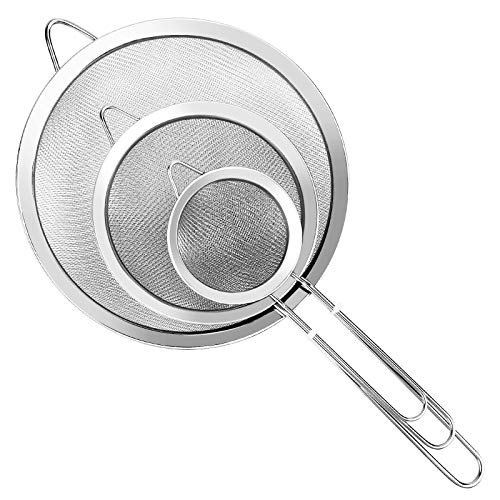
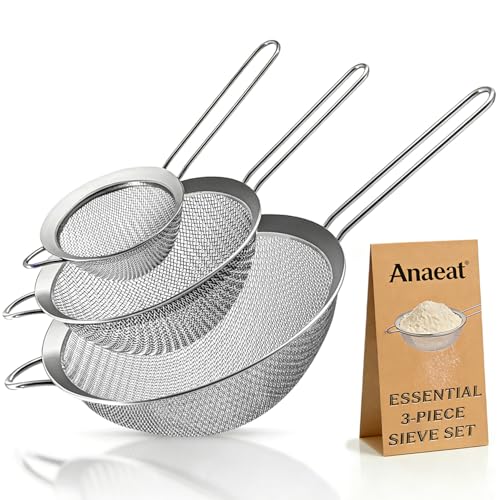
Consider what you cook most. A set of three sizes (small, medium, large) covers everything from rinsing berries to draining pasta. A single 8- or 9-inch strainer works well for everyday sifting and straining. If you often bake or make sauces, an extra-fine mesh is non-negotiable. Deep bowls hold more and reduce spills.
Ease of Cleaning and Storage
Fine mesh can trap particles, so dishwasher-safe models save time. Look for burr-free edges that won’t scratch your hands during hand-washing. Nestable sets or strainers with hanging loops keep your kitchen organized. All the strainers we reviewed are easy to clean and store.
Final Thoughts
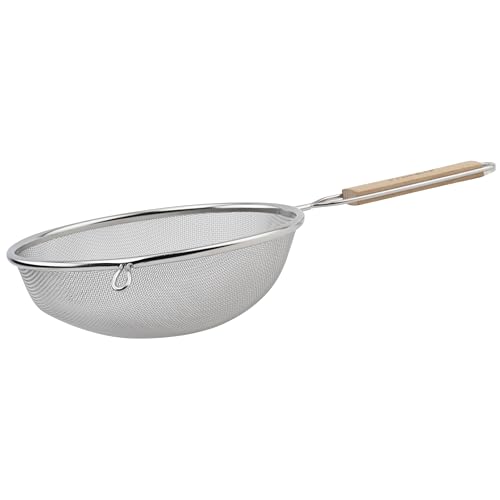
After reviewing eight fine mesh strainers, we recommend the 9″ Large Mesh Strainer, Stainless Steel 18/8 Extra from Tiawudi for its exceptional build quality, deep bowl, and lifetime guarantee, perfect for bakers and everyday cooks. For those who want a versatile set on a budget, the 3Pcs Super Wire Extra Fine Mesh Strainer from YLYL offers three sizes at an affordable price, making it ideal for small kitchens or occasional use. Whichever you choose, a quality fine mesh strainer will elevate your cooking and baking for years to come.
Frequently Asked Questions
What is the best mesh size for a fine mesh strainer?
A 30-mesh strainer works well for most kitchen tasks like sifting flour, straining quinoa, and rinsing rice. For ultra-fine filtering (e.g., honey, paint, or fine sauces), a 60-mesh or higher is better. The Tiawudi 30-mesh and ZHUITU 60-mesh options cover both ends of the spectrum.
Can I use a fine mesh strainer for hot liquids?
Yes, but ensure the handle is long and heat-resistant. Models like the OXO Good Grips Double Rod Strainer have a secure loop that keeps the strainer stable on pots, and the stainless steel handle stays cool. Always use caution when straining boiling pasta or stock.
Are fine mesh strainers dishwasher safe?
Most stainless steel fine mesh strainers are dishwasher safe. However, to extend their lifespan, hand-washing with mild soap is recommended. The YLYL and Anaeat sets are both dishwasher safe, but the burr-free mesh is also easy to rinse clean by hand.
What is the difference between a colander and a fine mesh strainer?
A colander has larger holes and is best for draining pasta or rinsing vegetables. A fine mesh strainer uses a tightly woven screen to catch small particles like seeds, flour, or quinoa. For most kitchens, having both is ideal, see our best colander for recommendations.