

You’ve just installed your favorite Linux distribution, ready for some serious gaming, only to find your mouse’s extra buttons do nothing, or the RGB is stuck on a rainbow cycle. It’s a common frustration for Linux users, as many gaming peripherals rely on software that simply isn’t available or fully functional on open-source systems. This guide cuts through the noise, focusing on mice that work well with Linux out of the box or have strong community support for configuration.
We’ve evaluated a range of wired and wireless options from trusted brands like Logitech G, Redragon, and Razer, considering factors like sensor performance, build quality, and button programmability within a Linux environment. Whether you’re a competitive FPS player needing precise tracking or an MMO enthusiast requiring many side buttons, this guide helps you find a reliable companion. For those also using other devices, check out our top Chromebook gaming mouse picks for similar compatibility insights.


Buying Guide
1. Linux Driver and Software Support
Not all gaming mice play nicely with Linux. Some manufacturers provide Linux-compatible configuration software, while others rely on community-driven tools like Piper or libratbag. Before purchasing, check if the mouse is supported by these open-source utilities to remap buttons, adjust DPI, and customize lighting.
Mice with on-board memory are a safer bet, as they store your settings directly on the device, making them OS-agnostic. This means you can configure the mouse on a Windows machine and then use it on Linux without needing any additional software. For more insights on cross-platform compatibility, explore our gaming mouse for laptop guide.
2. Sensor Performance and Precision
For gaming, sensor accuracy is paramount. Look for mice with high DPI sensors (8000 and above) and consistent tracking, as these perform well in fast-paced scenarios. Optical sensors are generally preferred over laser for their accuracy without acceleration.
Also, consider the polling rate (usually 1000Hz), which affects how often the mouse reports its position, translating to more responsive gameplay. A high-quality sensor ensures that your movements on screen match your physical actions precisely, whether you’re sniping or building in a world of blocks.
3. Ergonomics and Build Quality
Comfort is key for long gaming sessions. Consider the mouse’s shape, size, and weight relative to your grip style (palm, claw, or fingertip). A comfortable mouse reduces fatigue and improves your overall gaming performance.
Durable build quality ensures the mouse withstands intense use. Look for features like braided cables, high-quality switches, and a solid frame. If you also use a Mac for creative work, check out our MacBook gaming mouse recommendations which cover similar ergonomic considerations.
Final Thoughts
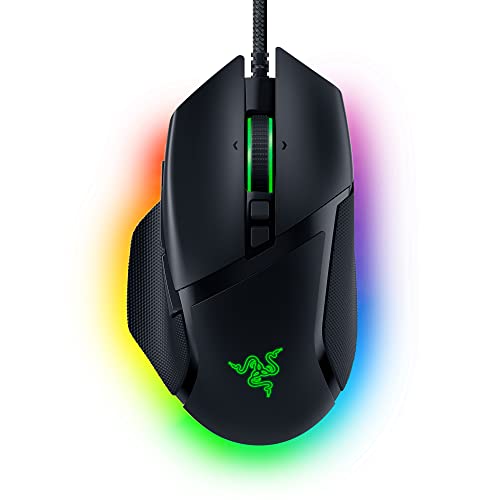
Choosing the right gaming mouse for your Linux rig doesn’t have to be a gamble. For a reliable, feature-rich wired option that’s easy to configure with open-source tools, the Razer Basilisk V3 Customizable RGB Wired Ergonomic is a standout, offering excellent ergonomics and numerous programmable buttons. On the wireless side, the Logitech G305 Lightspeed Wireless Gaming Mouse delivers exceptional battery life and lag-free performance in a lightweight design, making it perfect for gamers who prioritize freedom and portability. Both are excellent choices that will serve you well across various Linux distributions.
Frequently Asked Questions
Can I remap buttons on a gaming mouse in Linux?
Yes, you can often remap buttons using tools like Piper or libratbag, which support many popular mice. Some mice also have on-board memory, allowing you to save configurations directly on the device. Check compatibility with these tools before purchasing for the smoothest experience.
Do Razer mice work on Linux?
Razer mice generally work on Linux, but advanced features like custom RGB lighting and macro programming may require community-driven tools. The Razer Basilisk V3, for example, has partial support through OpenRazer. Basic functionality like movement and clicking works out of the box, but be prepared to tinker with open-source drivers for full customization.
What is the best wireless gaming mouse for Linux in 2026?
For 2026, the Logitech G305 Lightspeed is a top contender due to its excellent battery life and reliable wireless performance, which works seamlessly on Linux with no additional software needed for basic use. Its HERO sensor is well-supported by the Linux kernel, ensuring a plug-and-play experience. This makes it a favorite among Linux gamers who want a hassle-free wireless setup.
Do I need special drivers to use a gaming mouse on Linux?
Most gaming mice are plug-and-play on Linux, meaning they work immediately as a standard mouse. However, for advanced features like remapping and DPI switching, you may need to install open-source drivers or use configuration tools. Many users find that on-board memory allows them to configure the mouse on another OS and then use it on Linux without any additional software.


