Building a gaming PC on a budget of $1,000 can feel like a balancing act. You want a graphics card that delivers smooth frame rates at 1440p or even 4K without sacrificing other critical components. In this guide, we have evaluated six of the best graphics cards under $1000 for 2026, covering options from ASUS, ASRock, and GIGABYTE. Whether you are a competitive gamer or a content creator, our verified picks will help you make an informed decision. For more mid-range options, check out our best graphics cards for Mid-Range gaming guide.


What to Consider When Choosing a Graphics Card Under $1000
Performance vs. Resolution
The primary factor is how well the card handles your target resolution. For 1080p gaming, even budget-friendly GPUs like the ASUS Dual GeForce RTX 3050 6GB GDDR6 OC Edition can deliver high frame rates. For 1440p or entry-level 4K, you will want a card with more VRAM and faster clock speeds, such as the ASRock Radeon RX 9070 Challenger 16GB OC Graphics. Our top budget graphics cards for 2026 guide offers additional insights for lower budgets.
VRAM Capacity
Video memory (VRAM) is crucial for modern games with high-resolution textures and ray tracing. Cards with 12GB or 16GB, like the GIGABYTE Radeon RX 9070 XT Gaming OC 16G Graphics, are future-proof for 2026 and beyond. A 6GB card may suffice for esports titles but could struggle with newer AAA releases.
Cooling and Noise Levels
Efficient cooling extends the lifespan of your GPU and keeps fan noise low. Many cards in this range feature dual or triple fan designs with 0dB Silent technology, such as the ASRock Intel Arc B580 Challenger 12GB OC Graphics. Look for models with large heatsinks and quality thermal pads.
Connectivity and Features
Consider the ports and additional features. DisplayPort 2.1 and HDMI 2.1a support high refresh rates on modern monitors. Features like dual BIOS (quiet vs. performance) and RGB lighting can also influence your choice. For more general guidance, visit our Cards category page.
Final Thoughts
After reviewing the top contenders, our overall recommendation depends on your specific needs. For gamers seeking excellent 1440p performance and ample VRAM, the ASRock Radeon RX 9070 Challenger 16GB OC Graphics offers a sweet spot of price and capability. If you prioritize raw power for 4K gaming and have a bit more room in your budget, the GIGABYTE Radeon RX 9070 XT Gaming OC 16G Graphics delivers outstanding frame rates and advanced features. Both cards are excellent investments for a high-performance build under $1000.
Frequently Asked Questions
What is the best graphics card under $1000 for 4K gaming?
For 4K gaming under $1000, the GIGABYTE Radeon RX 9070 XT Gaming OC 16G Graphics is a top choice. Its 16GB VRAM and high boost clock handle demanding titles at 4K with ease. For a more affordable option, the ASRock Radeon RX 9070 Challenger 16GB OC Graphics also performs well at 4K with adjusted settings.
Is the RTX 5070 worth it under $1000?
Yes, the ASUS SFF-Ready Prime NVIDIA GeForce RTX 5070 OC Edition offers excellent AI performance and DLSS 4 support, making it a strong contender for ray tracing and content creation. Its 12GB GDDR7 memory and compact design are ideal for small form factor builds.
How much VRAM do I need for gaming in 2026?
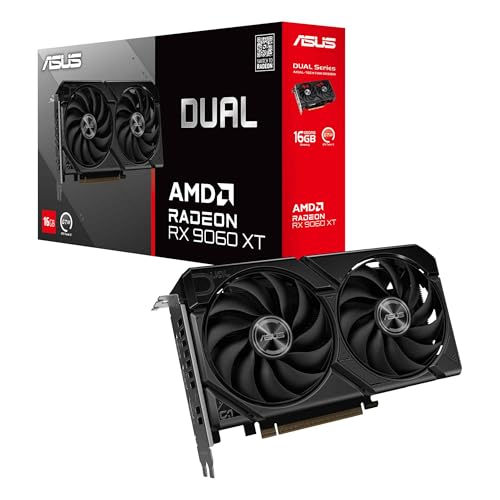
For 2026, 12GB is the recommended minimum for 1440p gaming, while 16GB is better for 4K and ray tracing. Cards like the ASUS Dual Radeon RX 9060 XT 16GB GDDR6 provide ample memory for modern titles and future releases.
Are AMD or Nvidia cards better under $1000?
Both brands offer strong options. Nvidia cards like the RTX 5070 excel in ray tracing and AI features, while AMD cards such as the RX 9070 XT provide great raw performance and higher VRAM at competitive prices. Your choice depends on whether you prioritize ray tracing or raw value. For more comparisons, see our best graphics cards for Mid-Range gaming article.