

Your dash cam is only as reliable as the memory card inside it. After a long drive, the last thing you want is corrupted footage or a card that fails mid-recording. Standard micro SD cards simply aren’t built for the constant overwriting and temperature swings that dash cams endure. That’s where high endurance micro SD cards come in. In this guide, we’ve evaluated five of the best high endurance micro SD cards for dash cam use, from trusted brands like Sandisk and Integral. Whether you need a budget-friendly 32GB option or a massive 512GB card for long trips, we have you covered. If you’re also looking for reliable storage for drones, check out our roundup of best SD cards for DJI Mavic drones, many of the same endurance features apply.




Buying Guide: What to Look for in a High Endurance Micro SD Card for Your Dash Cam
Endurance Rating: How Many Hours of Continuous Recording?
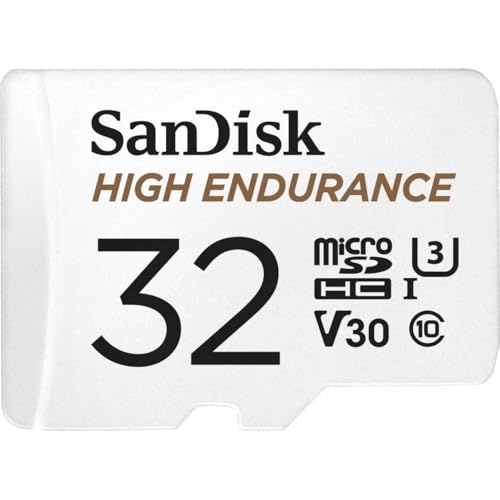
High endurance cards are rated for a specific number of hours of continuous recording before they wear out. Sandisk models offer ratings from 2,500 hours (32GB) up to 40,000 hours (512GB). Integral’s 128GB card is certified for up to 24,000 hours. For a typical dash cam that runs 8 to 12 hours daily, even the lower ratings will last years. But if you drive long hours or leave your cam running 24/7, opt for a card with a higher endurance rating. For similar longevity needs in aerial photography, see our best SD cards for DJI mini guide.
Speed Class: U3 and V30 for Smooth 4K Recording
Dash cams that record in 4K UHD require a card with a minimum U3 (UHS Speed Class 3) and V30 (Video Speed Class 30) rating. This ensures sustained write speeds of at least 30MB/s, which prevents dropped frames and choppy footage. All five cards in this review meet that standard, with read speeds up to 100MB/s. If your dash cam only records in 1080p, a U1 card might suffice, but investing in a U3 card future-proofs your setup. Many newer dash cams also support 4K, so it’s worth the small premium.
Durability: Withstanding Heat, Cold, and Shock
A dash cam sits on your windshield, exposed to intense sunlight in summer and freezing temperatures in winter. High endurance cards are built to handle these extremes. Both Sandisk and Integral cards are temperature proof from -25°C to 85°C, as well as water resistant, shock proof, and X-ray proof. This ruggedness is crucial for automotive use. If you’re looking for other durable automotive accessories, browse the Automotive category for more recommendations.
Capacity: Choosing the Right Size for Your Needs
Capacities range from 32GB to 512GB. A 32GB card stores roughly 4 to 6 hours of 4K footage before looping. For daily commuters, 64GB or 128GB is a sweet spot. If you take long road trips or want to keep footage for several days without overwriting, consider 256GB or 512GB. Keep in mind that higher capacities also offer higher endurance ratings. For example, Sandisk’s 512GB card is rated for 40,000 hours, enough for years of continuous recording. For more on capacity choices in other devices, see our best SD cards for phantom 4 guide.
Final Thoughts
After reviewing the top contenders, we recommend the Integral 128GB High Endurance microSD Card for drivers who want exceptional reliability at a reasonable price, it offers a verified 24,000 hours of continuous recording and sudden power-off protection. For those who need maximum capacity and the longest lifespan, the SANDISK 256GB High Endurance microSD Card is an excellent choice, providing up to 20,000 hours of recording and 4K support. Both cards are built to handle harsh dash cam conditions and will keep your footage safe mile after mile.
Related Guides
- Top Dash Cams for Rideshare Drivers in 2026
- Top Picks for the Best Dash Cam Under $200 in 2026
- Best Dash Cam for Toyota Tacoma
Frequently Asked Questions
What is the difference between a standard micro SD card and a high endurance one?
Standard micro SD cards are designed for occasional write and erase cycles, like in phones or cameras. High endurance cards use specialized NAND flash and advanced wear-leveling algorithms to handle constant overwriting, which is what dash cams do. They also have stronger durability ratings for temperature and shock. Using a standard card in a dash cam can lead to early failure and lost footage.
How long does a high endurance micro SD card last in a dash cam?
The lifespan depends on the card’s endurance rating and your usage. For example, a Sandisk 128GB card rated for 10,000 hours of Full HD recording would last over a year if you drive 8 hours daily. For 4K recording, the actual hours are lower because the card writes more data per minute. Higher capacity cards generally have higher endurance ratings. In 2026, most high endurance cards from Sandisk and Integral are rated for thousands of hours, giving you years of reliable service.
Can I use a regular micro SD card in my dash cam temporarily?
It’s not recommended. Regular cards are not built for the constant rewriting and vibrations inside a vehicle. They may overheat, corrupt data, or fail after a few weeks. Even for short-term use, the risk of losing important footage is high. Always use a high endurance card for dash cam applications. For more on card types, check the Cards category for additional guides.
What speed class do I need for 4K dash cam recording?
For smooth 4K UHD recording, your micro SD card should be at least U3 (UHS Speed Class 3) and V30 (Video Speed Class 30). This guarantees a minimum sustained write speed of 30MB/s. All the cards in this review meet that requirement. Some high-end dash cams may even recommend V60 or V90, but for most consumer models, U3/V30 is sufficient.


