

If you are a travel photographer or a content creator who values portability without sacrificing image quality, finding a lightweight mirrorless camera is essential. The best lightweight mirrorless cameras combine a compact body with powerful features, making them easy to carry on long hikes or during daily commutes. In this guide, we focus on Canon’s lineup, which offers a range of options from the full-frame EOS RP to the beginner-friendly EOS R100. Whether you are upgrading from a smartphone or looking for a second body, these cameras deliver excellent performance in a small package. For a broader look at the mirrorless market, check out our best mirrorless cameras of 2026.



Buying Guide: What to Look for in a Lightweight Mirrorless Camera
Weight and Portability
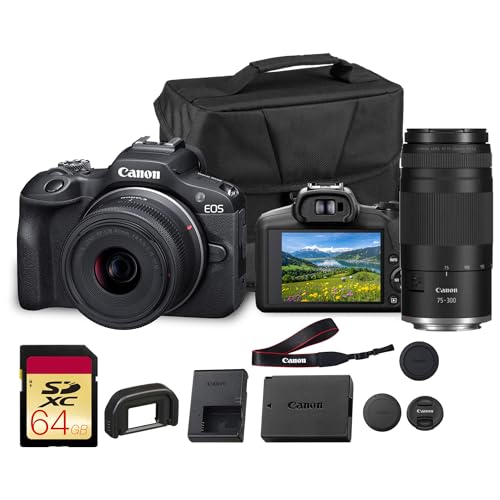
The whole point of a lightweight mirrorless camera is to reduce the burden on your shoulders. Look for a body that weighs under 500 grams with a kit lens. The Canon EOS R100, for instance, is exceptionally light at around 350 grams, making it ideal for all-day shooting. Pair it with a compact zoom lens and you have a setup that fits in a small bag.
Image Quality and Sensor Size
Sensor size directly affects image quality, especially in low light. Full-frame sensors like the one in the Canon EOS RP offer superior dynamic range and bokeh, while APS-C sensors (found in the R50 and R100) strike a great balance between quality and cost. For beginners, the APS-C models provide more than enough resolution for social media and prints. Learn more about entry-level options in our best entry level mirrorless cameras.
Autofocus Performance
Fast and accurate autofocus is crucial for capturing sharp images of moving subjects. Canon’s Dual Pixel CMOS AF is a standout feature, providing reliable face and eye tracking. The EOS R50 takes it further with subject detection for people, animals, and vehicles. This makes it easier to photograph kids, pets, or wildlife without constant manual adjustments.
Lens Selection and Versatility
A lightweight camera is only as good as the lenses available. Canon’s RF and RF-S mount offer a growing selection of compact zooms and primes. Bundles that include both a standard zoom and a telephoto lens, like the EOS R100 double lens kit, give you flexibility without needing to buy extra glass right away. This is especially useful for travel and event photography.
For a deeper dive into beginner-friendly models, read our best mirrorless cameras for beginners guide.
Final Thoughts
After evaluating Canon’s lightweight mirrorless lineup, we recommend the Canon EOS RP Mirrorless Camera RF24-105mm Lens for those who want full-frame image quality in a compact body, and the Canon EOS R50 Mirrorless Camera RF-S18-45mm for vloggers and content creators who need fast autofocus and 4K video. Both cameras deliver excellent portability and performance, making them top choices in the lightweight mirrorless category.
Frequently Asked Questions
Are lightweight mirrorless cameras good for professional photography?
Yes, many lightweight mirrorless cameras, such as the Canon EOS RP, produce professional-grade images thanks to their full-frame sensors and advanced features. They are widely used by travel and event photographers who need to move quickly without heavy gear.
What is the lightest mirrorless camera from Canon in 2026?
The Canon EOS R100 is currently one of the lightest options, weighing about 350 grams with the kit lens. It is an excellent choice for beginners and casual shooters who prioritize portability. Check our best mirrorless cameras for beginners for more details.
Can I use Canon EF lenses on these mirrorless cameras?
Yes, with the optional Canon EF-EOS R mount adapter, you can use a wide range of Canon EF and EF-S lenses on all RF mount cameras. This allows you to expand your lens collection without buying new glass immediately.
Which Canon mirrorless camera is best for video recording?
The Canon EOS R50 offers uncropped 4K video at 30 fps and Full HD at 120 fps, making it ideal for vlogging and content creation. The EOS RP also supports 4K but with a crop, so the R50 is generally preferred for video work.




