

You have a clear night, a star tracker, and a desire to capture the Milky Way. But your current camera struggles with noise above ISO 1600, and the stars come out as blurs. That is where a dedicated mirrorless camera for astrophotography changes everything. In this guide, we evaluate three models that perform well under dark skies: the Canon EOS RP, Sony Alpha a6400, and Canon EOS R100. Whether you are a beginner or a seasoned night shooter, these cameras offer the low-light sensitivity, manual controls, and lens flexibility you need. For more on camera selection for different scenarios, check out our guide on best mirrorless cameras for landscape photography.



Buying Guide for Astrophotography Mirrorless Cameras
Low-Light Sensor Performance
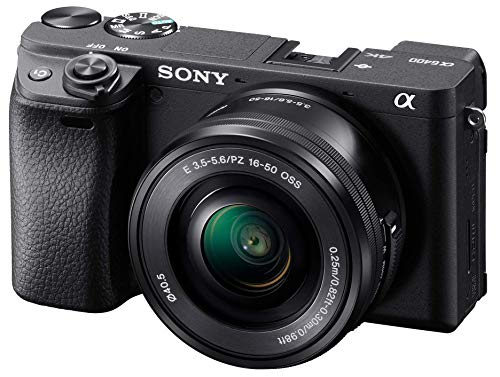
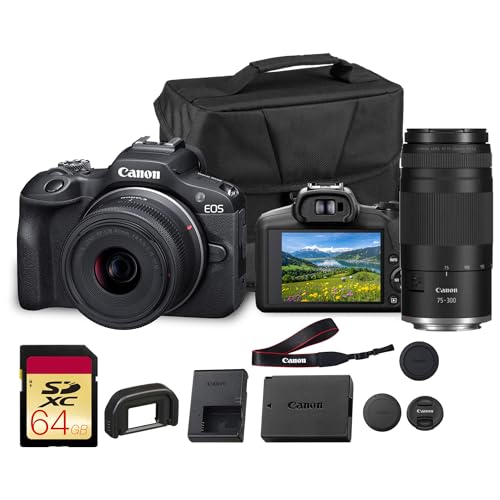
Astrophotography demands a sensor that captures clean images at high ISO settings. A full-frame sensor, like the one in the Canon EOS RP, gathers more light and produces less noise than smaller sensors. The Sony Alpha a6400 uses an APS-C sensor with excellent dynamic range, making it a strong contender for wide-field nightscapes. The Canon EOS R100 also uses an APS-C sensor but with a slightly older processor. For deep-sky imaging, prioritize cameras with larger pixels and good noise control.
Manual Focusing and Star Tracking Support
Precise focus is critical for sharp stars. Look for cameras with focus peaking and magnification tools. All three models offer manual focus aids. The Sony a6400 excels with its high-resolution EVF and fast contrast detection. The Canon EOS RP provides a clear viewfinder and intuitive focus zoom. If you plan to use a star tracker, a lightweight body like the Canon EOS R100 is easier to mount. For related advice, see our best mirrorless cameras for wildlife photography guide, which also covers focusing in low light.
Lens Compatibility and Ecosystem
Fast, wide-angle lenses are essential for astrophotography. Canon’s RF mount offers native lenses like the RF 24mm f/1.8 and RF 15-30mm f/4.5-6.3, which work well with the EOS RP and R100. Sony’s E-mount has a vast selection of third-party lenses from Sigma and Tamron, including the popular Sigma 16mm f/1.4 for APS-C. The Sony a6400 benefits from this ecosystem. The Canon EOS RP can also adapt EF lenses with an adapter, giving you access to older, affordable glass. For more on lens choices, read our best mirrorless cameras for portrait photography article.
Build Quality and Battery Life
Night shoots often involve cold temperatures and long exposures. A camera with a weather-sealed body and decent battery life is a plus. The Canon EOS RP has a magnesium alloy body with some weather sealing. The Sony a6400 is compact but lacks full weather sealing. The Canon EOS R100 is the lightest, making it easy to pack for hiking to dark sites. Battery life is moderate on all three; consider carrying spare batteries for all-night sessions. For rugged outdoor use, see our best mirrorless cameras for sports guide, which emphasizes durability.
Final Thoughts
For serious astrophotographers, the Canon EOS RP Mirrorless Camera RF24-105mm Lens offers a full-frame sensor that excels in low light and produces stunning wide-field images. If you prefer a more portable setup with excellent autofocus and a vast lens ecosystem, the Sony Alpha a6400 Mirrorless Camera is a versatile choice that handles star tracking and nightscapes with ease. Both cameras deliver the performance you need to capture the cosmos, and your choice will depend on whether you prioritize sensor size or system flexibility.
Frequently Asked Questions
Can a mirrorless camera shoot the Milky Way? Yes, any of these cameras can capture the Milky Way with a fast wide-angle lens and a sturdy tripod. The Canon EOS RP’s full-frame sensor gives you cleaner images at high ISO, while the Sony a6400’s APS-C sensor still performs well with the right lens.
Do I need a star tracker for mirrorless astrophotography? A star tracker is not mandatory for wide-angle shots, but it helps for longer exposures. The Canon EOS R100 is lightweight enough to mount on a portable tracker. For deep-sky objects, a tracker becomes essential regardless of camera choice.
Which lens is best for astrophotography with these cameras? For the Canon EOS RP, the RF 24mm f/1.8 or an adapted EF 14mm f/2.8 are excellent. For the Sony a6400, the Sigma 16mm f/1.4 is a top pick. The Canon EOS R100 works well with the RF-S 18-45mm kit lens, but a faster prime is recommended. For more lens recommendations, see our best mirrorless cameras for bird photography guide, which covers telephoto options.
Is a full-frame sensor necessary for astrophotography in 2026? Not strictly necessary, but it helps. APS-C sensors like those in the Sony a6400 and Canon EOS R100 can produce excellent results with good lenses and stacking techniques. Full-frame offers a wider field of view and better high-ISO performance, making it the preferred choice for many astrophotographers. For a broader look at camera types, visit our Cameras category page.




