

You are a content creator looking to upgrade your video quality without breaking the bank. The search for the best mirrorless cameras for video under $1000 can feel overwhelming with so many options from Canon, Sony, and Nikon. This guide evaluates four top contenders that deliver professional-grade 4K footage, reliable autofocus, and user-friendly designs for vloggers, streamers, and filmmakers. Whether you are just starting or need a compact secondary camera, we have you covered. For more budget-friendly options, check out our review of the Canon EOS R100 and other affordable mirrorless cameras.



Buying Guide
Video Quality and Resolution
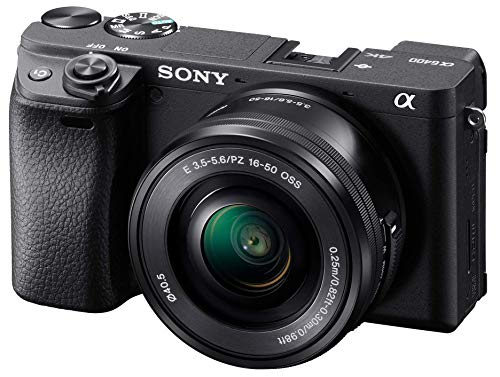
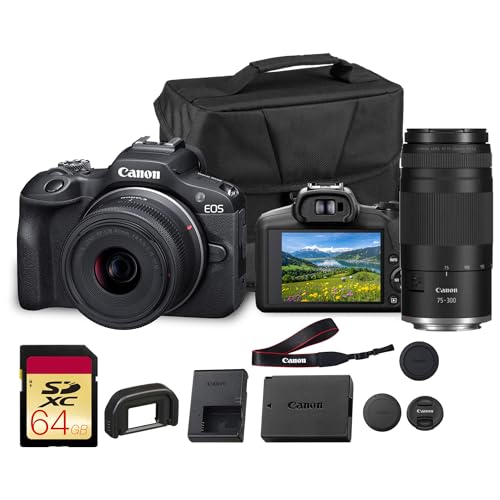
For video work, 4K resolution is now the standard. All four cameras in this roundup offer 4K recording, but the implementation varies. The Canon EOS R50 uses oversampled 4K for sharper detail, while the Sony Alpha a6400 delivers crisp 4K with excellent dynamic range. The Nikon Z 30 provides pro-grade 4K with minimal crop, and the Canon EOS R100 offers 4K at 24p, which is fine for cinematic projects. Consider whether you need slow motion or high frame rates; the Sony a6400 supports 120fps at 1080p for smooth slow-mo.
Autofocus Performance
Reliable autofocus is crucial for vlogging and run-and-gun shooting. The Sony a6400 features Real-Time Eye AF for humans and animals, making it a standout for tracking subjects. Canon’s Dual Pixel CMOS AF on the R50 and R100 ensures fast, accurate focusing with face and eye detection. The Nikon Z 30 also includes eye tracking for people and pets. If you shoot interviews or fast-moving scenes, prioritize a camera with phase-detection AF. For a deeper dive into autofocus capabilities, read our guide to Panasonic mirrorless cameras for video.
Form Factor and Ergonomics
As a video creator, you need a camera that is comfortable to hold for extended periods and easy to operate. The Canon EOS R50 is lightweight and compact, ideal for travel vlogging. The Nikon Z 30 is the smallest of the bunch, with a flip-out touchscreen that makes selfie shooting a breeze. The Sony a6400 has a tilting screen that works well for vlogging, though it does not fully articulate. The Canon EOS R100 is also beginner-friendly with simplified menus. If you prefer a larger grip, the Sony a6400 offers a more traditional DSLR-like feel. For more on compact options, see our best mirrorless cameras under $500 list.
Audio and Connectivity
Good audio is half the video. The Nikon Z 30 has a built-in stereo microphone with adjustable sensitivity and a red REC light, plus a USB-C port for constant power during long streams. The Sony a6400 includes a microphone jack but lacks headphone monitoring. The Canon R50 and R100 both offer external mic inputs. For live streaming, the Nikon Z 30 supports plug-and-play webcam operation over USB-C, while the Sony a6400 requires a capture card for high-quality streaming. If audio is a priority, consider the Nikon Z 30 or Canon R50. For more tips on camera connectivity, visit our Cameras category page.
Final Thoughts
After evaluating all four models, we recommend the Sony Alpha a6400 Mirrorless Camera for creators who need top-tier autofocus and advanced video features, and the Nikon Z 30 with Wide-Angle Zoom Lens for vloggers and streamers who value ease of use, excellent audio, and live streaming capabilities. Both cameras deliver exceptional value under $1000 and will elevate your video content in 2026.
Frequently Asked Questions
Which mirrorless camera is best for vlogging under $1000?
For vlogging, the Nikon Z 30 stands out with its flip-out screen, built-in stereo microphone, and lightweight design. The Canon EOS R50 is also a strong choice thanks to its oversampled 4K and Dual Pixel AF. Both are excellent for selfie-style recording.
Can I use these cameras for live streaming?
Yes, the Nikon Z 30 offers plug-and-play webcam operation over USB-C and can stream in Full HD 60p. The Canon R50 and Sony a6400 also work for streaming but may require additional software or capture cards for the best quality. Check our blog for more streaming tips.
What is the difference between Canon EOS R50 and R100 for video?
The Canon EOS R50 offers oversampled 4K with Dual Pixel AF and a fully articulating screen, making it better for vlogging. The R100 is more budget-friendly but has 4K with a crop and a simpler menu system. If video is your priority, the R50 is worth the extra investment.
Do these cameras have in-body image stabilization?
None of these models have in-body stabilization, but the kit lenses often include optical stabilization (like the Nikon Z 30’s 16-50mm VR lens and Canon’s RF-S 18-45mm IS STM). For handheld shooting, lens stabilization helps reduce shake. The Sony a6400 relies on lens stabilization as well.




