Picture this: you’re cruising down the highway, wind roaring past your helmet, but your music cuts out and you miss your exit because the GPS was a garbled mess. We’ve all been there. This guide is for riders who want to upgrade their helmet audio with reliable, high-performance speakers for music, calls, and navigation. We’ve researched and reviewed the top options to help you make an informed choice.


Buying Guide: How to Choose the Right Helmet Speakers
Before you pull the trigger on a new set of helmet speakers, it pays to know what to look for. Here are the key factors we always weigh when evaluating motorcycle audio gear. Getting these right means the difference between a great ride and a frustrating one.
Sound Quality and Volume
The whole point of helmet speakers is to hear your audio clearly, even at highway speeds. Look for speakers with larger drivers, typically 40mm or bigger, as they produce louder, richer sound with better bass. Also, consider the sensitivity rating, measured in decibels (dB); a higher dB rating means the speaker can get louder without distortion.
Noise cancellation is another big deal. Wind and engine noise can easily overpower your music, so features like CVC or DSP noise reduction help keep your calls and audio crisp. If you often ride at high speeds, prioritize speakers with a high volume output and good noise-cancelling microphone technology.
Battery Life and Charging
There’s nothing worse than your speakers dying mid-ride. For long-distance riders, battery life is a critical spec. Look for a headset that offers at least 10 to 20 hours of continuous use on a single charge. Also, check the standby time, which can range from a few days to several weeks.
Pay attention to the charging port and speed. Modern headsets typically use USB-C, which offers faster charging and is more convenient than older micro-USB. Some models even support pass-through charging, so you can use them while they charge, which is a lifesaver on a long trip. For more tips on choosing audio gear, check out our guide to motorcycle bluetooth speakers.
Water Resistance and Build Quality
Motorcyclists face all kinds of weather, so your electronics should be ready. Look for a headset with an IPX rating, such as IPX6 or IPX7, which means it can handle rain, splashes, and even heavy storms without failing. A durable build with reinforced cables and a robust housing will also stand up to the rigors of daily riding and occasional drops.
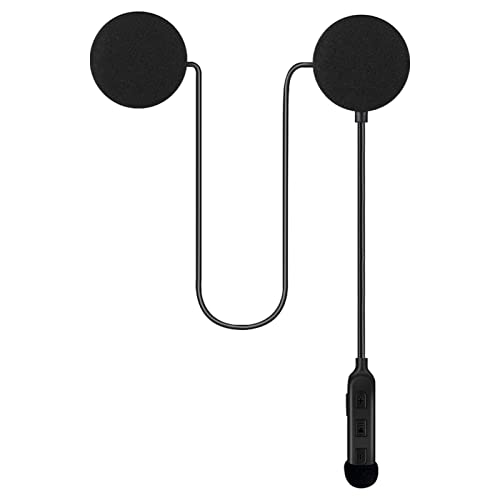
Don’t overlook the quality of the mounting system. A secure, easy-to-install mount is essential for keeping the speakers in place inside your helmet. Some units use strong adhesive pads, while others have clamp-style mounts; choose what works best for your helmet type. For a broader look at audio upgrades, you might also find our review of ATV speakers useful.
Ease of Use and Controls
When you’re riding, you can’t afford to fumble with tiny buttons. Look for headsets with large, glove-friendly controls that are easy to press and locate without taking your eyes off the road. Features like auto-answer for calls, voice assistant integration, and simple multi-function buttons can significantly enhance your riding experience.
Also, think about how the headset pairs with your phone and other devices. Multipoint connectivity is a great feature, allowing you to connect two phones or a phone and a GPS simultaneously. A stable wireless connection with a decent range, usually around 30 meters, is also important to avoid dropouts. For more insights on speaker technology, you can read our guide to motorcycle speakers.
Final Thoughts
Choosing the right helmet speakers comes down to your personal riding habits and priorities, but you can’t go wrong with either of our top picks: for riders who want the latest wireless tech and long-range intercom, the Fodsports FX-S Motorcycle Bluetooth Headset V5.4 is an outstanding choice, while those on a budget who still want great sound and a long battery life will love the JZAQ Motorcycle Helmet Bluetooth Headset,Outdoor.
Frequently Asked Questions
Can I use any helmet speakers with my full-face helmet?
Most helmet speakers are designed to fit in the ear pockets of a full-face helmet, but you should always check the speaker thickness and your helmet’s available depth. Many models come with different thicknesses of foam or adhesive pads to help with fit. If your helmet has deep pockets, you’ll have more options.
How do I make my helmet speakers louder?
First, ensure the speakers are positioned directly over your ear canals, not blocked by the helmet liner. You can also try increasing the volume on both the headset and your phone. If you still need more volume, consider a model with a higher decibel rating or a dedicated amplifier.
Are helmet speakers worth it for a casual rider?
Absolutely. Even if you only ride occasionally, helmet speakers make it safer and more enjoyable to hear navigation directions and take calls without stopping. They also let you listen to music, which can make a long ride far more pleasant. The convenience and safety benefits are well worth the investment.
Can I use my helmet speakers while they are charging?
Many modern headsets support pass-through charging, meaning you can use them while they’re plugged into a power bank. This is especially handy for long trips where you might need to top up the battery. However, check the product specifications, as not all models have this feature.