When you are troubleshooting an outlet or checking a wire before working on it, a non contact voltage tester is one of the most essential tools you can own. It keeps you safe by letting you know if a circuit is live without ever touching a bare conductor. In this guide, we have reviewed six of the top models on the market to help you find the right one for your needs.
Whether you are a professional electrician or a weekend DIYer, these tools make electrical work safer. For a deeper look at all types of electrical tools, check out our guide to the best voltage tester on the market.



Buying Guide
Voltage Range and Sensitivity
The voltage detection range matters because it determines what kinds of circuits a tester can handle. Many standard models detect from 50 to 1000 volts, which covers most household outlets and breakers. However, if you work with low-voltage systems like doorbells, thermostats, or security wiring, you need dual range capability that can detect from 12 volts.
Look for a voltage tester that fits the types of jobs you do most. If you never touch low-voltage gear, a standard range is plenty. But having adjustable sensitivity gives you more flexibility in the field.
Alerts and Feedback
A reliable non contact voltage tester provides clear signals when voltage is present. Most models use a combination of a glowing red LED and an audible beep. The speed of the beep often increases as voltage levels rise or as the tip gets closer to the source.
Some advanced testers also feature a vibration mode or a flashing pattern, which is helpful in loud environments. Consider if you need a visual indicator because you wear hearing protection or work near noisy machinery.
Build Quality and Drop Protection
These tools see a lot of use on job sites, where drops and bumps happen often. A rugged housing with drop protection can save you from buying a replacement after a fall. Look for models certified to withstand at least a 6.6-foot drop.
Durability also includes the pocket clip, battery door, and tip design. A sturdy clip keeps the tester within easy reach, while a sealed housing resists dust and moisture. These details matter over years of use.
Safety Certification
Voltage testers must meet strict safety standards. The CAT rating tells you the level of protection against electrical surges. CAT III and CAT IV ratings are ideal for work on building mains and distribution panels.
Always choose a tester with a rating that matches your work environment. A CAT IV 1000V rating gives you confidence when measuring high-energy circuits. This feature is non-negotiable for professional electricians.
Final Thoughts
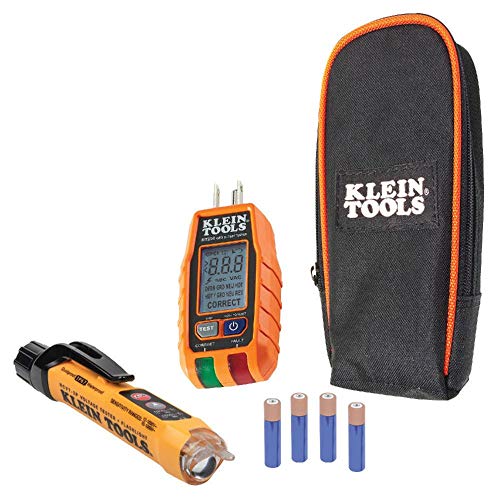
After evaluating all the options, the Klein Tools NCVT1P Voltage Tester stands out for its simplicity and reliability at a budget-friendly price, making it a solid choice for homeowners and pros alike. For those who need low-voltage detection and extra features like a flashlight, the Klein Tools NCVT3P Dual Range Non Contact Voltage offers great flexibility. Whatever your needs, any of the testers on this list will help you work smarter and stay safe.
Frequently Asked Questions
How does a non contact voltage tester work?
It uses an electromagnetic field sensor to detect voltage without direct contact. When the tip is near a live wire, the tester senses the field and alerts you with a light or sound.
Can a non contact voltage tester detect DC voltage?
No, most standard models only detect AC voltage. For DC applications, you need a specialized multimeter or a tester designed for direct current.
Does a non contact voltage tester need batteries?
Yes, most models require batteries to power the sensor and alerts. Many testers include an auto power-off feature to conserve battery life.
What is the difference between CAT III and CAT IV safety ratings?
CAT III testers are built for fixed installations like distribution boards, while CAT IV testers handle higher energy transients from utility connections. For most professional electrical work, CAT IV is recommended.