

You’ve spent hours perfecting your shots, tweaking colors, and sharpening details. Then comes the moment of truth: printing. Whether you’re a seasoned professional or a dedicated enthusiast, a standard office printer often falls short, leaving your images looking flat or with inaccurate colors. This guide is here to cut through the noise and help you find the ideal printer for your photographic journey, covering everything from compact snapshot makers to professional-grade large-format machines.
We understand that choosing the right printer can be overwhelming, with so many features and technologies to consider. That’s why we’ve evaluated top models from leading brands, focusing on print quality, ink systems, and overall value. Whether you’re preparing for an art show, scrapbooking, or just want to bring your digital memories to life, this guide is your starting point. For more insights on specific print sizes, you might find our guide on best 4×6 photo printers helpful.




Buying Guide for Photographers
Ink Technology: Dye vs. Pigment
The type of ink a printer uses is a critical factor for photographers. Dye-based inks, like those in the Canon PIXMA PRO-200S, are known for their vibrant colors and smooth gradations, making them ideal for glossy papers and color-rich scenes. They are often a more affordable option for high-volume printing.
Pigment-based inks, found in models like the Canon imagePROGRAF PRO-310 and PRO-1100, use microscopic particles that sit on top of the paper. This results in exceptional archival longevity, resistance to fading, and a wider color gamut, especially for fine art and black-and-white prints. Your choice should align with your output needs and how long you expect your prints to last.
Print Size and Paper Handling
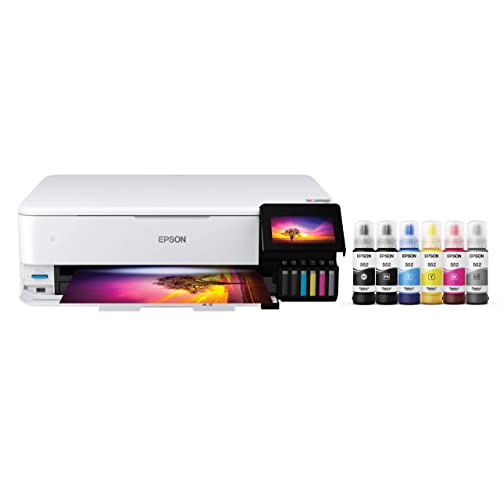
Consider the largest paper size you’ll regularly use. If you primarily share 4×6 or 5×7 prints, a compact model like the Liene M100 is perfect. For those who want to create statement pieces, a 13-inch or 17-inch wide printer like the Epson EcoTank Photo ET-8550 or Canon imagePROGRAF PRO-1100 offers greater creative flexibility.
Also, look at the paper feed options. Multiple paper trays allow you to keep different paper types loaded, while a straight paper path is essential for handling thicker media like fine art paper without curling. Think about whether you need a dedicated photo tray or if a standard paper cassette suffices.
Connectivity and Workflow
Modern printers offer a range of connectivity options that can significantly impact your workflow. Wi-Fi and Wi-Fi Direct allow you to print wirelessly from your laptop, smartphone, or tablet. Look for features like AirPrint and Mopria for seamless printing from Apple and Android devices.
Some printers, like the Liene M100, create their own hotspot, which is fantastic for printing on the go without a network. For professionals, Ethernet and USB ports provide a stable, high-speed connection for large files. Also, consider the companion app’s quality; a good app should offer editing tools and color management options.
Cost of Consumables
The initial cost of a printer is just the beginning. Ink replacement is a continuous expense, and it’s crucial to understand the cost per print. Cartridge-based printers can be expensive if you print frequently, but high-yield options or the Epson EcoTank’s ink bottle system can significantly reduce your long-term costs.
Consider how many prints you plan to make each month. If you’re a high-volume shooter, a tank printer like the Canon MegaTank G3270 or Epson EcoTank is a smart investment. These systems come with enough ink to last for months, and replacement bottles are much more affordable than cartridges, making them a budget-friendly choice for photographers.
Final Thoughts
Ultimately, the best printer for you will depend on your specific needs, whether that’s producing gallery-quality fine art prints or capturing memories on the go. For a professional who demands the highest color accuracy and archival stability, the Canon imagePROGRAF PRO-310 Professional 13″ is an outstanding choice, while the Liene M100 4×6” Photo Printer offers incredible portability and ease of use for casual photographers who want instant prints. We’re confident that by using this guide, you’ll find the perfect tool to bring your creative vision to life.
Frequently Asked Questions
What is the best printer for a professional photographer?
For professionals, a printer with a wide color gamut and archival pigment inks is essential. Models like the Canon imagePROGRAF PRO-1100 offer 11-color systems that deliver exceptional detail and longevity, making them ideal for gallery and fine art prints.
These printers are designed to meet the highest standards of color accuracy and stability. They often include advanced features like color calibration tools and professional software, ensuring your prints match your vision perfectly.
Are ink tank printers good for photo printing?
Yes, modern ink tank printers are excellent for photo printing. Models like the Epson EcoTank Photo ET-8550 use six-color ink systems that produce vibrant, high-resolution prints, often rivaling traditional cartridge-based photo printers.
The main advantage is the low cost per print, making them ideal for photographers who print frequently. With refillable bottles, you can enjoy high-quality photos without the constant expense of ink cartridges, making them a great value for photo enthusiasts.
How long do prints from a dye-sublimation printer last?
Prints from dye-sublimation printers, like the Liene M100, are known for their durability. They are resistant to water, scratches, and fingerprints, and the lamination process helps protect against fading, ensuring your memories last.
While not archival like pigment inks, they are perfect for everyday snapshots and gifts. For long-term preservation, keep them away from direct sunlight, and they will continue to look great for years.
Can I print borderless photos on a standard printer?
Many photo-specific printers offer borderless printing. For example, the Canon PIXMA PRO-200S allows borderless prints from 3.5″ x 3.5″ up to 13″ x 19″, which is perfect for producing professional-looking, edge-to-edge photos.
However, not all printers have this capability. Check the specifications for “borderless printing” if this is important to you. For more tips on getting the best results, you might enjoy our article on best photo printers for art prints.


