

Picture this: it’s 7 PM, and your family’s internet is a battlefield. Your teen is in a ranked game, your partner is on a video call, the smart TV is streaming in 4K, and someone’s tablet keeps buffering. The old router, buried in a closet, simply can’t keep up. If this sounds familiar, you don’t just need any router, you need one built for a large, busy household.
This guide cuts through the jargon to help you pick the best routers for large families in 2026. We’ve looked at the latest WiFi 6 and WiFi 7 models, focusing on real-world capacity, coverage, and control. Whether you’re a gamer, a streamer, or a parent wanting to manage screen time, we’ll help you find the right fit. For a deeper look at setting up a network in a tighter space, you might find our guide on routers for dorm rooms useful, as many of the same principles apply.
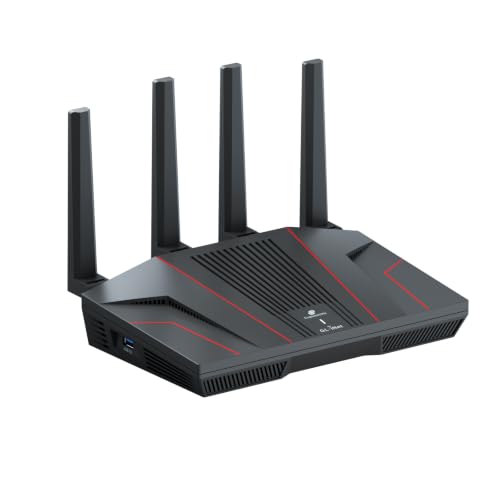

Pros
- Exceptional WiFi 6 performance handles multiple 8K streams and heavy gaming without buffering
- Outstanding device capacity supports dozens of connected devices with minimal congestion
- Reliable whole-home coverage reaches kitchens and bedrooms with strong signal strength
- Comprehensive security features included at no extra cost for network protection
- Modern aesthetic design with functional ventilation keeps the router cool and powerful
Cons
- Requires a modem for most internet service providers, adding to overall setup cost
- High-performance capabilities may be overkill for smaller homes or light internet users
- Premium security features beyond basics require paid subscription to HomeShield service
The TP-Link Archer AX73 is a premium WiFi 6 router engineered for power users, content creators, and families with heavy bandwidth demands. This router excels for households streaming multiple 8K videos, gaming competitively, or connecting dozens of smart home devices simultaneously without performance degradation.
What sets this router apart is its impressive 5400 Mbps total speed combined with intelligent MU-MIMO and OFDMA technology that dramatically increases device capacity. The 6-antenna configuration with beamforming technology delivers stable connections throughout your home, while the 4T4R structure on the 5 GHz band achieves maximum 4.8 Gbps ultra-fast connections for demanding applications. Real-world performance matches the specifications for speed and coverage, making it one of the most reliable options in its class.
The design is both functional and attractive, featuring a contemporary slant rectangle aesthetic with scaled armor styling. More importantly, the extensive ventilation design with 167 cm² of vent space prevents thermal throttling, allowing the router to maintain peak performance during extended use. The inclusion of a USB 3.0 port adds practical value for media sharing and cloud storage applications.
Security is handled comprehensively through TP-Link HomeShield, which provides DDoS protection, malicious site blocking, and port intrusion detection at no additional cost for basic features. The OneMesh compatibility allows seamless expansion with additional TP-Link routers for whole-home coverage without dead zones, making future upgrades straightforward.
The primary drawback is the requirement for a separate modem for most ISPs, and premium HomeShield features require a paid subscription. However, for users who need professional-grade WiFi performance and comprehensive security, the Archer AX73 delivers exceptional value and reliability that justifies the investment.
WiFi Performance: Up to 5400 Mbps total speed, 4.8 Gbps on 5 GHz band with HE160 technology, dual-band operation
Antenna Configuration: 6 external antennas with high-power FEM and beamforming for extended coverage and signal concentration
Device Capacity: MU-MIMO and OFDMA support enables 4x average throughput with reduced congestion for multiple simultaneous connections
Connectivity: 1x USB 3.0 port for media sharing, Gigabit Ethernet ports, compatible with all major ISPs including AT&T, Verizon, Xfinity, Spectrum, Cox, and others
Power & Operating Conditions: 12V 2.5A power supply, operating temperature range 0-40 degrees Celsius (32-104 degrees Fahrenheit)
Security: TP-Link HomeShield with network security scanning, IoT device identification, parental controls, and quality of service management
Network Expansion: OneMesh technology support for seamless whole-home WiFi coverage with multiple routers
Is This Router Right for You? The Archer AX73 is ideal if you have multiple family members streaming 4K or 8K content, competitive online gamers, smart home enthusiasts with 50+ connected devices, or work-from-home professionals requiring rock-solid connectivity. It's particularly valuable for larger homes where WiFi coverage is challenging.
When to Consider Alternatives: If you live in a small apartment, use the internet lightly, or primarily browse and email, a budget-friendly WiFi 5 router may be sufficient. Also consider alternatives if you already have a mesh system from another brand, as OneMesh works best with TP-Link products.
Setup Considerations: Remember you need an external modem for most internet providers, so factor that into your budget. The router supports all major ISPs, so compatibility is not an issue. The extensive ventilation design means it should be placed in an open area with good airflow for optimal performance.
Long-Term Value: WiFi 6 technology is future-proof for the next 5-7 years of device releases. The expandability through OneMesh and included security features make this a smart long-term investment for growing households and evolving connectivity needs.


Buying Guide: What to Look For in a Family Router
Choosing a router for a large family isn’t just about raw speed anymore. It’s about handling many different tasks at once without everything grinding to a halt. Here are the key factors we considered when shortlisting our top picks.
Coverage and Square Footage
In a large home, a single router in the corner often can’t reach every room. Look for a model with a high coverage rating, but remember that walls and floors can reduce the actual range. For a two-story house or a home over 2,000 square feet, you’ll want a router that can blanket the entire space.
If you have a particularly sprawling or multi-level home, you might also consider a mesh system. However, a single powerful router like the ones we’ve reviewed can often do the job. For more targeted advice on smaller spaces, our guide to wireless routers for apartments offers a different perspective on coverage.
Device Capacity and MU-MIMO
Think about how many devices are actually connected in your home. Phones, laptops, tablets, smart TVs, game consoles, smart speakers, and IoT devices can easily add up to 30 or more. A router that supports the latest WiFi standard, like WiFi 6 or WiFi 7, is designed to handle this load more efficiently.
Technologies like MU-MIMO and OFDMA are essential. They allow the router to communicate with multiple devices simultaneously, rather than taking turns. This means less lag and a more responsive connection for everyone, even when the network is under heavy use.
Parental Controls and Security
For families, a router’s ability to manage content and screen time is often as important as its speed. Good parental controls let you pause the internet, block inappropriate websites, and set time limits for specific devices. Some routers offer this for free at the basic level, while others provide more advanced features.
Security is another non-negotiable. Look for routers that offer built-in protection against online threats, such as malware and phishing attacks. This adds an extra layer of safety for all the devices on your network, especially those that might not have their own security software. For a different take on network security in small spaces, check out our article on routers for small apartments.
Final Thoughts
Choosing the right router can transform your family’s online experience, turning frustrating lag into seamless streaming and gaming. For the best blend of performance and value for a large, active household, we highly recommend the TP-Link AX5400 WiFi 6 Router (Archer AX73) for its excellent coverage and device handling, while those who want the absolute fastest speeds and future-proofing for many devices should consider the GL.iNet Fortify (GL-MT6000) with its advanced features and built-in VPN for extra security.
Related Guides
- Best WiFi Router For Gigabit Internet
- Top Routers with Parental Controls for 2026
- Top Routers Under $200 for 2026
Frequently Asked Questions
What is the most important feature in a router for a large family?
The most important feature is device capacity, which is often determined by the WiFi standard (like WiFi 6 or WiFi 7). A router that supports MU-MIMO and OFDMA can communicate with many devices at once, preventing slowdowns when everyone is online. This is more critical than having the fastest single-device speed.
How much coverage do I really need in a router?
For a typical large home, look for a router that officially covers at least 2,000 square feet. However, remember that walls, floors, and other obstacles can reduce that range. If you have a very large or multi-story home, you might need to consider a mesh system or a router with a higher coverage rating.
Can I use parental controls on these routers?
Yes, most modern routers come with built-in parental controls, but the features vary by brand. Basic controls like website blocking and time limits are often free, while more advanced features like per-device usage reports might require a subscription. Be sure to check the specific router’s capabilities before you buy.
Is WiFi 7 worth it for a big family in 2026?
If you have many devices and want the most future-proof option, WiFi 7 is a great choice as it offers significantly faster speeds and lower latency than WiFi 6. However, it’s still new, and you may not see a huge difference unless you have many WiFi 7 devices. For most families in 2026, a high-quality WiFi 6 router still provides excellent performance at a more accessible price point.


