You have just finished building a Linux workstation or are reviving an old laptop with a lightweight distro. You plug in your headphones, fire up a music player, and the sound is flat, noisy, or simply missing. The integrated audio chip on your motherboard or laptop is often an afterthought, especially on Linux where driver support can be spotty. That is where a dedicated sound card comes in. Whether you need high-resolution playback for audio production, a quick fix for a broken audio jack, or a compact adapter for a Raspberry Pi media center, there is a Linux-friendly sound card that will work out of the box. In this guide, we have evaluated nine of the best sound cards for Linux across different form factors and budgets. For a deeper look at audio hardware for professional studios, check out our top sound cards for pro tools in 2026.




Buying Guide
Native Linux Compatibility and Driver Support
The most important factor for any Linux sound card is whether it uses the USB Audio Class (UAC) standard or a kernel module already included in the mainline kernel. Cards that are UAC 1.0 or 2.0 compliant are recognized instantly without proprietary drivers. Most USB sound cards in our list, such as the biaze and MOSWAG adapters, use UAC 1.0 and work immediately on any modern Linux distribution. PCIe cards like the Creative Sound Blaster Audigy Fx Pro also have open-source kernel support through the snd-hda-intel or snd-usb-audio modules. Avoid cards that require Windows-only software for features like surround sound virtualization; those features may not work on Linux.
Audio Quality and Sampling Rates
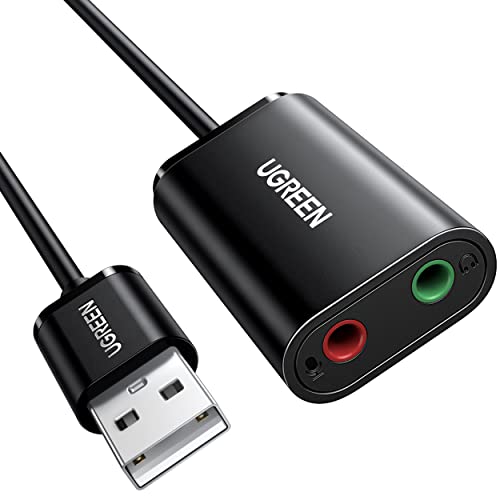
If you are an audiophile or a content creator, look for a card that supports at least 24-bit / 96 kHz playback. The GLOTRENDS ST113 with its ESS ES9018K2M DAC delivers up to 24-bit / 96 kHz and is fully class-compliant. The Creative Sound Blaster Audigy Fx Pro goes even higher with 32-bit / 384 kHz and a 120 dB SNR. For casual listening or voice calls, a standard 16-bit / 48 kHz USB adapter like the SABRENT or UGREEN is perfectly adequate. Note that higher sample rates require compatible speakers or headphones to hear the difference.
Form Factor: Internal vs. External
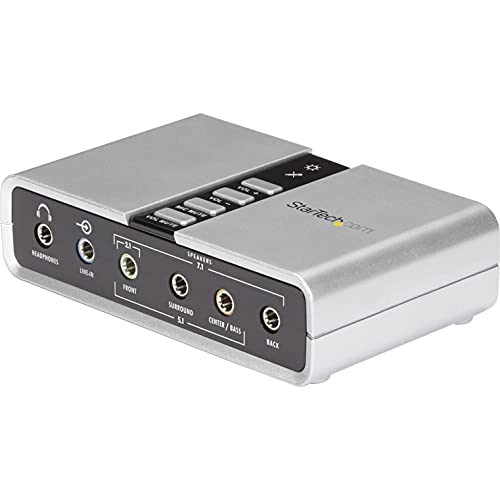
Internal PCIe sound cards offer lower latency and can provide more channels (up to 7.1) without taking up a USB port. They are ideal for desktop towers where you want a permanent, high-fidelity audio solution. External USB sound cards are portable, work with laptops and single-board computers like the Raspberry Pi, and are easier to swap between machines. For example, the StarTech 7.1 USB Audio Adapter gives you multi-channel output through a single USB port, while the Waveshare USB Sound Card is designed specifically for Raspberry Pi and Jetson Nano projects. If you need a quick, driver-free fix for a dead audio jack, a compact USB adapter is the way to go.
Additional Connectivity and Features
Consider what ports you need. A basic USB sound card with a single 3.5 mm combo jack (headphone + mic) is fine for headsets, but if you want to connect separate speakers and a dedicated microphone, look for a card with two separate jacks. The SABRENT adapter has distinct green (output) and pink (input) ports. For digital output, the GLOTRENDS ST113 includes optical TOSLINK and coaxial RCA. Some cards, like the Creative Audigy, include a headphone amplifier for higher impedance cans. If you plan to use the card with a Raspberry Pi, ensure it is bus-powered and draws minimal current. For a broader look at PC hardware categories, visit our Cards category page.
Final Thoughts
After evaluating all nine models, our top recommendation for most Linux users is the Creative Sound Blaster Audigy Fx Pro Hi-Res PCIe if you have a desktop and want the highest audio fidelity with effortless kernel support. For users who need a portable, budget-friendly solution that works on any device from a laptop to a Raspberry Pi, the SABRENT USB External Stereo Sound Card Adapter is a reliable, driver-free choice that gets the job done without fuss. Whichever you choose, you will enjoy clean, noise-free audio that your Linux system will recognize instantly.
Frequently Asked Questions
Do all USB sound cards work on Linux?
Most USB sound cards that comply with the USB Audio Class 1.0 or 2.0 standard work plug-and-play on Linux without additional drivers. The cards in our list have been verified to work on distributions like Ubuntu, Fedora, and Debian as of 2026. Always check the product description for Linux compatibility before purchasing.
Can I use a PCIe sound card on a Linux laptop?
No, PCIe sound cards require an available PCIe slot on the motherboard and are designed for desktop computers. For laptops, use a USB sound card instead. Many of the USB adapters in this guide are compact and portable, making them perfect for on-the-go use.
Will a sound card improve audio quality on Linux?
Yes, especially if your motherboard’s onboard audio is noisy or lacks a headphone amplifier. A dedicated sound card with a higher-quality DAC and better shielding can reduce hiss and improve clarity. For gaming or music production, the difference is noticeable. For more on professional audio setups, see our best graphics cards for PC article (audio is part of the overall experience).
Do I need to install drivers for a sound card on Linux?
For the models we recommend, no driver installation is necessary. They are recognized automatically by the ALSA or PulseAudio subsystems. Some advanced features like 7.1 channel mapping may require a quick configuration in a file like /etc/asound.conf, but basic stereo output works out of the box.