You’ve finally cleared that corner of the living room for a dedicated listening area, or maybe you just want better sound from your laptop while working from home. Either way, finding the best speakers for home use in 2026 means balancing sound quality, size, and versatility. This guide walks you through four carefully selected speakers that suit different spaces and listening habits. Each product was assessed for clarity, bass response, build quality, and ease of setup so you can make a confident choice.
If you’re dealing with a tight space, you might also want to browse our picks for compact audio solutions that fit neatly into small rooms. But for a broader look at home audio, keep reading.



Buying Guide: What to Look for in Home Speakers
Sound Quality and Driver Configuration
The driver arrangement defines a speaker’s character. Tower speakers with dual woofers and a silk dome tweeter deliver a wide frequency response that fills a room without distortion. For example, the Elimavi Floor Standing Tower Speakers pair features a two-way crossover that separates lows and highs cleanly, giving you both deep bass and crisp treble. In contrast, a compact soundbar like the ICOREBEI Computer Speakers uses a bass radiator and dual drivers to produce surprising fullness from a slim profile. Consider your primary use: movie nights demand room-filling sound, while desk work benefits from precise near-field audio.
Power Handling and Amplifier Compatibility
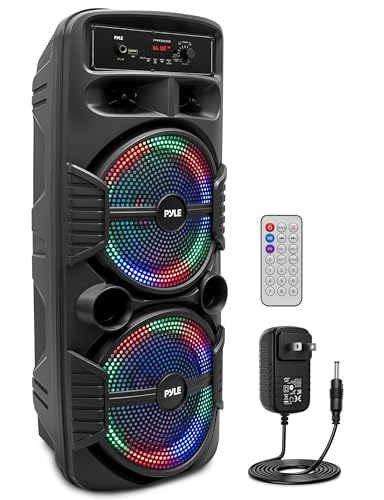
Passive speakers require an external amplifier or receiver, while active speakers have built-in amplification. The Elimavi towers are passive, rated at 120 W RMS, so you’ll need a compatible AV receiver. On the other hand, the Pyle Portable Bluetooth PA Speaker System packs its own 600W peak amplifier, making it a self-contained solution. For desktop use, the ICOREBEI soundbar draws power over USB, meaning no separate power brick. Always match the speaker’s impedance and power requirements to your amplifier to avoid distortion or damage.
Connectivity and Placement Options
Bluetooth makes it easy to stream from any device, but wired connections often deliver lower latency and higher fidelity. The Pyle speaker supports Bluetooth along with USB, aux, and even a microphone input for karaoke. For a clean desk setup, the ICOREBEI soundbar uses a single USB-C-to-USB-A cable for both power and digital audio, reducing cable clutter. If you have an outdoor patio and want something rugged, check out our guide to outdoor wireless speakers. Placement also matters: floor-standing speakers need open floor space, while a soundbar can sit under a monitor.
Build Quality and Durability
Cabinet material affects resonance. The Elimavi towers use dense MDF to minimize vibration, resulting in cleaner sound. The Pyle PA speaker is built to handle transport with an extending handle and rechargeable battery, ideal for moving between rooms or taking outside. For desktop use, the ICOREBEI soundbar’s slim metal-like body feels sturdy. Even the Install Link speaker wire uses a soft-flex jacket that resists kinking, which is important when hiding cables along baseboards. Good build quality means your investment lasts through years of daily use.
Final Thoughts
After evaluating each speaker’s performance and fit, the Elimavi Floor Standing Tower Speakers Pair stands out for anyone wanting a classic, immersive home theater experience with rich bass and clear highs, while the Pyle Portable Bluetooth PA Speaker System-600W is the ultimate choice for parties and portable use thanks to its built-in battery, flashing lights, and microphone input. Whichever you choose, you’re getting reliable sound that transforms your space.
Frequently Asked Questions
Do I need an amplifier for floor-standing speakers?
Yes, most floor-standing home speakers like the Elimavi towers are passive and require an external amplifier or AV receiver. Make sure the receiver’s power output matches the speaker’s rating for optimal performance.
Can I use a portable PA speaker indoors?
Absolutely. The Pyle Portable Bluetooth PA Speaker System works great indoors for parties, karaoke, or even as a powerful computer speaker. Its 600W peak power and dual 8″ subwoofers can fill a large living room.
What speaker wire should I use for home theater?
For most setups, 16 AWG speaker wire like the Install Link 16 AWG Gauge Speaker Wire is sufficient. It handles up to 100 feet without significant signal loss and is easy to strip and connect. For longer runs, consider 14 AWG.
Are USB-powered computer speakers good enough for music?
Yes, modern USB-powered soundbars such as the ICOREBEI Computer Speakers deliver impressive Hi-Fi stereo sound for desktop listening. They’re ideal for casual music, video calls, and gaming without taking up much space.
For more audio advice, explore our complete speakers category.