You’ve set up the perfect enclosure, but your reptile still seems sluggish or refuses to bask. The culprit is often inadequate UVB lighting. Without proper UVB rays, reptiles cannot synthesize vitamin D3, leading to calcium deficiency and metabolic bone disease. This guide cuts through the noise to bring you the best UVB light for reptiles in 2026, verified bulbs and fixtures that deliver real, measurable output.
We evaluated products from REPTI ZOO, GREENPAW, QZQ, and LUCKY HERP, focusing on UVB strength, build quality, ease of installation, and long-term reliability. Whether you own a bearded dragon, crested gecko, or desert tortoise, you’ll find a lighting solution that keeps your pet healthy and active. For more on creating a complete habitat, check our guide on best substrate for bearded dragon.




Buying Guide – What to Look for in a UVB Light for Reptiles
Selecting the right UVB light involves more than just picking a bulb. Here are three criteria every reptile owner should consider before buying.
UVB Strength and Spectrum
Different reptiles need different UVB intensities. Desert species like bearded dragons and tortoises require 10.0 UVB bulbs (10% UVB output), while tropical species such as crested geckos and tree frogs do well with 5.0 UVB (5% UVB). The bulbs we reviewed clearly label their UVB percentage, so you can match the light to your pet’s natural habitat. A 10.0 bulb is also suitable for large enclosures where the animal can choose its distance from the source.
Fixture Type and Installation
T5 HO (high-output) fixtures are the gold standard for linear UVB lighting. They produce more UVB per watt than compact fluorescent bulbs and last longer. The fixture should include a polished reflector to maximize UVB output. Look for kits that come with a hood, bulb, and mounting hardware, this saves you from buying separate components. Many of the products below also include a detachable power cord and on/off switch for convenience.
Compact screw-in bulbs are a budget-friendly alternative for small enclosures, but they generally cover a smaller area. For larger tanks, a linear T5 fixture is the better choice. To ensure your reptile’s environment stays balanced, also read our best reptile thermometer picks for accurate temperature monitoring.
Safety and Heat Dissipation
Reptile lights can get hot, especially when used for long hours. Fixtures with aluminum housing and flame-retardant end caps dissipate heat effectively and reduce fire risk. Flicker-free operation is also important, a stable current prevents stress to your pet and ensures consistent UVB output. Energy efficiency matters too; a well-designed bulb saves electricity without sacrificing performance.
For desert species, maintaining proper humidity is just as crucial as UVB. Explore our best reptile humidifier guide to keep your enclosure’s moisture levels ideal.
Final Thoughts
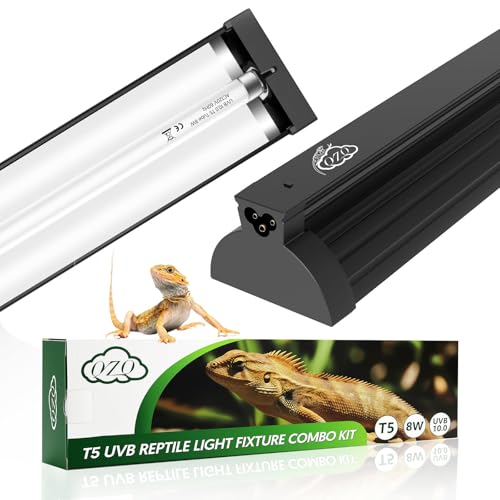
After assessing each product’s UVB output, build quality, and ease of use, we recommend the T5 UVB Reptile Light Fixture Combo Kit 8W 10.0 for desert reptiles that need strong, consistent UVB across a medium-sized enclosure, and the REPTI ZOO UVB Light for Tropical Reptile for owners of geckos, frogs, and other rainforest species who want a reliable dual-pack with a backup bulb. Both deliver verified UVB levels that support healthy vitamin D3 synthesis and natural behavior, so you can set up your vivarium with confidence.
Frequently Asked Questions
How long should I leave a UVB light on for my reptile?
Most reptiles need 10 to 12 hours of UVB exposure daily, mimicking a natural day cycle. Use a timer to maintain consistency. Replace bulbs every 6 to 12 months even if they still glow, as UVB output degrades over time.
Can I use a regular UVB light for a bearded dragon?
Bearded dragons require a 10.0 UVB bulb (high output) to thrive. A 5.0 bulb is too weak for desert species. Look for linear T5 HO fixtures with 10% UVB. The T5 UVB Reptile Light Fixture Combo Kit 8W 10.0 is a great fit for bearded dragons.
What is the difference between UVA and UVB for reptiles?
UVB is essential for vitamin D3 synthesis and calcium absorption, preventing metabolic bone disease. UVA stimulates appetite, breeding behavior, and overall activity. The best UVB lights for reptiles provide both UVA and UVB in proper ratios (typically 30% UVA and 5 to 10% UVB).
How close should my reptile be to the UVB light?
For T5 HO fixtures, maintain a distance of 12 to 18 inches from the basking spot. For compact bulbs, 6 to 10 inches is typical. Always follow the product’s recommended distance to prevent burns or inadequate exposure. Use a reptile thermostat to monitor temperature and ensure safe basking conditions.