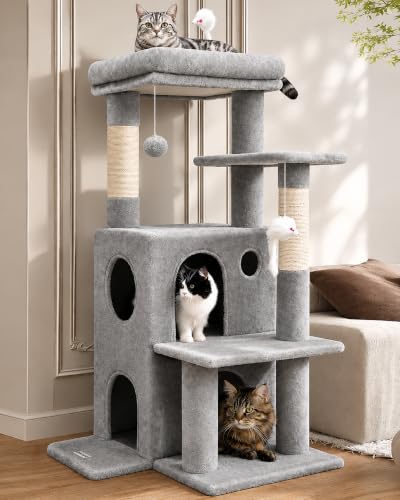
To stabilize a cat tree, you need to address the root cause of the wobble, which is usually an uneven floor, loose joints, or an inadequate base. Start by checking the floor with a level and tightening all screws and bolts. For persistent wobbles, add weight to the base or secure the tree to a wall. These steps will make the structure safe and enjoyable for your cat.
Uneven Floor Surface
The most common reason a cat tree wobbles is an uneven floor. Carpets, rugs, or hardwood floors that aren’t perfectly level can cause the tree to rock. Place a spirit level on the base to check if the floor is the issue. If the bubble isn’t centered, the floor is the culprit.
You can fix this by using shims or small pieces of cardboard under the low side of the base. Adjustable leveling feet on the cat tree’s legs can also compensate for floor irregularities. This simple adjustment often solves the wobble completely.
Loose or Worn Joints and Screws
Over time, screws and bolts can loosen from your cat’s jumping and climbing. This is especially common with cat trees made from particleboard or MDF, which can strip easily. Check every connection point, including where platforms attach to posts and where the base connects to the main pole.
Tighten all visible screws with a screwdriver or drill. If a screw hole is stripped, you can fill it with a wooden toothpick and wood glue, then reinsert the screw. For metal bolts, use a wrench to ensure they are snug but not overtightened, which could crack the board.
Inadequate Base Size or Weight
A cat tree with a base that is too small or too light for its height will always be unstable. The taller the tree, the wider and heavier the base needs to be to prevent tipping. Cat trees over 5 feet tall are particularly prone to this issue.
You can increase stability by placing heavy objects like sandbags or weight plates on the base, as long as they do not interfere with your cat’s access. Some cat trees have hollow posts or bases where you can add sand or gravel for extra weight. This lowers the center of gravity and reduces wobble.
Wall Mounting for Tall Trees
For cat trees over 6 feet tall, wall mounting is the most effective stabilization method. Many cat trees come with a wall anchor kit, or you can purchase one separately. This involves attaching a metal bracket from the tree to a wall stud using screws.
If your cat tree does not have a designated mounting point, you can use a furniture safety strap to secure the top of the tree to the wall. This prevents the tree from tipping over even during vigorous play. Always anchor into a wall stud, not drywall alone, for maximum strength.
Worn or Damaged Carpet or Fabric
The carpet or fabric covering the platforms and posts can wear out, causing the tree to feel unstable. If the covering is loose or torn, your cat’s claws may not grip properly, making them feel insecure. This can also lead to the tree shifting as your cat moves.
Replace worn carpet with new carpet squares or sisal rope. You can also tighten loose fabric by stapling it back into place. This restores traction and prevents the tree from moving under your cat’s weight.
How to Fix a Wobbly Cat Tree
- Check the floor with a level and use shims to level the base.
- Tighten all screws and bolts; repair stripped holes with toothpicks and glue.
- Add weight to the base with sandbags or weight plates.
- Secure the tree to a wall using a furniture strap or anchor kit.
- Replace worn carpet or fabric to improve grip and stability.
If your cat tree continues to wobble after these steps, consider that some lower-quality models may be inherently unstable.
Frequently Asked Questions
Can I use a rubber mat under my cat tree to stop it from wobbling?
A rubber mat can help by gripping the floor and reducing minor shifts, but it won’t fix wobbles caused by loose joints or an uneven floor. It works best as a complement to other fixes, not a standalone solution.
How often should I tighten the screws on my cat tree?
Check and tighten screws every month, especially if your cat uses the tree daily. Active cats can loosen connections quickly. A quick monthly inspection prevents small wobbles from becoming safety hazards.
Will adding a heavier cat tree topper help stabilize it?
No, a heavier topper makes the tree more top-heavy and increases the risk of tipping. Focus on adding weight to the base or securing the top to the wall instead. Always lower the center of gravity for stability.
Is it safe to use a cat tree that wobbles slightly?
No, a wobbly cat tree is unsafe because your cat could fall or the tree could tip over. Even a slight wobble indicates instability that can worsen over time. Fix the wobble before allowing your cat to use the tree again.
Related Guides
Closing Thoughts
Stabilizing a cat tree usually comes down to leveling the floor, tightening hardware, or adding weight to the base. For persistent wobbles, wall mounting is the safest option.