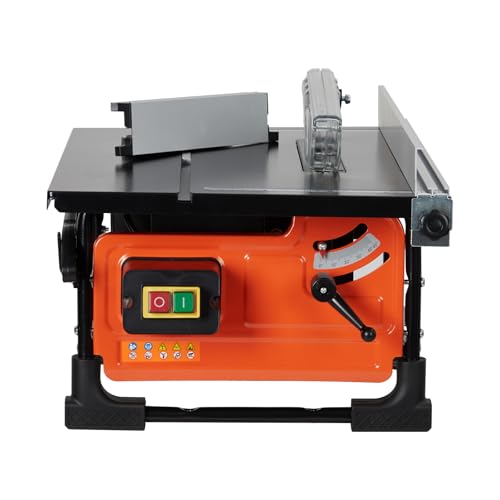
When setting up a miter saw for a small workshop, the key is to prioritize compact design, dust management, and accurate cutting within limited space. A miter saw is a versatile tool for crosscuts and angled cuts, but in a small workshop, every inch counts. You need a saw that fits your workbench without dominating the room and that integrates with your dust collection system to keep the air clear. This guide covers the essential factors to consider so you can make an informed choice for your space.

Space Constraints and Saw Size
The most obvious challenge in a small workshop is physical space. A standard sliding miter saw can extend far beyond its base, requiring significant depth clearance. Look for a saw with a compact footprint, such as a non-sliding or a compact sliding model. Measure your workbench depth and ensure the saw’s arm movement doesn’t hit walls or other tools.
Another consideration is the saw’s weight. A lighter saw is easier to move and store, but it must still be stable during cuts. Some models have folding stands or detachable bases that save space when not in use. Prioritize a saw that can be mounted securely to a workbench or a mobile cart for flexibility.
Cutting Capacity for Small Projects
In a small workshop, you likely work with smaller stock like trim, molding, or small furniture parts. A 10-inch blade is often adequate for most tasks, offering a balance between cutting depth and saw size. A 12-inch blade provides more capacity but adds bulk and weight.
Consider the maximum crosscut capacity at 90 degrees and 45 degrees. For typical small workshop projects, a saw that can cut a 2×6 at 90 degrees and a 2×4 at 45 degrees is sufficient. Avoid oversizing the saw for rare large cuts, as extra capacity wastes valuable space.
Dust Collection in a Small Workshop
Dust management is critical in a small, enclosed space. A miter saw produces fine sawdust that can linger in the air and coat surfaces. Look for a saw with a dust collection bag or port that connects to a shop vacuum. Some models have a built-in dust chute that directs debris into a bucket or vacuum hose.
If dust collection is poor, the saw will quickly fill your workshop with airborne particles. Consider adding a dust deflector or a dedicated dust hood to improve capture. A clean workshop is safer and more comfortable to work in.
Accuracy and Adjustment Features
Precision is non-negotiable, especially in small projects where mistakes waste material. A miter saw with easy-to-read scales and positive stops at common angles (like 0, 15, 22.5, 30, and 45 degrees) speeds up setup. A laser guide or shadow line can improve cut accuracy, but these features add cost and complexity.
Check the saw’s ability to adjust for square cuts. The fence and blade should be adjustable with simple tools. A saw that holds its settings over time saves frustration. For small workshops, a saw with a sliding compound function allows bevel cuts without moving the workpiece, which is useful when space is tight.
Power and Motor Considerations
Motor power affects how smoothly the saw cuts through various materials. A 15-amp motor is standard for most miter saws and handles softwoods and hardwoods well. In a small workshop, you likely don’t need a high-torque motor for thick stock, but consistent power prevents bogging down during repeated cuts.
Consider the saw’s amperage rating and the availability of a 120V outlet. Most small workshops have standard household power, so a 15-amp saw works fine. Avoid lower-amp models (under 12 amps) if you cut hardwoods regularly, as they may struggle with dense material.
Portability and Storage
If your workshop doubles as a garage or multipurpose room, portability matters. A miter saw on a rolling stand can be moved to the driveway or stored against a wall. Some saws have built-in handles or compact designs that fit in a cabinet or on a shelf.
Consider the saw’s storage footprint when not in use. Foldable stands or saws with detachable tables reduce the space needed. If you plan to leave the saw set up, choose a model that doesn’t block access to other tools or work areas.
How to Choose the Right Miter Saw for Your Small Workshop
- Measure your available bench space and choose a saw that fits without overhang.
- Select a blade size (10-inch or 12-inch) based on your typical project material.
- Ensure the saw has a dust collection port that connects to your vacuum system.
- Check that the saw adjusts easily for square cuts and common angles.
- Verify the motor power (15-amp recommended) matches your outlet capacity.
- Consider a portable or folding model if you need to store the saw between uses.
Once you have a clear picture of your space and cutting needs, you can explore specific models that match these criteria. For a detailed look at top-rated options, see our roundup of the best tire inflators for pickup trucks, though that’s for a different tool category. For miter saws, check our related post on compact workshop tools.
Frequently Asked Questions
What is the smallest miter saw size for a small workshop?
A 10-inch miter saw is the most common compact size, offering a good balance of cutting capacity and footprint. Smaller 7-1/4 inch models exist but are limited to trim work and small stock. For most small workshops, a 10-inch saw is the practical minimum.
Can I use a miter saw on a workbench in a small space?
Yes, but you need a stable workbench with enough depth to accommodate the saw’s base and arm movement. A saw mounted on a mobile cart or a folding stand can be stored against a wall when not in use. Ensure the bench is heavy enough to prevent tipping during cuts.
Do I need a sliding miter saw for a small workshop?
Not necessarily. A non-sliding miter saw is more compact and lighter, ideal for small spaces. A sliding saw offers wider crosscut capacity but requires more depth clearance. If you rarely cut wide boards, a non-sliding model saves space and reduces complexity.
How important is dust collection for a miter saw in a small workshop?
Very important. In a small enclosed space, sawdust accumulates quickly and can affect air quality. A saw with a good dust port that connects to a shop vacuum or dust collector keeps the workshop cleaner and safer. Poor dust collection leads to frequent cleanup and potential respiratory issues.
Can I use a miter saw for bevel cuts in a small workshop?
Yes, many compact miter saws offer bevel capacity up to 45 degrees. A sliding compound miter saw allows bevel cuts without moving the workpiece, which is useful in tight spaces. Check the saw’s bevel range and whether it tilts left or right to suit your workbench layout.
Related Guides
- Circular Saw for Beginners
- Circular Saw for DIY Projects
- Sliding Compound Miter Saw Review: VEVOR 12-Inch Precision Cuts
Final Thoughts
Choosing a miter saw for a small workshop comes down to balancing space, cutting needs, and dust management. Focus on a compact, accurate saw that fits your workspace and projects. For a deeper dive into specific models, explore our best tire inflator for pickup truck review, though that covers automotive tools. For workshop gear, check our blog for more guides.