

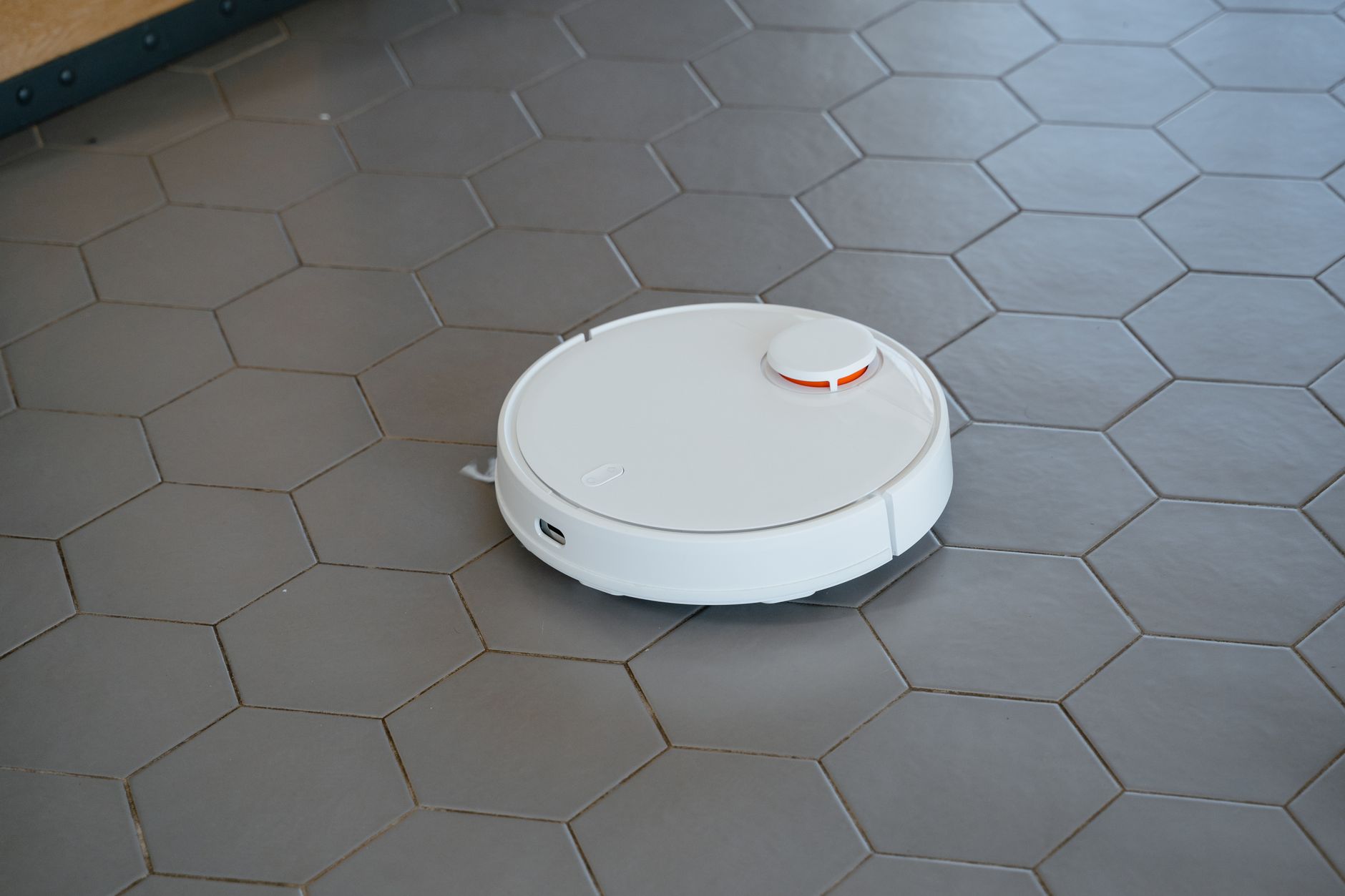
A robot vacuum for dark floors relies on optical and infrared sensors that can struggle with dark surfaces, which absorb light instead of reflecting it back to the vacuum’s cameras and cliff-detection systems. This means your robot may have trouble mapping your space, avoiding obstacles, or detecting stairs and drop-offs. Understanding why dark floors create these challenges and how to work around them will help you get better performance from your vacuum.
Sensor Limitations on Dark Surfaces
Most robot vacuums use cameras and infrared sensors to navigate and avoid hazards. Dark floors absorb light rather than reflect it, making it harder for these sensors to gather the visual data they need. Your vacuum may move more slowly, retrace paths, or miss areas entirely because it cannot confidently map the space.
Cliff sensors are especially affected. These infrared systems detect drops like stairs by measuring how light bounces back from the floor below. On dark surfaces, that bounce is weak, and the sensor may fail to register a drop or falsely trigger on a shadow or uneven texture.
Difficulty Detecting Obstacles and Cliffs
When your robot vacuum cannot see obstacles clearly, it may bump into furniture legs, cords, or pet toys more often than on light floors. This increases wear on the vacuum and creates a less efficient cleaning path. The robot also takes longer to course-correct after each collision.
Staircase detection becomes a genuine safety concern on dark floors. A vacuum that misses a cliff sensor reading could tumble down stairs, causing damage to the unit and potential injury if someone is below. This is why cliff detection failure is one of the most serious side effects of dark floor navigation.
Reduced Mapping Accuracy
Robot vacuums that use visual simultaneous localization and mapping (SLAM) technology create a mental model of your home as they move. Dark floors provide fewer visual landmarks for the camera to track, so the vacuum’s map becomes less accurate. This leads to inefficient cleaning patterns and missed sections.
Poor mapping also means the vacuum may not learn where walls, doorways, or furniture are located. Each cleaning cycle could follow a different random path instead of an optimized route, wasting battery life and time.
Battery Drain from Inefficient Cleaning Paths
Because your robot vacuum moves slower and retraces areas on dark floors, it drains its battery faster than it would on light surfaces. A vacuum that normally runs for 90 minutes might only last 60 minutes on dark flooring, forcing it to dock before the job is done.
The extra processing power needed to navigate uncertain terrain also increases power consumption. Your vacuum works harder to do less cleaning, which shortens both the runtime per charge and the overall lifespan of the battery.
Contrast and Texture Confusion
Dark floors with patterns, grout lines, or slight texture variations can confuse a robot vacuum’s sensors. The vacuum may interpret a shadow or a seam as an obstacle or cliff, causing it to stop or change direction unnecessarily. Conversely, actual hazards may blend into the dark surface and go undetected.
Polished dark tile or sealed dark wood can create reflective patches that fool sensors in different ways than matte dark surfaces do. Your robot may behave unpredictably depending on the time of day and how light enters the room.
Compatibility Issues with Older Vacuum Models
Older robot vacuums often rely entirely on infrared cliff sensors and basic bump detection. These models struggle significantly more on dark floors than newer units with advanced LIDAR or multi-camera systems. If your vacuum was designed five or more years ago, dark flooring may push it beyond its design limits.
Newer models with upgraded sensor arrays and artificial intelligence are better equipped to handle dark surfaces, though no robot vacuum completely eliminates the challenge. The technology has improved, but physics still favors light-colored floors.
How to Improve Robot Vacuum Performance on Dark Floors
- Clear the floor of cords, small toys, and clutter so the vacuum doesn’t waste battery navigating around obstacles it struggles to see.
- Set up virtual boundaries or no-go zones using your vacuum’s app to keep it away from stairs, ledges, and other drop-offs it may not detect reliably.
- Increase ambient light in the room during cleaning cycles by opening curtains or turning on lights, which helps optical sensors gather more visual data.
- Place your vacuum’s dock in a well-lit, open area so it can navigate to the charging station without relying on cliff detection.
- Run the vacuum on a regular schedule so it cleans the same route repeatedly and learns the layout despite sensor limitations.
- Consider placing rugs or runners with lighter-colored patterns on dark floors in high-traffic areas to improve sensor contrast.
If you’re considering a new robot vacuum and have mostly dark flooring, research models with LIDAR technology or advanced multi-sensor systems, which perform better in low-contrast environments than basic infrared cliff sensors alone.
Frequently Asked Questions
Can a robot vacuum work on dark floors at all?
Yes, but with limitations. Modern robot vacuums can clean dark floors, though they may be slower and less efficient than on light surfaces. Models with advanced sensors perform better than basic units, and proper setup with virtual boundaries and clear floors helps significantly.
Why does my robot vacuum keep getting stuck on dark tile?
Dark tile’s reflective or matte surface confuses infrared sensors differently than the vacuum expects. Seams and grout lines can register as obstacles, and the vacuum may interpret shadows as cliffs. Clearing the floor and using your app’s no-go zones can reduce this behavior.
Will a robot vacuum fall down stairs on dark flooring?
It’s a real risk. Cliff sensors are less reliable on dark surfaces, so your vacuum may not detect a staircase. Always use virtual boundaries to block stairs, or physically gate the area off to prevent the vacuum from reaching it.
Does lighting help a robot vacuum navigate dark floors?
Yes. Turning on room lights or opening curtains gives optical cameras more data to work with. Schedule cleaning during daylight hours or when room lights are on for noticeably better navigation and mapping accuracy.
What type of sensor works best on dark floors?
LIDAR and laser-based navigation systems perform better on dark floors than infrared cliff sensors alone because they emit their own light and measure distance independently of surface reflectivity. Multi-camera systems with AI also adapt better to low-contrast environments.
Related Guides
Final Thoughts
A robot vacuum for dark floors is possible, but it requires thoughtful setup and realistic expectations about performance. The key is working within your vacuum’s sensor limitations by clearing obstacles, using virtual boundaries, and maximizing available light. If you’re shopping for a new model, understanding how different sensor types handle dark surfaces will help you make a better choice for your home.


