

You are in the middle of a woodworking project, and sawdust is everywhere. It covers your tools, your floor, and even your lungs. A standard household vacuum just cannot handle the volume of fine dust and larger wood chips. You need a machine built for the workshop. A shop vac is not just a cleaning tool; it is an essential part of your woodworking setup. It keeps your work area safe and your tools running smoothly. This guide will help you find the right shop vac for your specific woodworking needs. We have evaluated ten of the top models on the market. Whether you work in a small garage or a large professional shop, there is a vacuum here for you. For more on essential workshop tools, check out our cordless circular saw reviews for homeowners.



Buying Guide
Suction Power and Motor Strength
The motor is the heart of any shop vac. For woodworking, you need enough suction to pick up heavy sawdust and large chips. Peak horsepower ratings give you a general idea of power, but air watts and water lift are more accurate measures. A motor with at least 4 peak HP is a good starting point for most woodworking tasks. Higher power means faster cleanup and better performance with fine dust. Look for models with high CFM (cubic feet per minute) ratings for moving large volumes of air.
Capacity and Portability
Tank size matters. A larger tank means you empty it less often, which is crucial for big projects. However, a bigger tank is heavier and harder to move around. For a small workshop, a 5 to 10 gallon tank is often ideal. If you need to move the vac frequently, look for models with sturdy wheels and a comfortable handle. Some vacs also offer wall-mounting options to save floor space. Consider how much debris you generate and how much room you have.
Filtration System
Woodworking creates fine dust that can be harmful to breathe. A good filtration system is essential. Look for shop vacs with high-efficiency cartridge filters that capture particles down to 1 micron or less. Some models include a HEPA filter option. A dust bag can also help contain fine dust and make disposal cleaner. Regular filter cleaning or replacement keeps suction strong. For more on maintaining your tools, see our impact driver reviews for DIY.
Noise Level
Shop vacs can be loud. If you spend hours in your workshop, a quieter model can make a big difference. Some manufacturers now offer “stealth” or “quiet” technology that reduces noise without sacrificing power. Look for decibel ratings if noise is a concern. Quieter models are also better if you work in a residential area or share a workspace. Your ears will thank you after a long day of sanding and sawing.
Final Thoughts
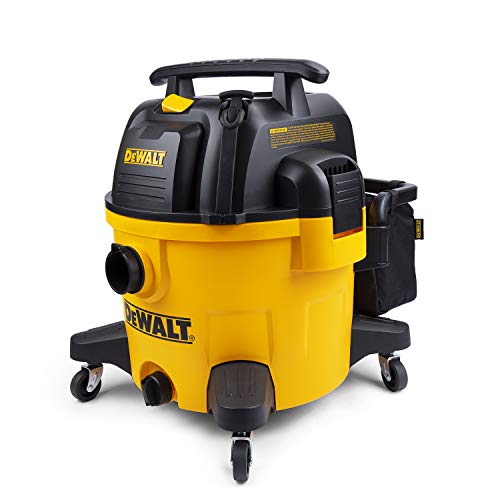
Choosing the right shop vac for woodworking comes down to balancing power, capacity, and features. For most woodworkers, the CRAFTSMAN CMXEVBE17595 16 Gallon 6.5 Peak HP Wet offers exceptional power and a large tank, making it ideal for heavy-duty shop cleanup. If you need a more compact and portable option that still delivers strong performance, the DEWALT Shop Vacuum 6 Gal 4 HP Poly Wet/Dry Vacuum is a reliable workhorse. Both models will keep your workspace clean and your projects on track.
Frequently Asked Questions
What size shop vac do I need for woodworking?
For most woodworking shops, a 5 to 10 gallon shop vac is a good balance of capacity and portability. If you have a large shop or do heavy production work, consider a 16 gallon model. Smaller 2.5 gallon units are handy for detail work and tight spaces.
Can I use a shop vac to collect sawdust from my table saw?
Yes, many woodworkers connect a shop vac to their table saw, miter saw, or sander. You will need a hose adapter if the diameters differ. For best results, use a vac with a fine dust filter or a dust bag to capture the smallest particles. Check our Reviews section for more tips.
How often should I replace the filter on my shop vac?
It depends on usage. For regular woodworking, check the filter every month. If it looks clogged or suction drops, clean or replace it. Washable filters can be rinsed and reused, but they eventually wear out. A good rule is to replace the filter every 6 to 12 months, depending on how much fine dust you collect.
Are quiet shop vacs worth the extra cost?
If you work in a shared space or for long hours, a quiet shop vac can be a great investment. Models like the DEWALT STEALTHSONIC series are significantly quieter than standard vacs. You will hear less noise and still get strong suction. It is a worthwhile upgrade for comfort and hearing protection.


