You have decided to move beyond your smartphone or bulky DSLR, and you want a camera that combines portability with professional-grade results. The mirrorless market is flooded with options, but finding the top rated mirrorless camera that fits your specific needs requires careful consideration of sensor performance, autofocus speed, and lens availability. This guide breaks down the best models from Sony, Canon, and Panasonic, focusing on real-world usability and image quality. Whether you are a travel enthusiast, a vlogger, or a portrait photographer, we have evaluated each camera to help you make a confident choice. For outdoor shooting, check our best mirrorless camera for nature guide.



Buying Guide
Sensor Size and Resolution
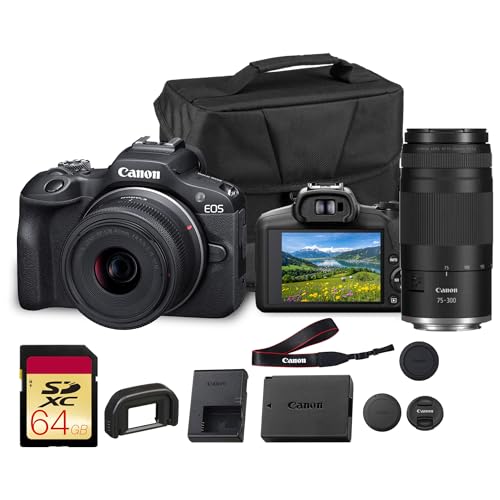
The sensor is the heart of any mirrorless camera. Full-frame sensors (like those in Sony Alpha a7 III and a7 IV) offer superior dynamic range and low-light performance, making them ideal for professional work and artistic photography. APS-C sensors, found in the Canon EOS R100 and Sony a6000, provide a great balance of image quality and affordability, with a crop factor that extends your telephoto reach. For most users, a 24MP to 33MP resolution is more than enough for large prints and heavy cropping. Choose full-frame if you prioritize shallow depth of field and high ISO performance; choose APS-C if you want a lighter kit and lower cost.
Autofocus Performance
Modern mirrorless cameras have closed the gap with DSLRs in autofocus speed and accuracy. Sony’s Real-time Eye AF for humans, animals, and birds sets the benchmark, as seen in the a7 III and a7 IV. Canon’s Dual Pixel CMOS AF on the EOS RP and EOS R100 delivers smooth and reliable tracking for both photos and video. Panasonic’s Depth from Defocus technology on the LUMIX G100 is competent for casual use but may struggle with fast action. If you shoot sports, wildlife, or unpredictable subjects, prioritize cameras with phase-detection pixels across most of the frame. For general photography, any of these systems will serve you well.
Video Capabilities
Video has become a key consideration for many buyers. The Sony Alpha a7 IV records 4K 60p 10-bit 4:2:2 with full pixel readout, offering cinema-grade flexibility for color grading. The Canon EOS RP captures 4K 24p but with a crop, while the Panasonic LUMIX G100 includes 4K 24p and 30p with a built-in microphone that tracks audio. For vloggers and content creators, the Canon EOS R100 and Panasonic G100 double as webcams. If video is your priority, look for 10-bit internal recording, headphone and microphone jacks, and log profiles like S-Log or V-Log. Our best vlogging camera with tripod guide covers more options for creators.
Lens Ecosystem and Portability
A camera is only as good as the lenses available for it. Sony’s E-mount has the largest selection of native and third-party lenses, from compact primes to super-telephotos. Canon’s RF mount is growing quickly, with excellent optics like the RF 24-105mm f/4-7.1 IS STM included in the EOS RP kit. Panasonic uses the Micro Four Thirds standard, which offers a huge range of lightweight lenses ideal for travel. Consider what you plan to shoot: a single zoom lens may suffice for everyday use, but if you want to expand creatively, a robust lens system is essential. Portability also matters: the Sony a6000 and Panasonic G100 are extremely compact, while full-frame bodies like the a7 IV require larger bags.
For a broader overview of camera types and comparisons, visit our Cameras category page.
Final Thoughts
After reviewing the top rated mirrorless cameras on the market, we believe the Sony Alpha a7 III Mirrorless Camera with 28-70mm remains the best all-around choice for enthusiasts and professionals who demand stellar image quality, reliable autofocus, and a mature lens system. For those entering the mirrorless world on a budget or prioritizing lightweight travel, the Canon EOS RP Mirrorless Camera RF24-105mm Lens offers excellent value with a versatile zoom and user-friendly controls. Whichever you choose, you are investing in a camera that will elevate your photography for years to come.
Frequently Asked Questions
What is the best mirrorless camera for beginners in 2026?
For beginners, we recommend the Canon EOS R100 or the Panasonic LUMIX G100. Both offer intuitive controls, built-in guidance modes, and affordable kit lenses. The Canon’s Dual Pixel AF makes it easy to get sharp photos, while the Panasonic’s intelligent auto mode handles settings automatically. As you grow, you can explore manual modes and expand your lens collection.
Which mirrorless camera has the best autofocus system?
Sony leads the industry with its Real-time Eye AF, available on the a7 III and a7 IV. These cameras track human, animal, and bird eyes with remarkable accuracy during both stills and video. Canon’s Dual Pixel CMOS AF is also excellent, especially on the EOS RP. For most users, either system will deliver consistent results, but Sony edges ahead for fast-moving subjects.
Is full-frame or APS-C better for mirrorless cameras?
Full-frame sensors (like those in Sony a7 III and a7 IV) provide better low-light performance, wider dynamic range, and shallower depth of field. APS-C sensors (like in Canon EOS R100 and Sony a6000) are more compact, less expensive, and offer a 1.5x crop factor that benefits telephoto shooting. Your choice depends on your priorities: if you shoot in low light or want maximum image quality, go full-frame; if you value portability and budget, APS-C is a smart pick.
How long do mirrorless camera batteries last?
Battery life varies by model. The Sony a7 III and a7 IV use the NP-FZ100 battery, rated for over 600 shots per charge. The Canon EOS RP and EOS R100 manage around 250 to 300 shots, while the Panasonic G100 gets about 270 shots. For extended shoots, carry spare batteries or use a power bank via USB charging if supported. Always check the manufacturer’s CIPA ratings for realistic estimates.