You have just finished building a custom bookshelf. The joints are tight, the glue is dry, but the surface feels rough. Without a reliable sander, that final smooth finish remains out of reach. Whether you are a weekend hobbyist or a seasoned woodworker, choosing the right tool for sanding can make or break your project. In this guide, we evaluate two standout options: the SKIL 5” Random Orbital Sander with Cyclonic Dust and the WEN 6307 Variable Speed Detailing File Sander. Each excels in different scenarios, and we will help you decide which one fits your woodworking needs in 2026.
If you also work with other power tools, you might find our reviews of top oscillating multi tools useful for tackling detailed cuts and sanding in tight spots.

Buying Guide for the Best Sander for Woodworking
Selecting the ideal sander involves more than just picking a brand. We have evaluated dozens of models and narrowed down three critical factors that separate a good sander from a great one. Keep these criteria in mind as you browse.
Power and Speed Control
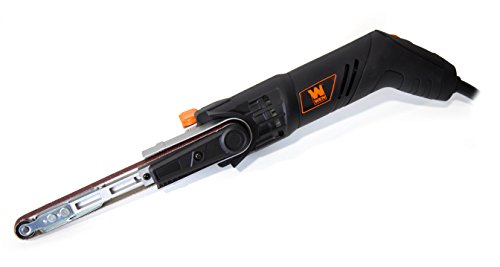
A sander’s motor determines how quickly it can remove material and how consistent the finish will be. For woodworking, you want a motor that delivers steady orbital motion or belt speed without bogging down under pressure. Variable speed control is a must: it lets you dial in the right aggression for softwoods, hardwoods, or delicate veneers. The SKIL model offers a 2.8 amp motor with 13,000 orbits per minute and a variable speed dial, giving you fine control across different materials. The WEN unit also features a variable speed dial that ranges from 1080 to 1800 feet per minute, ideal for shaping and smoothing curved surfaces.
Dust Collection Efficiency
Wood dust is not only messy but also a health hazard. A sander with effective dust collection keeps your workspace cleaner and your lungs safer. The SKIL random orbital sander uses a cyclonic dust box that spins dust away from the filter, maintaining strong suction even as the container fills. Its transparent design lets you see when it is time to empty. The WEN file sander includes a dust port attachment that connects to a shop vacuum, which is essential for capturing fine particles during detailed work. Both approaches work well, but the SKIL’s self-contained system is more convenient for quick jobs.
Versatility and Ergonomics
Woodworking involves a mix of large flat surfaces and intricate details. Your sander should handle both without causing fatigue. The SKIL sander’s compact size and soft rubber grip reduce vibration, letting you work longer. It also features a dust‑sealed on/off switch for easy operation. The WEN detailing file sander, on the other hand, pivots up to 55 degrees and uses a 1/2‑by‑18‑inch belt that can reach into corners and contours. Its auto‑tracking belt system requires no manual tensioning, and tool‑free belt changes speed up your workflow. If you frequently switch between broad sanding and detailed shaping, consider owning both types. For more heavy‑duty cutting tasks, check our picks for the best reciprocating saw for the money.
Final Thoughts
After comparing these two sanders, our recommendation depends on your primary woodworking tasks. For everyday smoothing of panels, tabletops, and cabinetry, the SKIL 5” Random Orbital Sander with Cyclonic Dust delivers powerful, low‑vibration performance with excellent dust control, making it a versatile choice for most projects. If your work involves tight curves, moldings, or detailed shaping, the WEN 6307 Variable Speed Detailing File Sander offers the precision and maneuverability you need at a budget‑friendly price. Both tools have earned strong ratings from users and represent the best sander for woodworking in 2026 across different use cases.
Frequently Asked Questions
What is the best sander for woodworking for beginners?
For those new to woodworking, a random orbital sander like the SKIL model is ideal. It is easy to control, minimizes swirl marks, and includes effective dust collection. The variable speed allows you to start slow and build confidence as you learn.
Should I choose an orbital sander or a detail file sander?
An orbital sander works best for large, flat surfaces and general finishing. A detail file sander, such as the WEN 6307, excels at reaching into corners, along edges, and on curved profiles. Many woodworkers keep both in their shop for different stages of a project.
How do I choose the right sandpaper grit for my woodworking project?
Start with a coarse grit (60 to 80) for heavy material removal, then move to medium (100 to 150) for smoothing, and finish with fine grit (180 to 220) for a polished surface. Always progress through grits gradually to avoid deep scratches. Your sander’s variable speed helps you adjust aggressiveness accordingly.
Can I use a woodworking sander on metal or plastic?
Yes, but you must select the appropriate abrasive belts or discs designed for those materials. Both the SKIL and WEN sanders can handle light metal deburring or plastic shaping when fitted with the correct grit. For heavy metal work, consider a dedicated sander. For more specialized tools, see our guide on best sawzall picks for cutting metal.