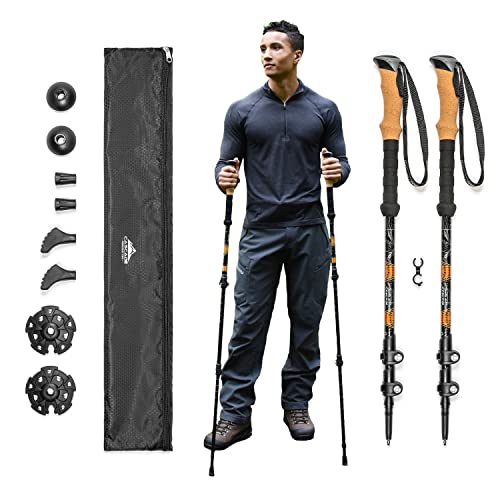
You are on a steep, rocky trail, and your knees start to ache. Your backpack feels heavier with each step. This is where a reliable pair of collapsible trekking poles can transform your hike. They provide stability, reduce joint strain, and pack down small when you don’t need them. Whether you are a seasoned backpacker or a weekend trail enthusiast, choosing the right poles makes a big difference. This guide reviews the best collapsible trekking poles available now, focusing on lightweight materials, secure locking systems, and comfortable grips. We evaluated numerous options to help you find the perfect match for your outdoor needs. For more gear insight, check out our picks for top daypacks for hiking as well.



Buying Guide
Shaft Material: Carbon Fiber vs. Aluminum
The shaft material affects weight, durability, and vibration dampening. Carbon fiber poles are lighter and reduce arm fatigue on long hikes. They absorb trail shock better, which is gentle on your wrists. Aluminum poles are more affordable and highly durable, bending rather than breaking under stress. For ultralight backpacking, carbon fiber is ideal. For rugged terrain on a budget, aluminum is a solid choice.
Locking Mechanism: Flip Locks vs. Twist Locks
Secure locks keep your poles at the right height. Flip locks are quick to adjust with one hand and provide a strong hold. They are favored for their reliability in mud or snow. Twist locks require two hands but are less prone to mechanical failure. Look for metal components over plastic for longevity. Both systems work well, but flip locks offer faster adjustment on the trail.
Grip Comfort and Materials
Your hands will spend hours on these grips. Cork handles mold to your hand shape and wick moisture, reducing blisters. They are lightweight and comfortable in warm weather. EVA foam grips are softer and good for wet conditions, but they wear faster. Extended foam sections under the main grip help on steep climbs. Choose cork for all-day hikes and foam for variable weather.
Collapsibility and Portability
Collapsible poles are designed to fold or telescope into a compact size. This makes them easy to store in a backpack or even a carry-on bag. Tri-fold designs pack the shortest, often under 15 inches, while telescoping poles offer more height range. Check the collapsed length to ensure it fits your travel needs. For ultralight trips, every inch matters. For related backpack options, see best 70L hiking backpacks and best 50L hiking backpacks.
Final Thoughts
After careful evaluation, we confidently recommend the 100% Carbon Fiber Trekking Poles by USA Brand for ultralight hikers who value superior comfort and weight savings, and the TrailBuddy Trekking Poles as a durable, versatile option for all-around trail use that balances performance and value. Both models offer reliable support and pack well for your next adventure.
Frequently Asked Questions
What is the difference between collapsible and folding trekking poles?
Collapsible poles usually telescope or fold into sections. Folding poles use a cord system to collapse into three or four pieces. Both are portable, but folding poles often pack shorter, while telescoping models offer more adjustability.
How do I choose the right height for trekking poles?
Stand upright and hold the pole with your elbow at a 90-degree angle. For general hiking, the pole tip should rest on the ground about 6 inches from your foot. Adjustable poles let you fine-tune for uphill or downhill sections.
Are carbon fiber poles better than aluminum for 2026?
Carbon fiber poles are lighter and reduce vibration, making them ideal for long-distance hiking. Aluminum poles are more durable and cost-effective for rugged trails. Both are excellent choices depending on your priorities and budget.
Can I use collapsible trekking poles for everyday walking?
Yes, many collapsible poles work well for daily walks or travel. Their compact design fits in luggage or a backpack. For more gear ideas, explore the outdoor category for additional recommendations.