You are planning a long hike, and every ounce in your pack matters. Carrying heavy gear can turn a beautiful trail into a painful slog. This is where lightweight trekking poles make a difference. They reduce strain on your knees, improve balance, and help you move faster. In this guide, we review the best lightweight trekking poles available in 2026 for hikers of all levels, from day-trippers to thru-hikers. Whether you prefer carbon fiber or aluminum, we have options for you. For a complete outdoor setup, check out our picks for the top daypacks for hiking.




Buying Guide: What to Look for in Lightweight Trekking Poles
Weight and Material
The primary reason to buy lightweight trekking poles is to reduce fatigue. Carbon fiber poles, like the 100% Carbon Fiber Trekking Poles by USA Brand and the Foxelli Carbon Fiber Trekking Poles, weigh around 7.6 ounces each. They absorb vibration well, making them comfortable on rocky terrain. Aluminum poles, such as the A ALAFEN 7075 Aluminum Collapsible Ultralight, are slightly heavier but offer greater durability at a lower cost. Choose carbon fiber for ultralight backpacking or aluminum for rugged trails where durability is key.
Grip Comfort and Ergonomics
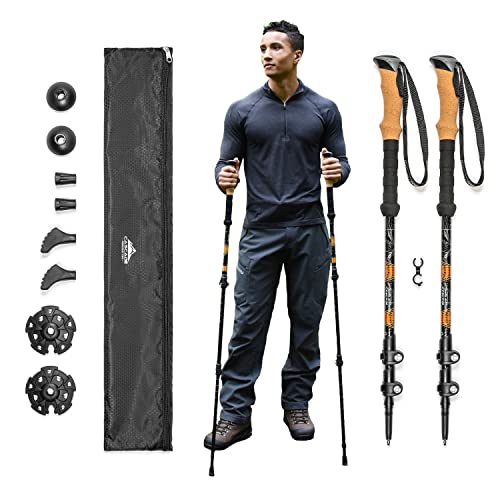
Your hands will be on these poles for hours, so grip material matters. Cork grips, found on models like the TrailBuddy Trekking Poles and the KINGGEAR Trekking Poles 7075 Aluminum Lightweight, mold to your hand shape over time and wick away moisture. EVA foam grips are also common and provide cushioning. Many poles feature an extended foam section below the main grip, which is useful for steep climbs when you need to choke up. Padded wrist straps reduce fatigue and prevent the pole from slipping.
Locking Mechanism and Adjustability
A reliable locking system ensures your poles stay at the desired height. Flip locks, as seen on the Cascade Mountain Tech Trekking Poles, are easy to adjust with one hand and hold securely. Twist locks are common on budget models but can slip over time. Look for poles with a wide adjustability range, typically from around 24 inches to 54 inches, to accommodate different terrains and user heights. For beginners, we recommend reading our guide on the best backpacking backpack for beginners to complete your gear setup.
Accessories and Versatility
Most trekking poles come with interchangeable baskets and tips for different conditions. Tungsten carbide tips provide excellent traction on rock and ice. Rubber tips protect the pole on pavement. Snow baskets prevent sinking in soft snow, while mud baskets offer grip in wet terrain. Some poles, like the TrailBuddy Trekking Poles, include a carry case for easy transport. Consider your typical hiking environment to choose the right accessories. For more on outdoor gear, visit our Outdoor category page.
Final Thoughts
Choosing the best lightweight trekking poles depends on your hiking style and budget. For ultralight enthusiasts seeking maximum comfort, the 100% Carbon Fiber Trekking Poles by USA Brand offer an exceptional balance of weight and durability with their cork grips and secure flip locks. If you prefer a more affordable option without sacrificing quality, the TrailBuddy Trekking Poles provide reliable aluminum construction and ergonomic handles that suit a wide range of hikers. Whichever you choose, investing in a quality pair will enhance your outdoor experiences for years to come.
Frequently Asked Questions
What are the lightest trekking poles available?
The lightest trekking poles are typically made from carbon fiber, with many models weighing around 7 to 8 ounces per pole. The 100% Carbon Fiber Trekking Poles by USA Brand and the Foxelli Carbon Fiber Trekking Poles are excellent examples, each weighing only 7.6 ounces. These are ideal for ultralight backpacking and long-distance hikes.
Are carbon fiber trekking poles worth the extra cost?
Yes, if you prioritize weight savings and vibration dampening. Carbon fiber poles are lighter than aluminum and reduce fatigue on long trails. They are also more expensive and can be less durable under extreme stress. For most hikers in 2026, the investment is worthwhile for the comfort and performance gains.
How do I choose the right height for trekking poles?
A general rule is to set the pole height so that your elbow forms a 90-degree angle when holding the grip. For flat terrain, adjust the poles to be roughly the same as your height in inches. For uphill sections, shorten the poles; for downhill, lengthen them. Most adjustable poles, like the Cascade Mountain Tech Trekking Poles, offer a range from 26 to 54 inches to suit different users.
Can I use trekking poles for snowshoeing?
Yes, many trekking poles are versatile enough for snowshoeing. Look for poles with snow baskets to prevent sinking, and tungsten carbide tips for grip on ice. The TrailBuddy Trekking Poles include snow baskets and are built to handle winter conditions. For more on hiking gear, see our top backpacking backpacks for men.