

Picture this: you are streaming a 4K movie in the living room, your partner is on a video call in the home office, and the kids are gaming in the basement. Suddenly, the video buffers, the call drops, and the game freezes. This frustrating scenario is all too common with traditional single-router setups. That is where a mesh WiFi system comes in. Unlike a lone router that struggles to push a signal through walls and across floors, a mesh network uses multiple nodes to blanket your entire home with strong, seamless coverage. In this guide, we have reviewed four of the leading mesh routers for home use in 2026 from trusted brands like TP-Link and Google. Whether you need to cover a 4,500-square-foot house or simply want to upgrade to the latest WiFi 6E technology, you will find a recommendation that fits your needs. For more insight into modern home networking, check out our guide on top WiFi 6 routers for a fast and reliable home network.

Pros
- Easy app based setup that takes minutes
- Strong and reliable coverage for large homes up to 4,500 sq. ft.
- Clean, compact design that fits discreetly into any room
- Built in parental controls and guest network for enhanced security
Cons
- Some users report occasional router failure requiring re authentication
- WiFi 5 (802.11ac) is not the latest standard, may lack future proofing
- Only 3 ports per router, limiting wired connections
The Google WiFi AC1200 Mesh Router 3 Pack is a whole home mesh system designed to replace traditional routers and extenders. It targets users who want consistent, reliable WiFi throughout a large home without technical hassles. Whether you are a remote worker, a gamer, or a family with multiple devices, this system promises to keep everything connected seamlessly.
In real world use, the mesh network delivers on its promise of eliminating dead zones. The dual band AC1200 technology provides enough speed for 4K streaming, online gaming, and video calls. The Google Home app makes setup straightforward, and the ability to manage devices, set parental controls, and create guest networks adds significant value. Performance is generally stable, though some users have reported occasional router failures requiring re authentication.
Design wise, each router is compact and unobtrusive, with a snow white finish that blends into most home environments. The build feels solid, and the lack of external antennas keeps the look clean. The system includes three routers, each with three ports, which may be limiting for users with many wired devices.
There are a few drawbacks to consider. The most notable is that this system uses WiFi 5 technology, which is not the latest standard. While sufficient for most current needs, it may not be as future proof as WiFi 6 systems. Additionally, a small number of customer reviews mention connectivity issues with one of the routers, requiring resetting or re adding devices. However, the majority of feedback is positive, praising ease of use and reliable coverage.
Overall, the Google WiFi AC1200 3 Pack is a solid choice for anyone looking to upgrade their home network with a simple, effective mesh system. It excels in coverage, ease of use, and design, though potential buyers should weigh the WiFi 5 standard against their long term needs. For most households, it delivers a strong, hassle free WiFi experience.

Pros
- Excellent coverage for medium to large homes, as verified by thousands of positive reviews.
- Simple app-based setup that takes minutes, even for non-technical users.
- Seamless roaming with a single network name, eliminating connection drops when moving around.
- Strong performance with support for up to 75 devices simultaneously.
- Affordable price point compared to many competing mesh systems.
Cons
- Dual-band only; lacks a dedicated backhaul band which can slightly reduce speeds in congested areas.
- Limited to two Gigabit Ethernet ports per unit, may require a switch for wired devices.
- Some users may need to optimize placement for best performance, especially with Ethernet backhaul.
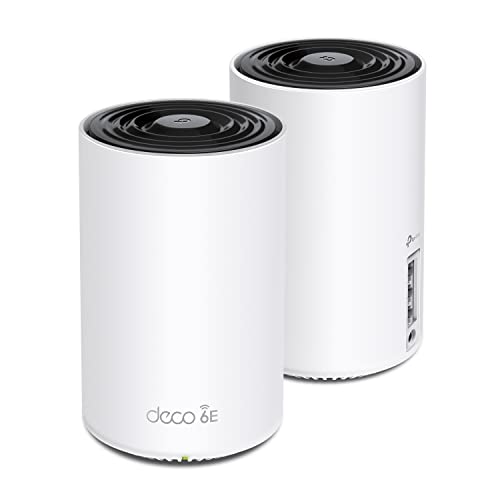
The TP-Link Deco S4 is a dual-band mesh WiFi system designed to eliminate dead zones and provide consistent coverage throughout your home. Ideal for families, remote workers, and anyone tired of buffering or dropped connections, this two-pack covers up to 3,800 square feet and supports up to 75 devices simultaneously. With a strong 4.5-star rating from thousands of reviews, it's a trusted solution for improving home WiFi performance.
Standout features include seamless roaming with a single network name, so your devices automatically connect to the strongest signal as you move around. The Deco app makes setup a breeze, and parental controls let you manage screen time and block inappropriate content for each family member. Real-world performance is solid; users report consistent speeds and stable connections, even in homes with multiple floors or concrete walls.
Design-wise, the Deco S4 units are compact and unobtrusive, blending into most home decors. Each unit has two Gigabit Ethernet ports for wired connections, and you can use Ethernet backhaul for even faster speeds. The system supports both router and access point modes, giving you flexibility depending on your existing setup. Build quality is typical for TP-Link, with a durable plastic shell and reliable internals.
Potential drawbacks include the lack of a dedicated backhaul band (common in tri-band systems), which may slightly impact performance in very congested networks. Also, with only two Ethernet ports per unit, you may need an additional switch to connect multiple wired devices. Some users note that optimal placement is key, especially if using Ethernet backhaul, but the app provides helpful guidance.
Overall, the TP-Link Deco S4 offers excellent value for its price, delivering reliable, whole-home WiFi with easy setup and robust features. It's a top choice for anyone looking to improve coverage without breaking the bank. If you need a simple, effective mesh system for a medium to large home, the Deco S4 is a smart investment.

Pros
- Exceptional range and WiFi signal strength even at distances from the router
- Simple setup process that takes just minutes with clear instructions
- Handles multiple devices and heavy network traffic without lag or performance drops
- Excellent value for the price with WiFi 6 performance at an affordable cost
- CISA Secure-by-Design pledge ensures advanced security features built into the device
Cons
- Requires a separate modem for internet connection, which may be an additional purchase
- Phone app setup can be problematic for some users, though web browser setup is more reliable
- Dual-band design does not support the 6 GHz band like higher-end WiFi 6 routers
The TP-Link Archer AX21 is a dual-band WiFi 6 router engineered for households seeking a significant upgrade from older networking equipment. It delivers 1.8 Gbps total bandwidth (1200 Mbps on 5 GHz, 574 Mbps on 2.4 GHz) and is compatible with all major internet service providers. This router is ideal for families with multiple connected devices, gamers, streamers, and anyone frustrated with slow or unreliable WiFi performance.
The standout feature of this router is its exceptional range and coverage capability. Four high-gain antennas combined with advanced beamforming technology focus signal strength toward your devices, ensuring strong connections even in distant rooms or areas with obstacles. WiFi 6 technology with OFDMA support allows the router to communicate with multiple devices simultaneously, eliminating the congestion and slowdowns common with older routers handling heavy network traffic.
Setup is remarkably straightforward, with users reporting successful connections in just minutes using either the mobile app or web browser interface. The router features a modern, compact black design that fits discreetly in most home environments. Built-in security includes WPA3 protocol support and compliance with the CISA Secure-by-Design pledge, giving you confidence in your network's protection. Additional features include VPN server support, parental controls, and Alexa voice integration for hands-free management.
The primary consideration is that this router requires a separate modem for internet connectivity, which may mean an additional purchase if you don't already have one. The phone app can occasionally present setup challenges, though the web browser interface provides a more reliable alternative. As a dual-band router, it does not support the 6 GHz band available on premium WiFi 6E models.
The Archer AX21 represents exceptional value for budget-conscious buyers seeking genuine WiFi 6 performance. With industry-leading support, a 2-year warranty, and proven reliability from a trusted networking brand, this router delivers the speed and coverage upgrades that frustrated users consistently praise in real-world usage.
Wireless Performance: WiFi 6 (802.11ax), AX1800 with 1.8 Gbps total bandwidth, 1200 Mbps on 5 GHz band, 574 Mbps on 2.4 GHz band.
Connectivity: 4 high-gain fixed antennas, beamforming technology, OFDMA support, 5 ports (Gigabit Ethernet), Alexa voice control compatible.
Security: WPA/WPA2, WPA/WPA2-Enterprise (802.1x), WPA3 protocol, OpenVPN and PPTP VPN server support, CISA Secure-by-Design pledge signatory.
Physical: Dimensions 10.28 inches L x 5.3 inches W x 1.61 inches H, weight 1.1 pounds, black color, 12V power adapter included.
Support: 2-year manufacturer warranty, 24/7 technical support at +1 866-225-8139, compatible with Internet Explorer 11+, Firefox 12.0+, Chrome 20.0+, Safari 4.0+.
Is This Router Right for You? The Archer AX21 is ideal if you're upgrading from a router older than 5 years, experiencing slow speeds despite paying for higher-tier internet plans, or adding numerous smart home devices that overwhelm your current network. It's perfect for households with 2,000-3,000 square foot homes seeking reliable coverage without premium pricing.
What You'll Need: A cable or DSL modem (not included), active internet service provider subscription, and a compatible browser for setup. Most major ISPs like Comcast, Charter, AT&T, Verizon, and Spectrum are fully supported without additional configuration.
Setup Expectations: Plan 10-15 minutes for initial configuration using either the Tether mobile app or web browser interface. The included ethernet cable and quick installation guide make the process straightforward even for non-technical users. Consider using the web browser setup method if you encounter app-related issues.
Performance Considerations: Actual speeds depend on your internet plan, distance from the router, obstacles like walls, and the number of connected devices. The router's 1.8 Gbps capacity is more than sufficient for gigabit internet plans and handles streaming, gaming, and video conferencing simultaneously without degradation.
Buying Guide: What to Look for in a Mesh Router
Coverage Area and Number of Nodes
One of the first factors to evaluate is how much square footage your home requires. Mesh systems are sold in packs of two or three nodes, each designed to cover a specific area. For example, a 3-pack like the Google WiFi AC1200 covers up to 4,500 square feet, while a 2-pack like the TP-Link Deco S4 covers 3,800 square feet. Consider the layout of your home, the number of floors, and where dead zones currently exist. If you have a larger home or one with thick walls, opting for a system with more nodes or a higher coverage rating is wise. You can also add extra nodes later if needed.
WiFi Standard and Speed
The WiFi generation directly impacts speed, capacity, and future-proofing. WiFi 6 and WiFi 6E routers offer faster speeds, lower latency, and better handling of multiple devices compared to older AC standards. The TP-Link Deco XE75 AXE5400 is a tri-band WiFi 6E system that unlocks the 6 GHz band, reducing interference from legacy devices and providing a dedicated backhaul for node-to-node communication. If you have many smart home devices or frequently stream high-bandwidth content, investing in a WiFi 6 or 6E mesh system is a smart move. For budget-conscious shoppers, our roundup of top WiFi 6 routers under $100 offers additional options.
Ease of Setup and Management
Not everyone wants to spend an afternoon configuring network settings. The best mesh routers simplify installation with intuitive mobile apps. The Google WiFi system uses the Google Home app to guide you through setup in minutes, while TP-Link’s Deco app offers similar step-by-step guidance. Look for features like automatic firmware updates, parental controls, guest networks, and the ability to manage your network remotely. A seamless setup process means you can enjoy your improved coverage without technical headaches.
Device Capacity and Smart Home Integration
Modern homes are filled with connected devices: phones, tablets, laptops, smart TVs, thermostats, lights, cameras, and more. A mesh router should handle all these connections simultaneously without slowing down. The TP-Link Deco XE75 supports up to 200 devices, while the Deco S4 comfortably manages 75 devices. Also consider integration with voice assistants. Some systems work with Alexa or Google Assistant, allowing you to control guest Wi-Fi or prioritize devices with simple voice commands. If you are building a smart home, a mesh network with robust device capacity is essential.
Final Thoughts
After evaluating the top contenders, we believe the Google WiFi AC1200 Mesh Router System is an excellent choice for those who prioritize simplicity and whole-home coverage straight out of the box, while the TP-Link Deco XE75 AXE5400 Tri-Band WiFi 6E Mesh is ideal for power users who want cutting-edge speed and the ability to handle a large number of devices. If your budget is tighter, the TP-Link Deco S4 offers reliable mesh performance at a very accessible price point. No matter which route you take, upgrading to a mesh system will transform your home network experience and banish dead zones for good. For more router recommendations, visit our Routers category page and see our related articles on top mesh routers and WiFi 6 options.
Related Guides
- Best WiFi Router For Gigabit Internet
- Top Routers with Parental Controls for 2026
- Top Routers Under $200 for 2026
Frequently Asked Questions
What is the difference between a mesh router and a traditional router?
A traditional router sends WiFi from a single point, which often leads to weak spots in larger homes. A mesh system uses multiple nodes that communicate with each other to create a unified, seamless network. This eliminates dead zones and allows devices to switch automatically between nodes as you move around your home.
Do I need WiFi 6E for my home network in 2026?
WiFi 6E provides access to the 6 GHz band, which offers more channels and less interference than 2.4 GHz or 5 GHz. If you have many devices, live in a crowded apartment building, or use bandwidth-intensive applications like VR gaming or 8K streaming, WiFi 6E can make a noticeable difference. For most households, WiFi 6 is already a huge step up from older AC standards.
Can I mix different brands of mesh nodes?
Generally, no. Mesh systems are designed to work only with nodes from the same brand and product line. Mixing brands can cause incompatibility and degrade performance. Stick to a single mesh system from a manufacturer like TP-Link or Google for the best experience.
How many mesh nodes do I need for a 3,000-square-foot home?
Most 2-pack mesh systems cover 3,500 to 4,000 square feet, so a 2-pack should suffice for a 3,000-square-foot home. If your home has multiple floors or challenging construction materials, consider a 3-pack for extra assurance. The TP-Link Deco S4 2-pack, for instance, covers up to 3,800 square feet.


