

You have been dreaming of stepping into your favorite game worlds. Whether it is racing through a virtual circuit, exploring alien landscapes, or battling in a multiplayer arena, the right VR headset makes all the difference. With so many options on the market, finding the best gaming VR headsets for your setup and budget can feel overwhelming. This guide breaks down the top contenders for 2026, covering standalone headsets, PC-powered models, and budget-friendly picks. We have evaluated each product based on visual clarity, tracking accuracy, comfort, and overall gaming performance. If you prefer a wireless experience, check out our roundup of best VR headsets that Don’t need a PC for more standalone options.


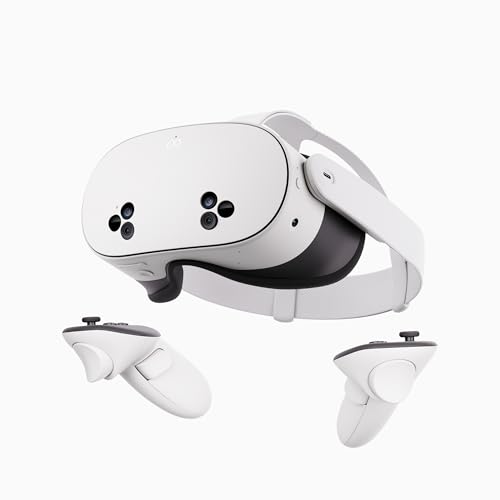


Buying Guide for the Best Gaming VR Headsets
Resolution and Visual Quality
Sharp visuals and smooth refresh rates are critical for immersion. Higher resolution per eye reduces the screen-door effect, while a wider field of view makes virtual worlds feel more expansive. For sim racing and flight enthusiasts, visual clarity is especially important. Our best VR headsets for sim racing guide highlights models that excel in this area. Look for headsets with at least 1832×1920 per eye and 90 Hz refresh rates for a satisfying experience.
Tracking and Controllers
Accurate, low-latency tracking makes your movements feel natural in VR. Inside-out tracking (no external sensors) is now standard and works well in most rooms. For PC VR, high-end headsets with 6DoF tracking deliver precise hand and head motion. If you plan to pair a headset with a gaming rig, see our best VR headsets for PC gaming recommendations for top tracking performance.
Comfort and Ergonomics
Long gaming sessions demand a comfortable fit. Lightweight designs, balanced weight distribution, and soft facial interfaces reduce fatigue. Adjustable head straps and IPD sliders accommodate different head shapes and eyesight. For those who wear glasses, some headsets offer extra space or prescription lens inserts. Check our best VR headsets for glasses wearers for comfortable options.
Platform Compatibility and Content Library
Consider whether you want a standalone headset (no PC required) or a PC-powered model. Standalone headsets like the Meta Quest series offer portability and access to a large library of games. PC VR headsets connect to a computer and unlock SteamVR’s vast catalog. If you are invested in Steam games, see our top VR headsets for steam guide for compatible picks. Also check system requirements before buying.
Final Thoughts
After evaluating the top models, our overall recommendation depends on your priorities. For gamers who demand the absolute best visual fidelity and a massive field of view for simulators, the Pimax Crystal Super VR Headset, 3840×3840 per Eye is unmatched. If you prefer a versatile, wireless headset with a huge game library and excellent mixed reality capabilities, the Meta Quest 3 512GB | Virtual Reality is the all-round champion. Both deliver exceptional gaming experiences, so choose the one that fits your gaming style.
Frequently Asked Questions
Which VR headset is best for PC gaming in 2026?
For PC gaming, the Pimax Crystal Super offers the highest resolution and widest field of view, making it ideal for sims and demanding titles. The DPVR E4 is a more affordable option with 120 Hz refresh and SteamVR support. If you want a balance of performance and price, the Meta Quest 3 can also connect to a PC via Link cable or Air Link.
What is the difference between Meta Quest 3 and Quest 3S?
The Meta Quest 3S is a lower-cost variant with the same processor but less storage (128GB vs 512GB) and no Gorilla Tag bundle in the base model. Both have the same Snapdragon XR2 Gen 2 chip, dual RGB cameras, and 8GB RAM. The Quest 3S is a great entry point, while the Quest 3 offers more storage for a larger game library.
Do I need a powerful PC for VR gaming?
It depends on the headset. Standalone headsets like the Meta Quest 2 and Quest 3S do not require a PC at all. For PC VR headsets such as the DPVR E4 or Pimax Crystal Super, you need a gaming PC with at least an Intel Core i5, 8GB RAM, and a GTX 1060 or better. Higher-resolution headsets demand more GPU power for smooth performance.
Can I use VR headsets with glasses?
Many modern VR headsets accommodate glasses with adjustable eye relief or extra space in the facial interface. The Meta Quest 3 and Quest 3S have a glasses spacer included. For a more comfortable fit, you can also buy prescription lens inserts. Check our best VR headsets for glasses wearers guide for models that work well with spectacles.

