You’re out on a shoot, the light is perfect, and you’ve just captured the shot of a lifetime. Then, your camera stutters, the buffer fills, and you miss the next frame. That’s the moment you realize a slow memory card can hold you back. Whether you’re a hobbyist, a content creator, or a professional, the right UHS-I SD card can make all the difference.
This guide breaks down the top UHS-I SD cards available in 2026, focusing on real-world performance, durability, and value. We’ve analyzed the specs and features to help you choose the perfect card for your camera, drone, or laptop. Let’s dive in and find the card that keeps up with your creative vision.


Buying Guide
Read and Write Speeds
Speed is the most critical factor for any SD card. Read speed determines how fast you can transfer photos and videos to your computer, while write speed affects how quickly your camera can save data to the card. For 4K video recording, you need a card with a minimum write speed of 30MB/s, which is designated as V30.
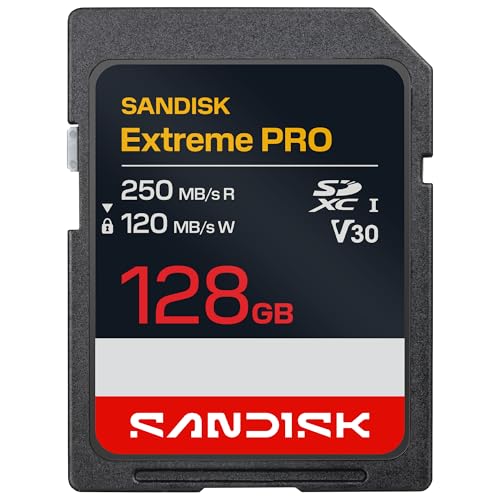
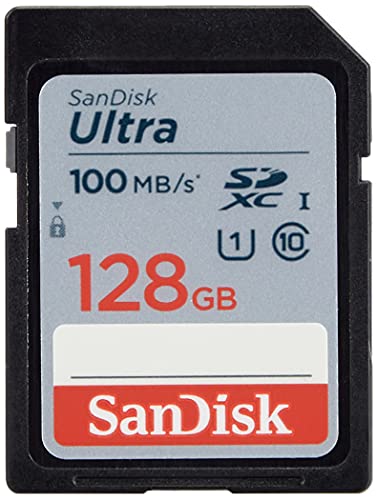
Cards like the SanDisk 128GB Extreme PRO SD UHS-I Card offer read speeds up to 250MB/s and write speeds up to 170MB/s, making them ideal for high-resolution burst photography and 4K UHD video. For standard Full HD recording, a card with 100MB/s read speed, like the SanDisk 128GB Ultra SDXC UHS-I Memory Card, is more than sufficient.
Capacity and Storage Needs
Capacity is another crucial consideration. Cards range from 32GB to 2TB, but your choice should be based on your shooting habits. If you shoot a lot of 4K video or high-resolution RAW photos, a larger capacity card like 256GB or 512GB is a wise investment. For casual shooters, a 128GB card offers a good balance of space and affordability.
Consider how often you can offload your files. If you have a reliable workflow to transfer files to a computer or cloud, you can manage with smaller capacities. But if you’re traveling or on a long shoot without access to a computer, a high-capacity card is essential. Always have at least one backup card to avoid running out of space.
Durability and Reliability
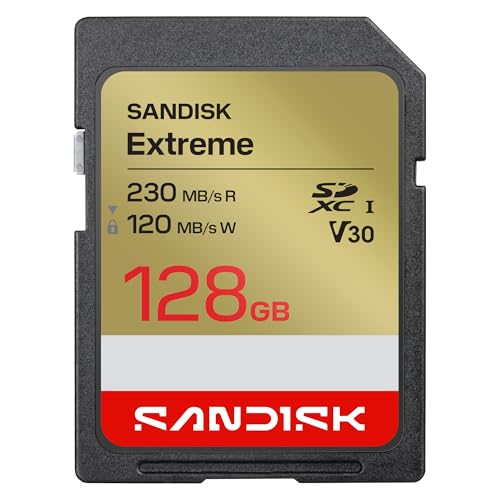
SD cards are tiny, but they’re often exposed to harsh conditions. Whether you’re shooting in the desert, the arctic, or just in your backyard, you need a card that can withstand temperature extremes, humidity, water, and shock. SanDisk’s Extreme and Extreme PRO lines are engineered to be temperature-proof, waterproof, shock-proof, and X-ray-proof.
This durability is not just a marketing claim; it’s a safety net for your precious memories. A card that fails can mean lost photos and video that can’t be recovered. Investing in a rugged card like the SANDISK 64GB Extreme PRO SDXC UHS-I Memory Card provides peace of mind, especially if you’re shooting in challenging environments.
Compatibility with Your Devices
Before making a purchase, check that the card is compatible with your camera, drone, or card reader. Most modern devices support UHS-I, but older models might not take advantage of the fastest speeds. Also, consider the physical size: full-size SD cards are standard in most cameras, while microSD cards are used in action cams, drones, and smartphones.
If you use a microSD card in a full-size SD card slot, you’ll need an adapter, which is often included. For example, the SANDISK 256B Extreme microSD Card + Adapter comes with a standard SD adapter, making it versatile for multiple devices. Always verify the card’s speed class and capacity are supported by your device to avoid performance issues.
Final Thoughts
Choosing the right UHS-I SD card doesn’t have to be complicated. For professional photographers and videographers who need maximum speed and reliability, the SanDisk 128GB Extreme PRO SD UHS-I Card is our top recommendation. If you’re a vlogger or action sports enthusiast looking for a durable, high-capacity microSD card, the SanDisk 512GB Extreme microSD UHS-I Card is an outstanding choice.
Frequently Asked Questions
What is the difference between UHS-I and UHS-II SD cards?
UHS-I cards have a maximum theoretical transfer speed of 104MB/s, while UHS-II cards can reach up to 312MB/s. UHS-II cards have an extra row of pins and are often used by professionals for high-resolution video and rapid-fire photography. However, UHS-II cards are more expensive and require compatible devices to take full advantage of their speed.
Can I use a microSD card in a full-size SD card slot?
Yes, you can use a microSD card in a full-size SD card slot with an adapter. Many microSD cards come with a standard SD adapter, making them versatile for use in cameras, laptops, and other devices. Just ensure the adapter is properly inserted and the card is securely seated to avoid connection issues.
How do I know if my camera supports UHS-I speed class 3 (U3)?
Check your camera’s manual or specifications online. Most modern cameras that support 4K video recording are UHS-I U3 compatible. You can also look for the U3 symbol on the card itself, which indicates a minimum write speed of 30MB/s, necessary for smooth 4K recording.
What does V30 mean on an SD card?
V30 is a video speed class that guarantees a minimum sustained write speed of 30MB/s. This rating is designed for recording 4K UHD video without dropping frames. For most consumer and prosumer cameras, a V30 card is sufficient. For 8K or high-bitrate 4K, you might need a V60 or V90 card.