You are a STEM student, and your laptop is your lifeline. It needs to handle dense PDFs, complex coding environments, and endless browser tabs for research, all while surviving the chaos of a campus schedule. But with so many options, how do you choose one that fits your specific science major and budget without getting bogged down in technical jargon?
We have analyzed the latest lineup to bring you a focused guide on the best laptops for STEM students. We will break down the key features that matter for science, technology, engineering, and math coursework, and we will highlight a few top contenders to get you started. Whether you are a freshman in biology or a senior in computer science, this guide is your first step toward making a smart investment.


Buying Guide for STEM Laptops
Processor and Performance
The brain of your laptop, the processor, dictates how smoothly it handles demanding software. For STEM students, a multi-core processor is essential. It ensures that tasks like compiling code, running simulations, or analyzing large datasets do not cause frustrating lag. Look for options with at least a quad-core CPU, like the Intel N150 or Pentium Gold, to keep your workflow efficient.
You do not need the absolute fastest chip on the market, but you do need enough power to avoid slowdowns. A capable processor helps you stay focused on your studies rather than waiting for progress bars. For more demanding tasks, consider a higher-tier processor, but for most undergraduate work, a balanced mid-range chip is more than sufficient.
Memory and Storage
Memory, or RAM, is your laptop’s short-term memory. It allows you to run multiple programs and browser tabs simultaneously without a performance hit. For STEM students, 8GB of RAM is a good starting point, but 16GB is becoming the sweet spot for more intensive applications like virtual machines or data analysis tools. It provides a smoother, more responsive experience.
Storage is where you keep your files. A solid-state drive (SSD) is non-negotiable for its speed and reliability. It boots up your system and opens applications much faster than older hard drives. Look for at least 256GB of SSD storage to have ample space for your software, projects, and research data. Some laptops also offer expandable storage options, which can be a great bonus.
Portability and Battery Life
As a student, you are likely moving between classes, the library, and study groups. A lightweight and compact laptop is not a luxury; it is a necessity. Look for models that are easy to slip into a backpack without adding unnecessary bulk. A slim design also makes it easier to use in tight spaces like lecture hall desks.
Battery life is equally critical. You need a laptop that can last through a full day of classes without scrambling for an outlet. Models with long battery life, often advertised as 10 hours or more, are ideal. This ensures your laptop is a reliable tool, not a constant source of anxiety about the next available power socket.
Final Thoughts
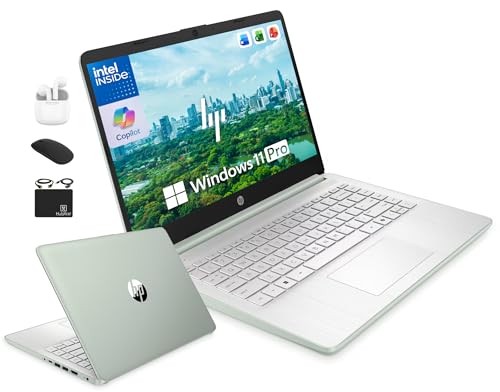
Finding the right laptop is a personal journey, but you can make a confident choice by focusing on performance, memory, and portability. For a powerful and versatile option that handles demanding STEM software, consider the HP 14″ Laptop 2025 Business Student Slim Computer, which offers a great balance of power and storage. If you are on a tighter budget, the HP 14″ Ultra-Light Laptop for Student & Home is a fantastic entry-level choice that still covers all the basics for your coursework.
Frequently Asked Questions
What processor is best for a STEM student?
For most STEM students, a quad-core processor from Intel or AMD is a solid baseline. It offers enough power for programming, data analysis, and general multitasking. If your major involves heavy simulation or 3D modeling, you may want to invest in a higher-performance chip, but a mid-range processor is sufficient for most coursework.
How much RAM do I need for a STEM degree?
We recommend 8GB of RAM as a minimum for STEM students, but 16GB is a safer bet if your budget allows. More RAM enables you to run complex software like virtual machines, large spreadsheets, or statistical analysis tools without slowdowns. It is an investment in smooth multitasking that will pay off during busy project weeks.
Is a touchscreen laptop necessary for STEM?
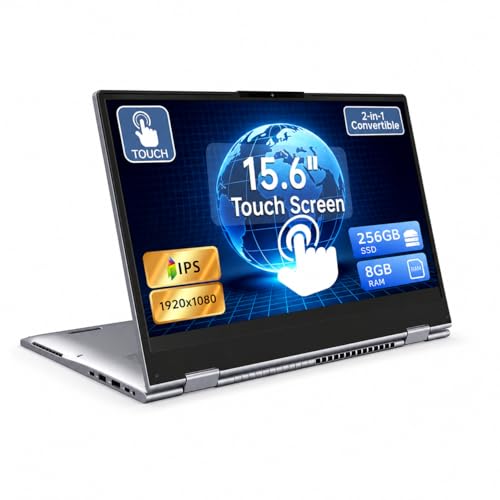
A touchscreen is not a strict requirement for STEM, but it can be a helpful feature for note-taking and annotating PDFs. It adds convenience for reviewing lecture slides or sketching out diagrams. However, it is not essential for most software, so you can prioritize other specs like battery life or storage and still be well-prepared.
What is the best operating system for STEM students?
The best operating system depends on your specific field. Windows is widely compatible with most engineering and science software, while macOS is popular in design and some research fields. Linux is also a strong choice for computer science and programming. Consider the software requirements of your courses and choose an OS that supports them seamlessly.