

Are you tired of smartphone video limitations? Whether you are starting a YouTube channel, streaming live, or shooting short films, a dedicated mirrorless camera unlocks professional quality. In this guide, we have evaluated the top mirrorless cameras for video from Canon and Nikon, focusing on 4K capabilities, autofocus performance, and vlogging-friendly features. Our picks suit beginners and experienced creators alike. For more on portable options, check our roundup of lightweight mirrorless cameras.


Buying Guide
Video Quality and Resolution
For serious video work, 4K resolution is the baseline. Look for cameras that offer oversampled 4K from a higher-resolution sensor, like the Canon EOS R50 with its 6K oversampled uncropped 4K. Frame rates matter too: 60p for smooth motion, and 120p for slow motion in Full HD. The Nikon Z50 II delivers 4K UHD/60p and in-camera 120p slow motion, making it a strong contender for creative projects.
Also consider bitrate and color depth. Higher bitrates preserve detail in fast action, while 10-bit internal recording (available on some models) gives more flexibility in post. For a deeper dive into sensor sizes, see our best APS C mirrorless cameras guide.
Autofocus Performance
Reliable autofocus is crucial for video, especially when tracking moving subjects. Canon’s Dual Pixel CMOS AF II, found in the EOS R50, covers nearly the entire frame and uses deep learning to detect people, animals, and vehicles. The Nikon Z50 II also impresses with subject detection for nine categories, including birds and airplanes. Eye detection ensures your subject stays sharp even when they turn their head.
For vloggers, face and eye tracking are non-negotiable. Both brands perform well, but Canon’s system is slightly faster in low light. If you shoot a lot of selfie-style content, a flip-out screen combined with reliable autofocus makes all the difference. Explore small mirrorless cameras for compact options with great AF.
Usability for Vloggers and Streamers
If you plan to vlog or stream, look for a fully articulating screen that faces forward, a microphone input, and a red REC light. The Nikon Z 30 is designed specifically for creators with a flip-out touchscreen, built-in stereo mic with adjustable sensitivity, and easy USB-C streaming. The Canon EOS R50 offers vertical video mode and Creative Assist for social-media-ready content.
Battery life and portability also matter. The Nikon Z 30 is the lightest in this group, while the Canon EOS R100 is budget-friendly. For a compact all-rounder, refer to our best compact mirrorless cameras list.
Lens Ecosystem and Expandability
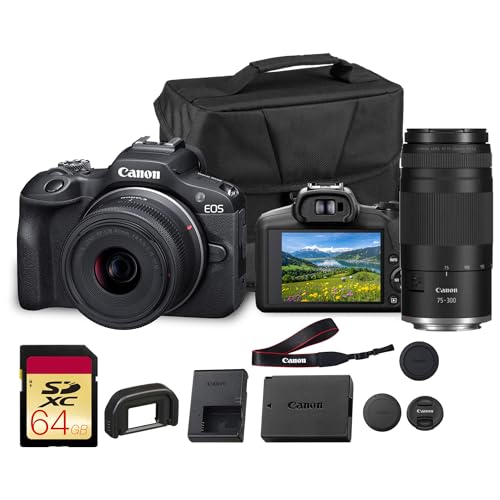
Your camera is only as good as the lenses you pair with it. Canon’s RF mount offers a growing lineup of RF-S lenses for APS-C and full-frame RF glass. The Nikon Z mount is equally versatile, with native Z DX lenses and compatibility with F-mount lenses via an adapter. For video, a wide-angle zoom (like the 16-50mm on the Nikon Z 30) is ideal for handheld vlogging, while a telephoto zoom (like the 55-210mm on the Canon R50 bundle) adds reach for events.
Consider future-proofing: if you plan to upgrade to full-frame later, choosing a camera with a mount that supports both sensor sizes (like Canon RF or Nikon Z) saves you from replacing lenses. For more on lens options, browse our best Micro Four Thirds mirrorless cameras if you prefer a different system.
Final Thoughts
After evaluating the top models, the best mirrorless camera for video depends on your needs. For beginners and vloggers who want a lightweight, user-friendly setup with excellent autofocus, the Canon EOS R50 Mirrorless Camera with 18-45mm Lens is an outstanding choice. If you crave more creative control and a larger sensor with versatile dual-lens kit, the Nikon Z50 II with Two Lenses delivers professional-grade video and 31 built-in color presets. Both cameras offer exceptional value for their price and will serve you well for years to come.
Frequently Asked Questions
Which Canon mirrorless camera is best for video in 2026? The Canon EOS R50 stands out for its 6K oversampled 4K, Dual Pixel CMOS AF II, and vlogging-friendly features like vertical video and Creative Assist. It is ideal for beginners and content creators. For an even more affordable option, the Canon EOS R100 offers solid 4K video at a lower price point.
Is the Nikon Z50 II good for vlogging? Yes, the Nikon Z50 II is excellent for vlogging. It has a flip-out touchscreen, built-in flash, 4K/60p video, and 31 color presets that let you customize your look. The included 16-50mm and 50-250mm lenses cover wide-angle to telephoto, making it versatile for different shooting scenarios.
What is the best budget mirrorless camera for video? The Canon EOS R100 with the 18-45mm lens is a strong budget pick. It features a 24.2MP APS-C sensor, 4K video, and Dual Pixel CMOS AF. While it lacks a flip screen, its compact size and ease of use make it great for beginners. For a similar price, the Nikon Z 30 offers a flip screen and dedicated vlogging features.
Do I need two lenses for video? Not necessarily. A single standard zoom like 18-45mm covers most everyday needs. A second telephoto lens (e.g., 55-210mm) adds reach for events or wildlife. Bundles like the Canon EOS R50 double lens kit or the Nikon Z50 II two-lens kit give you flexibility without buying separately. For more on lens choices, see our small mirrorless cameras guide.




