

You are a filmmaker ready to step up from your smartphone or DSLR, but you need a camera that balances video performance with portability. Mirrorless systems now offer 4K resolution, reliable autofocus, and interchangeable lenses without the bulk of traditional cinema rigs. In this guide, we evaluate two top contenders for best mirrorless cameras for filmmaking in 2026: the Nikon Z50 II and the Canon EOS R100. Whether you are shooting vlogs, short films, or documentaries, these cameras deliver the features you need at accessible price points. For more options, check out our roundup of best lightweight mirrorless cameras.



Buying Guide: What to Look for in a Filmmaking Mirrorless Camera
Video Quality and Resolution
For filmmaking, 4K video at 60 frames per second is a must for smooth motion and the ability to create slow-motion effects. The Nikon Z50 II records 4K UHD up to 60p and offers in-camera 120p slow motion in Full HD, giving you creative flexibility. The Canon EOS R100 also captures 4K video, though at a lower frame rate, making it more suited for standard cinematic work. Both cameras use large APS-C sensors that deliver excellent low-light performance and shallow depth of field.
Autofocus Performance
Reliable autofocus is critical when you are behind the camera or moving subjects. The Nikon Z50 II features advanced subject detection that tracks people, animals, and vehicles with precision, even in challenging lighting. The Canon EOS R100 uses Dual Pixel CMOS AF with Eye Detection, ensuring your subject stays sharp during interviews or action sequences. Both systems are fast and accurate, but the Nikon offers more tracking modes for diverse filming scenarios.
Lens Versatility and Ecosystem
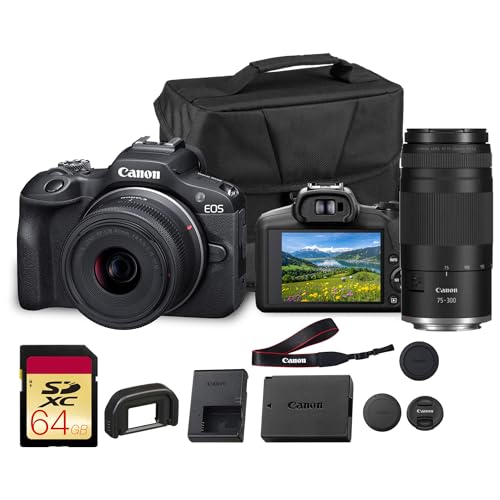
A camera is only as good as its lenses. The Nikon Z50 II comes with two versatile zoom lenses: a 16-50mm standard zoom and a 50-250mm telephoto, covering wide-angle to long-distance shots. The Canon EOS R100 bundle includes an 18-45mm kit lens and a 75-300mm telephoto, giving you similar reach. Both Nikon and Canon offer extensive lens lineups, but Nikon’s Z-mount has grown rapidly with native options for filmmakers. For more compact setups, see our list of best compact mirrorless cameras.
Portability and Ergonomics
Filmmaking often requires hours of handheld shooting or quick transitions between locations. The Nikon Z50 II is lightweight and compact, fitting easily into a small bag, while its built-in flash and intuitive controls make it ideal for run-and-gun work. The Canon EOS R100 is even lighter and features a comfortable grip, perfect for beginners. Both cameras have electronic viewfinders and tilting screens, though the Nikon’s screen is more responsive for vlogging. Choose based on your need for built-in flash (Nikon) versus a more budget-friendly entry point (Canon).
Final Thoughts
After evaluating both cameras, we recommend the Nikon Z50 II with Two Lenses for filmmakers who prioritize advanced autofocus, 4K/60p video, and creative color presets right out of the box. If you are starting your filmmaking journey on a tighter budget, the Canon EOS R100 Mirrorless Camera with 18-45mm delivers solid 4K video, reliable autofocus, and a lightweight body that grows with your skills. Both are excellent choices for 2026 filmmaking, so pick the one that matches your creative vision and workflow.
Frequently Asked Questions
Which mirrorless camera is best for filmmaking on a budget?
The Canon EOS R100 offers strong video features at a lower entry price, making it a great choice for beginner filmmakers in 2026. Its dual lens bundle covers a wide range of focal lengths, and the Dual Pixel AF ensures sharp focus during video recording.
Can the Nikon Z50 II shoot 4K video at 60 fps?
Yes, the Nikon Z50 II records 4K UHD video at up to 60 frames per second, and it also offers in-camera 120p slow motion in Full HD. This makes it ideal for capturing smooth action and creative slow-motion shots without external equipment.
Do these cameras have built-in stabilization for handheld filming?
The Nikon Z50 II includes electronic VR (video stabilization) that helps reduce shakiness during handheld shooting. The Canon EOS R100 relies on lens-based stabilization (IS) in its kit lenses. For best results, consider using a gimbal or tripod for critical shots.
Are mirrorless cameras better than DSLRs for filmmaking?
Mirrorless cameras are generally preferred for filmmaking in 2026 because they are lighter, offer faster autofocus, and provide electronic viewfinders that show real-time exposure. Both the Nikon Z50 II and Canon EOS R100 are excellent examples of how mirrorless technology benefits video creators.




