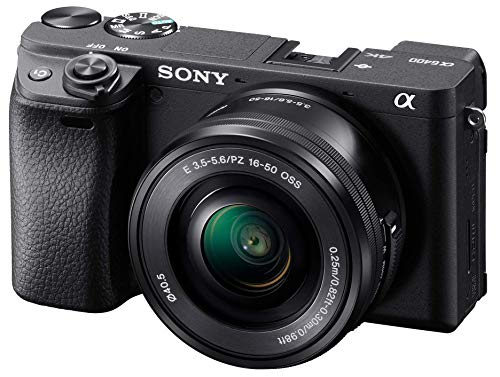
You have finally decided to leave your smartphone behind and step into the world of mirrorless photography. The only problem? Every camera body you see promises incredible quality, but without a zoom lens, you are limited to whatever is right in front of you. Whether you want to capture family moments, travel landscapes, or wildlife from a distance, a mirrorless camera with a zoom lens gives you the flexibility to frame your shot exactly how you imagine it. In this guide, we evaluate the top five options that combine a reliable camera body with versatile zoom glass, so you can start shooting with confidence.
We have focused on kits and lenses that work together seamlessly, especially for beginners and hobbyists. If you are curious about other types of cameras, our guide on best action cameras for travel might also interest you, but here we stick strictly to mirrorless systems with zoom capabilities.


Buying Guide: What to Look for in a Mirrorless Camera with Zoom Lens
Zoom Range and Versatility
The primary reason you want a zoom lens is to cover multiple focal lengths without swapping glass. A kit that includes both an 18-45mm and a 55-210mm lens, for instance, covers wide-angle for group shots and telephoto for distant subjects. Think about what you shoot most often: if you travel frequently, a wider range like 18-45mm plus a telephoto zoom gives you everything from architecture to wildlife. For everyday family photos, a standard 18-45mm lens may be enough, but having the option to zoom in further is always a bonus.
When assessing zoom range, also consider the maximum aperture. Lenses with a wider aperture (lower f-number) let in more light, which helps in low-light situations and creates a pleasing background blur. However, most kit zoom lenses have a variable aperture that narrows as you zoom. That is a trade-off for affordability and compactness.
Autofocus Performance
Fast and accurate autofocus is crucial when you are capturing moving subjects like children, pets, or sports. Canon’s Dual Pixel CMOS AF is widely praised for its smooth and reliable tracking, especially with face and eye detection. Panasonic’s contrast-detect system on the LUMIX G Vario lens also performs well for still subjects and video, but may struggle slightly with fast action. For a beginner, a camera that locks focus quickly and stays locked makes the biggest difference in getting sharp shots every time.
We recommend checking the autofocus speed in reviews or trying a demo in store. The Canon EOS R100 series, for example, uses Dual Pixel AF that works across the entire frame, making it very forgiving for new users.
Portability and Build Quality
A mirrorless camera should be light enough to carry on a day trip or a hike. The Canon EOS R100 body weighs under 400 grams, and when paired with a compact zoom lens, the whole setup fits easily in a small shoulder bag. Panasonic’s 45-150mm lens is also lightweight at about 200 grams, making it a great travel companion for Micro Four Thirds users. If you plan to shoot handheld for long periods, consider the overall weight and whether the camera has built-in image stabilization. Some lenses, like the Panasonic, include Mega O.I.S., which helps reduce blur from shaky hands.
For those who want the smallest possible kit, a single zoom lens like the RF-S18-45mm is ideal. It is compact enough to slip into a jacket pocket. If you need more reach, a two-lens bundle still remains portable if you carry only one lens at a time.
Lens Compatibility and Future Upgrades
When you invest in a mirrorless system, you are also buying into a lens mount ecosystem. Canon’s RF mount offers a growing lineup of native lenses, including the RF100-400mm telephoto for wildlife and sports. That lens can be added later to your R100 body, giving you a professional-level reach without switching cameras. Panasonic’s Micro Four Thirds mount has one of the largest lens selections available, from ultra-wide to super-telephoto, and many third-party options. Think about whether you want to expand your kit in the future, and choose a system that supports that growth.
If you are just starting, the Canon EOS R100 double lens bundle gives you two zooms right out of the box, so you can explore different focal lengths before committing to additional lenses. For more advanced beginners, our guide on top cameras for professional photography beginners may help you decide on a system with more room to grow.
Final Thoughts
After evaluating the options, we believe the Canon EOS R100 Mirrorless Camera with 18-45mm double lens bundle offers the best all-around value for beginners who want a complete kit with wide and telephoto coverage. For those who prefer a single, more affordable zoom lens and a lighter setup, the Canon EOS R100 Mirrorless Camera with RF-S18-45mm is an excellent entry point, and you can always add the RF100-400mm later for extra reach. Both cameras share the same reliable autofocus and 4K video capabilities, so your choice really comes down to how much zoom range you need from day one.
Frequently Asked Questions
What is the best mirrorless camera with zoom lens for beginners in 2026?
The Canon EOS R100 with the double lens kit is widely considered the best mirrorless camera with zoom lens for beginners. It offers a 24.1MP sensor, 4K video, and two zoom lenses that cover a wide range of shooting scenarios, all at a very accessible price point. The autofocus system is easy to use and produces sharp results right away.
Can I use a Panasonic lens on a Canon mirrorless camera?
No, Panasonic lenses use the Micro Four Thirds mount, while Canon EOS R cameras use the RF mount. They are not compatible without an adapter, and even then, autofocus and image stabilization may not work properly. If you are choosing a system, stick with one mount ecosystem to avoid compatibility headaches.
What zoom lens should I buy for my Canon EOS R100?
If you already own the Canon EOS R100 body, the RF-S18-45mm f/4.5-6.3 IS STM is a great standard zoom to start with. For more reach, the RF100-400mm f/5.6-8 IS USM is an excellent telephoto lens for wildlife and sports. Both lenses are native RF mount and work seamlessly with the R100’s autofocus and image stabilization.
Is a mirrorless camera with zoom lens better than a smartphone in 2026?
Yes, a mirrorless camera with a zoom lens provides superior image quality, optical zoom that does not degrade resolution, and much better low-light performance than any smartphone. The larger sensor and interchangeable lenses give you creative control that a phone cannot match. If you are serious about photography, upgrading to a mirrorless system is a worthwhile investment.
For more on choosing the right camera for your needs, check out our article on best cameras with Bluetooth to phone for easy sharing.