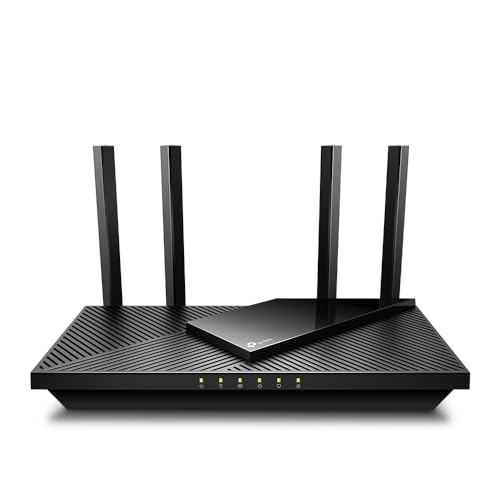
Choosing between a NETGEAR and an ASUS router can feel overwhelming with so many models on the market. You want fast, reliable WiFi for streaming, gaming, and smart home devices, but each brand offers different strengths. This guide breaks down the key differences and highlights top models from both brands to help you make a confident decision.
We have evaluated both NETGEAR and ASUS routers across several criteria: speed, coverage, security features, and ease of use. Whether you need a budget-friendly WiFi 6 router or a cutting-edge WiFi 7 powerhouse, our comparison will point you in the right direction. For more on securing your network, check out our guide on the best router with Built-in VPN.




Pros
- Exceptional real-world performance with users achieving full gigabit speeds over WiFi from fiber connections
- Reliable and stable operation with zero downtime reported by long-term users
- Intuitive mobile app control and guest network management with individual passwords for up to three guests
- Compact footprint and premium design leverage 25 years of NETGEAR engineering expertise
- Compatible with any ISP and works seamlessly as a standalone router with external modem
Cons
- Requires separate cable modem, adding to total system cost and setup complexity
- Smart Connect feature may need adjustment for Apple devices like Apple TV and iPads
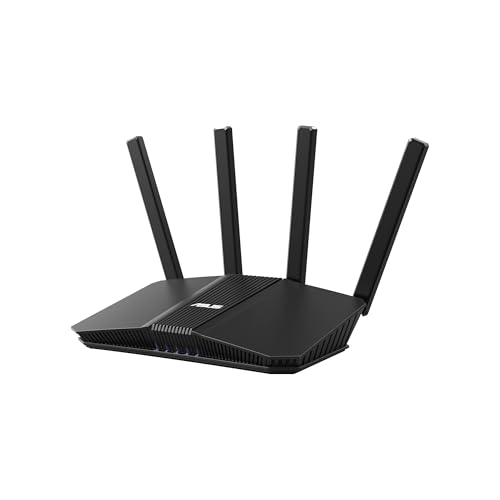
The NETGEAR Nighthawk RS700S is a flagship WiFi 7 router engineered for power users, content creators, gamers, and households with multiple connected devices demanding consistent high-speed performance. This is not a cable modem, so you'll need to pair it with a separate modem from your ISP, but the payoff is exceptional flexibility and performance.
The standout feature is undeniable raw speed. WiFi 7 technology delivers up to 19 Gbps of combined bandwidth, providing 2.4x faster speeds than WiFi 6 routers. Real-world testing from customers confirms these speeds translate to practical benefits, with users pulling full gigabit speeds over WiFi on 6GHz band devices and 600-700 Mbps on 5GHz connections. The tri-band architecture with 320 MHz channels means multiple devices can stream 4K/8K video, handle AR/VR applications, and enable lag-free online gaming simultaneously without performance degradation.
Design and build quality reflect NETGEAR's 25 years of WiFi expertise. The RS700S features a compact, sleek form factor with an innovative 3D antenna design that delivers 360-degree coverage across 3,500 square feet. The inclusion of a 10 Gigabit internet port future-proofs your investment, allowing you to maximize speeds from emerging fiber and ultra-high-speed ISP offerings. The router includes military-grade WPA3 security, advanced threat notifications, and Smart Connect technology that intelligently routes devices to optimal bands.
Minor drawbacks exist for specific use cases. Some users with Apple devices report that Smart Connect requires manual adjustment to function properly, though this is easily remedied through the NETGEAR app. Additionally, the router's premium pricing and requirement for a separate modem may deter budget-conscious buyers or those seeking all-in-one solutions.
The NETGEAR Nighthawk RS700S is the best choice for users who demand cutting-edge performance, plan to keep their router for years, and want to future-proof their home network. It's an investment in reliability, speed, and next-generation connectivity that delivers measurable real-world benefits for demanding households.
Performance Specs: WiFi 7 tri-band router with maximum speeds up to 19 Gbps. Supports 802.11be wireless standard with 320 MHz channels for enhanced bandwidth.
Connectivity: 1 x 10 Gigabit LAN port plus 4 x 1 Gigabit Ethernet ports. Compatible with any internet service provider. Requires separate cable modem with coax inputs.
Coverage: Up to 3,500 square feet of 360-degree WiFi coverage with 3D antenna design and 3 fixed antennas.
Security: WPA3 security protocol, firewall protection, and advanced threat notification system. 90-day complimentary technical support included.
Physical: Dimensions 11.09 x 5.59 x 4.88 inches. Includes 19V/3.16A power adapter, 2-meter Ethernet cable, and quick start guide. 1-year limited warranty with Armor protection.
Who Should Buy: The RS700S is ideal for gamers, 4K/8K content streamers, AR/VR enthusiasts, home office professionals, and anyone with 15+ connected devices. It's perfect for fiber internet subscribers wanting to maximize their investment or those planning network upgrades for the next 5+ years.
Important Setup Notes: This router requires a separate cable modem. If you currently have a modem, verify it has coax inputs and is compatible with your ISP. The router pairs well with modern modems like the NETGEAR CM2000 for optimal performance.
Optimization Tips: Use the NETGEAR mobile app to manage Smart Connect settings based on your device types. Consider disabling Smart Connect if you use primarily Apple devices, then re-enable for mixed ecosystems. Take advantage of guest network features to create separate secure networks for visitors.
Alternatives to Consider: If you need an all-in-one modem-router combo, explore NETGEAR's Nighthawk AXE500 or similar hybrid models. For budget options, WiFi 6 routers remain capable, though WiFi 7 provides significant performance advantages for future-proofing.
Pros
- Next-gen WiFi 7 technology with ultra-fast speeds and low latency.
- Comprehensive security suite with no subscription fees.
- Flexible WAN connectivity including cellular tethering.
- AiMesh support for easy whole-home coverage expansion.
- Rich VPN features for privacy and remote access.
Cons
- Requires compatible devices to fully utilize WiFi 7 speeds.
- Limited to 4 antennas; some competitors offer more for extreme range.
- No built-in modem; separate modem needed for cable or DSL.
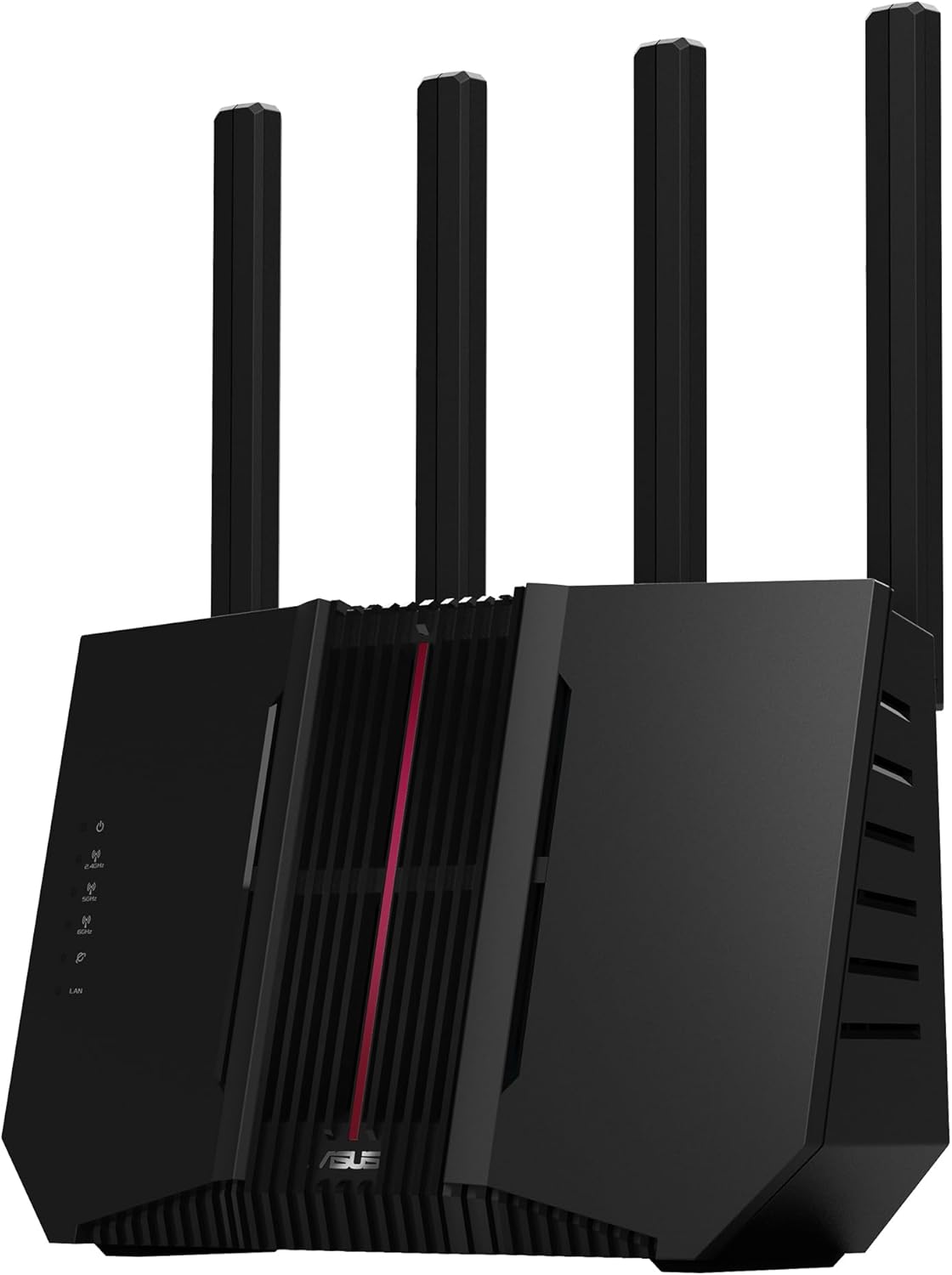
The ASUS RT-BE9700 is a tri-band WiFi 7 router designed for users who demand the fastest wireless speeds and most reliable connections. With a staggering theoretical throughput of 9.7 Gbps, it is ideal for heavy-duty tasks like 8K streaming, VR gaming, and large file transfers. The router supports the latest 802.11be standard with 320 MHz channels in the 6 GHz band, ensuring minimal interference and maximum data capacity.
Real-world performance is enhanced by Multi-Link Operation (MLO), which allows devices to connect across multiple bands simultaneously for stable, low-latency connections. The router also features ASUS AiMesh support, enabling you to create a seamless whole-home mesh network by adding other compatible ASUS routers. This makes it a great choice for large homes or offices up to 2750 square feet.
Design-wise, the RT-BE9700 has a sleek black chassis with four external antennas and a variety of ports, including six LAN ports and a USB port for 4G/5G tethering. The setup is straightforward via the ASUSWRT interface, and the router is compatible with Alexa for voice control. Build quality is solid, typical of ASUS networking gear.
One potential drawback is that to fully benefit from WiFi 7 speeds, you need WiFi 7-capable devices, which are still emerging. Also, the router lacks a built-in modem, so you will need a separate cable or DSL modem. However, for early adopters and tech enthusiasts, the RT-BE9700 offers a future-proof foundation.
In conclusion, the ASUS RT-BE9700 is a powerful, feature-rich WiFi 7 router that delivers exceptional speed, security, and flexibility. Its subscription-free security, versatile VPN, and mesh expandability make it a strong contender for anyone building a high-performance home network. While it is an investment, it provides cutting-edge technology that will serve you for years to come.
Brand: ASUS
Model: RT-BE9700
Wi-Fi Generation: Wi-Fi 7 (802.11be)
Frequency Band: Tri-Band (2.4 GHz, 5 GHz, 6 GHz)
Max Data Rate: 9.7 Gbps (2.4 GHz: 1032 Mbps, 5 GHz: 2882 Mbps, 6 GHz: 5764 Mbps)
Coverage: 2750 sq ft
Antennas: 4 external
Ports: 6 LAN, 1 WAN, 1 USB
Memory: 256 MB Flash, 1 GB DDR4 RAM
Security: AiProtection, VPN, WPA3
Dimensions: 11.3 x 4 x 9.7 inches
Weight: 1.7 pounds

Pros
- Blazing-fast WiFi 7 performance handles multiple simultaneous 4K streams, video calls, and gaming without lag
- Extensive coverage and device capacity make it perfect for larger homes with many connected smart devices
- Backward compatible with WiFi 6 and earlier devices ensures smooth integration with existing equipment
- Dual 2.5 Gigabit ports provide wired connectivity for devices that need maximum speed and stability
- Built-in security features and automatic updates protect your network without ongoing costs
Cons
- Coverage is limited to 2,500 sq. ft. in open layouts, so larger or multi-story homes may require a mesh system for optimal performance
- Real-world speeds depend heavily on your internet plan and connected devices, not just the router itself
- Some ISP gateways require bridge mode configuration, which may add complexity to initial setup
The NETGEAR Nighthawk BE9300 is a standalone WiFi 7 router designed for modern households that demand high-speed connectivity across multiple devices. It's built for families and power users running simultaneous 4K video streams, online gaming sessions, video conferencing, and dozens of smart home devices without performance degradation.
The standout feature is its WiFi 7 tri-band technology delivering up to 9.3 Gbps of combined throughput across 2.4 GHz, 5 GHz, and 6 GHz bands. This represents a significant leap over WiFi 6 routers and provides future-proof performance. The router supports up to 100 connected devices and covers 2,500 sq. ft., making it suitable for most single-story homes and smaller multi-story residences. Dual 2.5 Gigabit ports and two 1 Gigabit LAN ports enable wired connections for devices like gaming consoles and media servers that benefit from stable, high-speed links.
Setup is straightforward through the free Nighthawk app or web browser, and the router integrates seamlessly with existing modems and ISP gateways from major providers. Security is handled automatically with WPA3 encryption, Advanced Router Protection, and regular firmware updates included at no cost. The compact 9.8 x 5.9 x 4-inch design fits well in most home environments.
Limitations include the 2,500 sq. ft. coverage area, which may fall short in larger or multi-story homes where a mesh system would be more appropriate. Real-world speeds depend on your internet plan and device capabilities, so the full 9.3 Gbps potential may not be realized unless you have compatible devices and a multi-gig internet connection. Some ISP gateways require bridge mode setup, adding a minor configuration step.
The NETGEAR Nighthawk BE9300 is an excellent choice for tech-savvy users seeking cutting-edge WiFi 7 performance in a single-unit router form factor, backed by NETGEAR's 30-year networking expertise and solid customer support.
WiFi Standard: WiFi 7 (802.11be) with tri-band support (2.4 GHz, 5 GHz, 6 GHz)
Maximum Speed: 9.3 Gbps combined
Coverage Area: Up to 2,500 sq. ft. in open layouts
Connected Devices: Up to 100 devices
Internet Ports: 1x 2.5 Gigabit WAN port
LAN Ports: 2x 2.5 Gigabit + 2x 1 Gigabit
Security: WPA3 encryption, Advanced Router Protection, automatic firmware updates
Setup: Free Nighthawk app (iOS/Android) or web browser
Compatibility: Works with cable, fiber, DSL, and satellite ISP gateways
Dimensions: 9.8 x 5.9 x 4 inches
Certification: FCC certified for United States use
Who Should Buy This Router? The BE9300 is ideal for users who want WiFi 7 performance without a mesh system, have homes up to 2,500 sq. ft., run multiple high-bandwidth activities simultaneously, or plan to upgrade to multi-gig internet plans soon.
Who Should Consider Alternatives? If you have a home larger than 2,500 sq. ft., live in a multi-story building with significant obstructions, or need WiFi coverage in multiple zones, a mesh system like NETGEAR Orbi would be more suitable. Budget-conscious buyers may prefer WiFi 6 routers at lower price points.
Setup Considerations: Ensure your modem is active before starting setup. Check if your ISP gateway requires bridge mode operation. Have ethernet cable ready to connect your modem to the 2.5 Gig WAN port for optimal performance.
Maximizing Performance: Place the router centrally in your home, away from metal objects and microwave ovens. Use the 2.5 Gigabit ports for devices that support them. Connect compatible WiFi 7 devices to the 6 GHz band for maximum speeds and reduced interference.
Buying Guide
WiFi Standard and Speed
The WiFi standard determines maximum speed and efficiency. WiFi 7 (802.11be) offers the fastest speeds with multi-link operation and 320 MHz channels, ideal for 8K streaming and VR gaming. WiFi 6 (802.11ax) is still excellent for most homes, with solid throughput and better capacity for multiple devices.
ASUS offers both WiFi 6 and WiFi 7 models across a wide price range. NETGEAR focuses on high-performance WiFi 7 routers like the Nighthawk RS700S, which can reach up to 19 Gbps. If you want a mesh system for whole-home coverage, our top mesh router systems guide can help.
Coverage and Mesh Support
Coverage depends on router design, antenna count, and whether you can add mesh nodes. ASUS routers often support AiMesh, allowing you to mix and match compatible models for seamless whole-home WiFi. NETGEAR Nighthawk routers offer strong standalone coverage, but for larger homes, a dedicated mesh system may be better.
Models like the ASUS RT-BE55 cover up to 2,000 square feet, while the NETGEAR RS700S covers up to 3,500 square feet. For multi-story homes, consider a mesh system like those in our best mesh WiFi extender guide.
Security and VPN Features
Both brands offer robust security, but ASUS stands out with AiProtection Pro powered by Trend Micro, providing commercial-grade threat protection without a subscription. NETGEAR routers include WPA3 encryption and automatic firmware updates, with optional Armor subscription for advanced features.
VPN support is another differentiator. ASUS routers offer built-in VPN servers and clients, plus the Instant Guard app for one-tap secure connections. NETGEAR supports VPN pass-through but may require manual configuration. If VPN is a priority, ASUS models are generally more user-friendly.
Wired Connectivity and Ports
For the fastest wired connections, look at port options. ASUS RT-BE88U features two 10G ports (one SFP+, one RJ45) for future-proof networking. NETGEAR RS700S includes a 10 Gig LAN port and four 1 Gig ports. Most models also offer 2.5 Gig ports for multi-gig internet plans.
Consider how many wired devices you have. Gamers and streamers benefit from multiple Gigabit Ethernet ports to reduce latency. For a broader comparison of brands, read our TP-Link vs NETGEAR.
Final Thoughts
Both NETGEAR and ASUS offer excellent routers, but the best choice depends on your priorities. For advanced security, VPN features, and flexible mesh expansion, ASUS routers like the ASUS RT-BE58U WiFi 7 Router – Dual-WAN, 3.6 Gbps are hard to beat. If raw speed and coverage are your main concerns, the NETGEAR Nighthawk Tri-Band WiFi 7 Router (RS700S) delivers unbeatable performance for large homes and demanding users.
Frequently Asked Questions
Which is better, NETGEAR or ASUS for gaming?
Both brands have gaming-focused models. ASUS routers often include advanced QoS and VPN features that reduce lag. NETGEAR Nighthawk routers prioritize raw speed and low latency. For competitive gaming in 2026, a WiFi 7 router from either brand will provide an excellent experience.
Can I use a NETGEAR router with an ASUS mesh system?
No, mesh systems from different brands are not compatible. ASUS uses AiMesh, while NETGEAR uses Orbi or Nighthawk mesh. Stick with one brand for seamless roaming. If you want to expand coverage later, choose a router with mesh support from the same brand.
Do ASUS routers have better security than NETGEAR?
ASUS offers AiProtection Pro with Trend Micro for subscription-free commercial-grade security. NETGEAR includes WPA3 and automatic updates, with an optional Armor subscription. For built-in VPN and parental controls, ASUS generally provides more features out of the box. For more on secure routers, see our best router with Built-in VPN.
What is the difference between WiFi 6 and WiFi 7 routers?
WiFi 7 offers significantly faster speeds (up to 19 Gbps vs 9.6 Gbps), lower latency, and better performance in crowded areas thanks to 320 MHz channels and multi-link operation. WiFi 6 is still excellent for most homes and costs less. In 2026, WiFi 7 is ideal for heavy streaming, gaming, and future-proofing.